


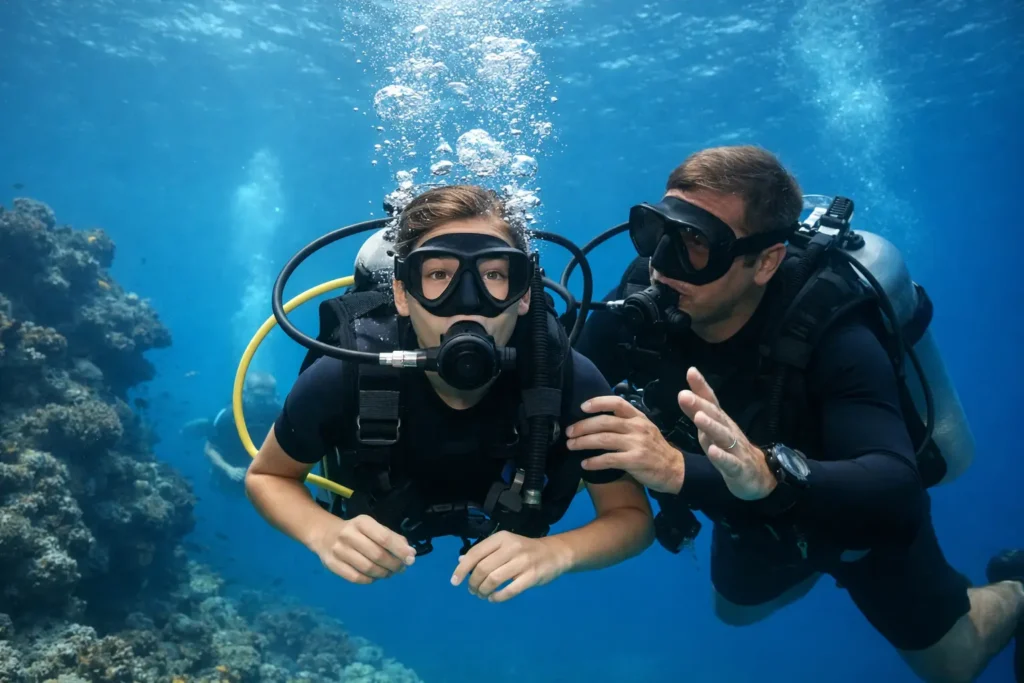
You are floating above clear Caribbean water, wearing equipment that may look more complicated than it feels. A few minutes later, after practicing a handful of simple skills, you are breathing calmly beneath the surface and watching reef life pass at eye level. So, what is a discovery dive? It is a closely supervised first scuba experience for people who are not certified divers but want to find out what it truly feels like to breathe underwater.
A discovery dive is not a rushed dip off the back of a boat or a test of courage. Done properly, it is a personal introduction to scuba with a qualified instructor or dive professional beside you, a shallow site chosen for comfort, and enough time to settle in before the underwater fun begins.
What Is a Discovery Dive, Exactly?
A discovery dive is often called a Try Scuba experience or introductory scuba dive. It gives first-time divers the chance to use real scuba equipment and explore underwater under direct professional supervision. You do not need an Open Water certification to participate, because you are not diving independently.
The purpose is simple: let you experience scuba safely, at an easy pace, before deciding whether a full certification course is right for you. It is one of those travel experiences that can change how you see the ocean. From the surface, a reef is a beautiful patch of blue. Below it, it becomes a living neighborhood of coral, schools of fish, and unexpected color.
In warm, calm conditions such as those often found around Bayahibe, the first experience can be remarkably relaxed. That does not mean there are no rules. A discovery dive follows defined safety procedures, conservative depth limits, and constant supervision. The instructor remains close enough to assist throughout the dive.
What Happens During Your First Scuba Experience?
The best discovery dives do not begin by putting you straight into deep water. They begin with a conversation. Your instructor will ask about your health, explain the plan, and help you decide whether the activity is suitable for you that day.
You will then receive a short, clear briefing on the equipment. You do not need to memorize technical terminology. You only need to understand what the regulator does, how the mask works, how to clear water from it, and how to communicate underwater with hand signals. Your guide will also explain the number-one rule of scuba: keep breathing normally and never hold your breath.
Once you are in shallow water, you will practice a few basic skills before heading out. This usually includes breathing through the regulator, recovering it if it comes out of your mouth, clearing a little water from your mask, and equalizing your ears as you descend. The goal is not perfection. It is comfort and confidence.
Then comes the moment most guests remember. You descend slowly, often holding onto a line or following the instructor down, and the sound of the surface fades away. For many beginners, the first few breaths feel unusual. Within minutes, the rhythm becomes natural. You are no longer thinking about the tank on your back. You are looking at the reef.
A typical guided underwater portion is kept shallow and paced around the group or private guest. Your instructor monitors how you are feeling, manages the route, and points out marine life you might otherwise miss. If you want to stop, return to the surface, or simply take a moment to adjust, that is always okay.
Who Can Join a Discovery Dive?
Most healthy adults and older children can enjoy an introductory scuba experience, provided they meet the program’s age requirements and complete the required medical screening. You do not need previous scuba experience, and in many cases you do not need to be an expert swimmer. Still, being reasonably comfortable in the water makes the experience more enjoyable.
The medical questionnaire matters. Certain heart, lung, ear, or sinus conditions, recent surgery, pregnancy, and some medications may require a doctor’s approval or mean scuba is not appropriate. Be honest when completing it. A professional dive center would rather adjust the plan or suggest another water activity than take an unnecessary risk.
Nervous guests are welcome. In fact, many people arrive convinced they will only try the equipment at the surface, then surprise themselves by calmly exploring a reef. The difference is pacing. A private or small-group format gives your instructor room to focus on you, rather than pushing everyone through the same schedule.
Discovery Dive vs. Open Water Certification
A discovery dive lets you try scuba. An Open Water course teaches you how to dive as a certified buddy diver. They are very different experiences, although a discovery session can be a brilliant first step toward certification.
During a full SSI Open Water course, you learn planning, buoyancy, equipment setup, emergency procedures, navigation, and the practical skills needed to dive with a buddy after training. It takes more time and commitment, but the reward is the freedom to join certified dives around the world within the limits of your training.
A discovery dive is much more focused. Your instructor handles the planning and closely manages the equipment and dive profile. You learn enough to participate safely in one supervised experience, not enough to dive independently later.
That distinction matters when booking. If your dream is to see a reef once during your Dominican Republic vacation, a discovery dive may be exactly right. If you already know the ocean has your attention and want scuba to become part of future travels, ask about continuing into a certification course. Some guests prefer to try the water first; others are ready to commit from day one.
Why the Right Conditions Matter for Beginners
The location and the crew can shape your first underwater experience as much as the lesson itself. Calm entry conditions, warm water, good visibility, and a shallow reef make it easier to relax and focus on breathing. A complicated boat transfer, strong current, or crowded group can make a perfectly capable beginner feel overwhelmed.
This is why local knowledge is more than a nice extra. A crew that knows the water can choose the best site for the weather, visibility, and your comfort level. Around Bayahibe, access to protected reef areas and Caribbean water that stays inviting much of the year creates an excellent setting for first-time divers.
At Sharky’s Crew, the approach is personal: explain clearly, move at your pace, and keep the experience exciting without making it feel like a production line. That matters for couples where one person is eager and the other is uncertain, for families introducing older children to the sea, and for small corporate groups looking for a shared story worth telling afterward.
What Should You Bring and What Should You Expect?
Your dive center normally provides the essential scuba equipment, including mask, fins, regulator, buoyancy device, tank, and weights. Wear a swimsuit, bring a towel, and use reef-conscious sun protection before you board. Avoid alcohol before diving, stay hydrated, and give yourself enough time after the dive before flying, according to your dive professional’s guidance.
Expect a mix of anticipation and laughter. Equipment can feel unfamiliar on land, but it becomes far less noticeable in the water. Expect your instructor to repeat instructions, check in often, and celebrate the small wins – the first comfortable breath, the first cleared mask, the first fish you spot without being prompted.
Do not expect to touch coral, chase animals, or race through the reef. The most memorable first dives are unhurried. Good buoyancy and respectful distance protect the reef while giving you a better view of the life that calls it home.
Is a Discovery Dive Worth It?
It depends on what you want from your time on the water. If you want a quick thrill with no learning involved, snorkeling may suit you better. If you are curious about the quiet, weightless world below the surface and are willing to spend a little time learning the basics, a discovery dive offers something snorkeling cannot: the chance to be part of that world, not just look down at it.
You do not need to arrive fearless or already convinced that you are a scuba diver. You only need curiosity, a willingness to listen, and a crew that treats your first breath underwater as the big moment it is. The reef will take care of the rest.
