


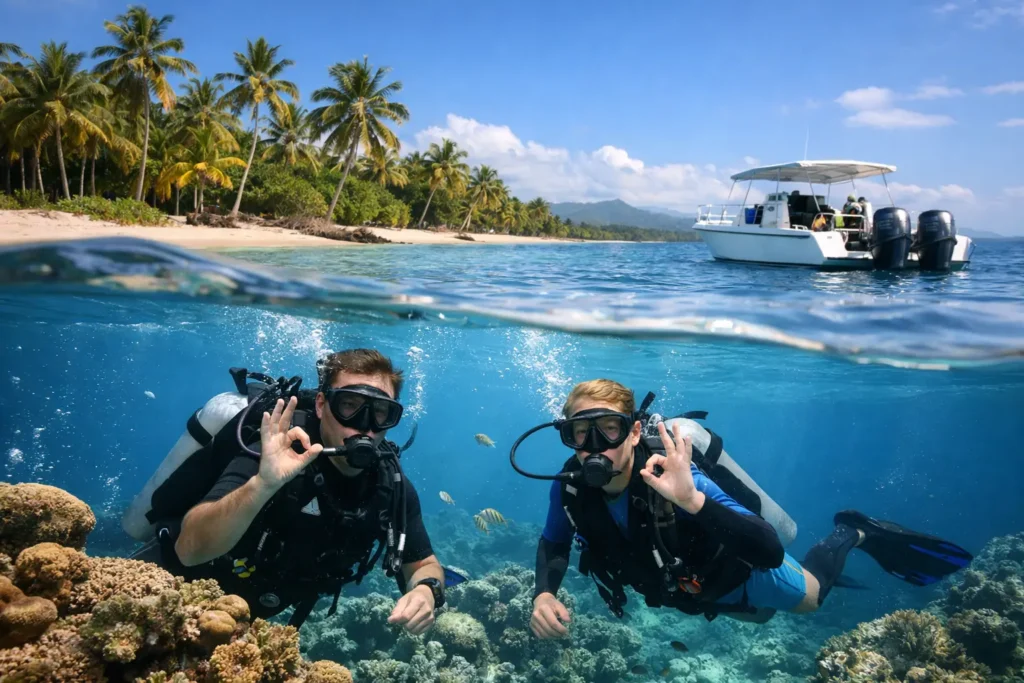
You do not want to spend half your vacation sitting in a classroom while the Caribbean is flat, warm, and calling your name. A good dominican republic dive certification guide helps you choose a course that fits your trip, your comfort level in the water, and the kind of diving you actually want to do afterward.
For many travelers, getting certified here makes more sense than doing it at home. Water temperatures are friendly, visibility is often excellent, and your training dives can happen on reefs people fly across the world to see. That said, not every certification setup feels the same. Some are rushed, some are crowded, and some turn what should be an exciting first step into a box-checking exercise.
Why the Dominican Republic works for dive training
The biggest advantage is simple: conditions are often easier for beginners. Warm water reduces stress. Good visibility makes skills easier to learn. And when your open water dives take place in clear Caribbean water instead of a cold quarry, confidence tends to build faster.
The Dominican Republic also works well for travelers who want to combine certification with a real vacation. If you are staying near the southeast coast, especially around Bayahibe, you are close to calm reef areas, protected marine environments, and boat access that makes training more enjoyable than shore entries in rougher locations.
But there is a trade-off. Vacation energy can make people overestimate how much they want to pack into a few days. If your schedule is already full of island excursions, dinners, and family plans, forcing a full certification course into a tight window can make the experience feel rushed. In some cases, a Try Scuba session is the smarter move.
Dominican Republic dive certification guide: your main options
If you have never dived before, you usually have three realistic choices.
Try Scuba for a first taste
This is not a full certification, but it is often the best first move for cautious beginners or short-stay travelers. You learn the basics with an instructor, practice a few key skills, and experience breathing underwater in controlled conditions. If you love it, you can continue into a full course later.
This option is ideal if you are curious but not ready to commit. It is also a smart fit for couples or families where one person wants to test the water before signing up for several training sessions.
Open Water certification for full entry-level training
This is the standard beginner certification and the one most travelers mean when they say they want to get scuba certified. It includes knowledge development, confined water training, and open water dives. Once completed, you can dive around the world within the limits of your certification.
For most adults visiting the Dominican Republic, this is the sweet spot. You leave with a recognized certification and real confidence in the water, not just a vacation memory.
Referral or eLearning plus vacation dives
If you want to use your trip efficiently, doing the academic portion before arrival can save valuable vacation time. Many divers complete theory and sometimes pool work at home, then finish their open water dives in the Dominican Republic.
This route works well if your time is limited. The catch is coordination. Your paperwork, medical forms, and prior training need to be organized properly so there are no surprises once you arrive.
How long certification usually takes
A full Open Water course typically takes around three days, though that depends on scheduling, group size, and how quickly you progress through skills. Some centers stretch it out for comfort. Others compress it to fit tourist demand.
Faster is not always better. If you are nervous in the water, a slower pace can make a huge difference. Small-group or private instruction also changes the feel of the course. Instead of waiting while eight other people clear masks, you get focused coaching and more actual in-water time.
That matters more than travelers expect. A certification course is not just about passing skills. It is about finishing the course feeling capable, calm, and excited to dive again.
What to look for in a dive center
This is where your experience can either feel premium and personal or painfully generic. Ask how many students are typically assigned per instructor. Ask where training dives happen. Ask whether the course is taught in your language comfortably, not just technically.
A good center will be transparent about standards, schedule, and what is included. Equipment quality matters. Boat logistics matter. The team matters even more. Instructors should make you feel safe without making the experience feel stiff or intimidating.
If you are training on vacation, hospitality matters too. You want a crew that understands timing, comfort, and how to adapt when weather or nerves shift the plan. That local operational knowledge is often the difference between a smooth course and a frustrating one.
Costs and what affects the price
Prices vary depending on certification agency, group size, location, and whether the course includes eLearning, gear, boat dives, and certification fees. Private instruction usually costs more, but for many travelers it is worth it.
If you are comparing prices only, the cheapest option can look attractive at first glance. But a lower price sometimes means larger groups, older gear, shorter in-water sessions, or hidden add-ons. A premium course should feel premium in practice, not just in the brochure.
Think about value, not just the headline number. Better instruction, better dive sites, and a smoother schedule often make the difference between barely finishing and truly enjoying the process.
Conditions beginners should expect
The Dominican Republic can offer excellent beginner conditions, especially on calmer reef sites. Water is warm for much of the year, and visibility is often very good. Those two factors alone make early training much less stressful than in colder destinations.
Still, conditions are never identical every day. Wind, current, and surface chop can change. A responsible dive center will adjust sites and timing to suit the group, especially for student divers. That flexibility matters more than any marketing promise about perfect water.
If you are prone to motion sickness, mention it early. Boat-based training is common, and a simple adjustment to timing or preparation can make your day much better.
Who should get certified on vacation – and who should wait
Getting certified on vacation is a great choice if you are comfortable in the water, have at least a few open days, and genuinely want scuba to become part of your future travels. It is also a strong option for couples and families who want to share an experience that continues long after the trip ends.
It may not be the best move if your itinerary is packed, you are very anxious in open water, or you dislike learning under time pressure. In that case, a Try Scuba experience or a referral setup might be a better fit.
There is no prize for forcing a full certification into the wrong vacation. The right choice is the one that leaves you wanting your next dive, not needing a recovery day from the course itself.
Dominican Republic dive certification guide for families and couples
For couples, certification can turn one trip into years of future dive travel. But partners do not always learn at the same pace. If one person is confident and the other is hesitant, private or semi-private instruction keeps the experience supportive instead of stressful.
For families with teens, certification can be one of the most memorable things you do together on a Caribbean trip. The key is choosing a center that treats younger divers with patience and keeps the course engaging rather than overly formal.
For small corporate groups, entry-level scuba can work surprisingly well as a shared challenge. But it only works if the operator can manage safety, pacing, and mixed comfort levels without turning the day into a cattle call.
How to prepare before you arrive
Start with the basics. Make sure you are comfortable swimming and spending time in the water. Complete any eLearning early if your course offers it. Review the medical questionnaire honestly, especially if you have asthma, recent surgeries, or other conditions that could require clearance.
Arrive rested, hydrated, and realistic. Certification is fun, but it is still training. Too much sun, too many drinks the night before, or an overstuffed itinerary can make the course harder than it needs to be.
And bring the right mindset. You do not need to be fearless. You just need to be coachable, patient, and open to learning one skill at a time.
A great first certification should feel like the beginning of something bigger, not a task you survived. If you choose the right team, the right pace, and the right setting, your first breath underwater in the Dominican Republic can become the moment your vacation turns into a lifelong habit.
