


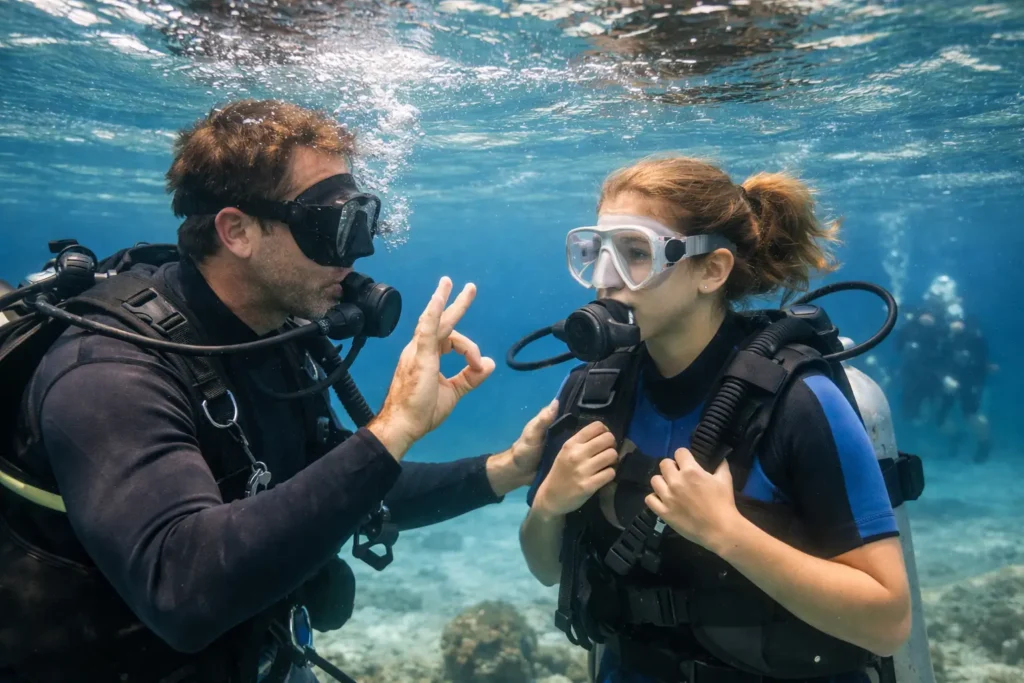
The question usually comes up with a nervous laugh on the boat or right before the briefing – can non swimmers try scuba? The short answer is yes, many can, especially in a controlled beginner experience with a professional instructor. But the honest answer is a little more useful than a simple yes: it depends on what you mean by “non-swimmer,” how comfortable you are in water, and what kind of scuba experience you want.
That distinction matters. Someone who cannot do formal swim strokes but feels calm floating in shallow water is very different from someone who panics the moment water reaches their chest. Scuba is not a swimming contest, but it is still a water activity. Confidence, breathing control, and the ability to stay relaxed matter more on a first try than looking graceful doing freestyle.
Can non swimmers try scuba on a first experience?
For many first-timers, yes. A Try Scuba or introductory dive is designed for exactly that first step. You are not being asked to swim laps across a pool or manage the ocean alone. You stay with an instructor, you learn a few core skills on the surface and in very shallow water, and you move at a measured pace.
In calm, warm conditions, a non-swimmer can often enjoy a first underwater experience surprisingly well. The regulator does the breathing for you, the tank and buoyancy system help you float on the surface, and your instructor stays close the entire time. For some guests, the biggest challenge is not technique. It is trusting that slow breathing and good guidance are enough.
What scuba does not do is remove fear automatically. If you are deeply uncomfortable in water, scuba can feel intense. The mask changes your vision, the regulator feels unfamiliar at first, and the idea of going under the surface can trigger tension. That is why a good dive center will never treat every beginner the same way. Some guests are ready after a clear briefing and a few minutes of practice. Others need extra time in shallow water, and that is completely fine.
What “non-swimmer” really means
This is where a lot of confusion starts. People say they are non-swimmers for different reasons.
Some mean, “I never learned proper strokes.” Others mean, “I can float and move a little, but I am not strong in deep water.” And some mean, “I am afraid of water and avoid it.” Those are three very different starting points.
If you are in the first or second group, trying scuba may be more realistic than you think. You are not expected to power through the water the way you would in a swim lesson. Beginner scuba is slow, controlled, and guided.
If you are in the third group, the answer becomes more personal. You may still be able to try scuba, but only if you feel willing to go step by step without pressure. A quality introductory program should feel supportive, not rushed. If an operator acts like fear is a problem to brush aside, keep looking.
Why some non-swimmers do very well underwater
Here is the part that surprises people: a lot of nervous first-timers calm down once they are underwater. On the surface, waves, splashing, and the effort of staying oriented can make people feel exposed. Underwater, especially in gentle conditions, things often become quieter and more stable.
You are not kicking hard to stay up. You are breathing slowly. You are following one instructor. Your world gets smaller in a good way. Instead of worrying about “swimming,” you focus on one thing at a time.
That is one reason calm beginner sites make such a difference. In places known for warm water and easy conditions, first-time guests often settle in faster because the environment is working with them, not against them. Bayahibe is especially well suited to this kind of introduction because visibility is often excellent and many sites are friendly for training and first dives.
The limits you should know before booking
Scuba is not a magic shortcut around water safety. Even when non-swimmers can try scuba, there are limits that need to be respected.
You should not expect to be taken into rough seas, strong current, or a crowded dive environment where the pace feels rushed. You should not be grouped with a large number of people if you are anxious in water. And you should not be told that your comfort level does not matter because “everyone gets used to it.” That is not personalized diving. That is poor screening.
There is also a difference between trying scuba once and getting certified. An introductory experience may be possible for a non-swimmer under close supervision, but certification courses usually include swim and float requirements. That is where many people get tripped up. They had a great first experience, assume the next step is automatic, and then realize certification demands more water confidence.
That is not bad news. It just means the path may be two stages instead of one. First, get comfortable underwater. Then, if you love it, work on your swimming skills and continue from there.
How a safe first dive should feel
A proper beginner session should feel calm, personal, and very clear. First, your instructor explains the equipment in plain English, not technical jargon. Then you practice a few basics such as breathing through the regulator, clearing a little water from your mask, and understanding simple hand signals.
After that, you should enter shallow water and get used to the sensation before going any farther. No racing. No pressure. No macho energy. If you need a minute, you take a minute.
Once underwater, your instructor should remain close enough to help immediately. For anxious beginners, smaller groups or private instruction can make a huge difference. It is easier to relax when the whole experience is built around your pace instead of a schedule packed with strangers.
That is one reason boutique dive operations tend to be a better fit for non-swimmers than high-volume tourist setups. The first attempt at scuba is not the moment to feel like one more wristband in a crowd.
Can non swimmers try scuba in the ocean, or only in a pool?
Both are possible, and the best option depends on the person. A pool is predictable and can be perfect for someone who wants to remove as many variables as possible. The ocean, on the other hand, can be easier than people expect when conditions are calm and visibility is clear.
Some guests actually prefer the ocean because the experience feels more natural and inspiring right away. Seeing fish, coral, and open blue water shifts the focus away from fear. Others do better starting in confined water first. Neither approach is more courageous. It is simply about what helps you stay relaxed.
If you are unsure, ask how the operator handles nervous beginners. That question tells you a lot. The right answer should include pace, instructor proximity, site conditions, and whether they adjust the experience to the guest. If the answer sounds generic, that is your answer.
When you should wait before trying scuba
Sometimes the smart move is not “book it now.” If you have intense water panic, untreated ear issues, or a strong tendency to hold your breath when anxious, it may be worth taking a little more time first.
Even one or two basic swim lessons can help, not because you need polished technique, but because you build comfort in water. Practicing floating, putting your face in, and breathing calmly can change the whole experience. Scuba rewards relaxation. The more comfortable you are before the first session, the more fun you are likely to have.
And if you are traveling with a partner or family who already dives, do not let comparison ruin the moment. Your first underwater breath is your own milestone. You do not need to arrive “good” at it.
The best mindset to bring
Come in curious, not determined to prove something. That is the sweet spot. Guests who do best on a first scuba experience are usually the ones who listen closely, communicate honestly, and let the instructor lead.
If you are a non-swimmer but willing to learn, willing to speak up, and willing to go step by step, scuba may be much more accessible than you imagined. The key is choosing the right setup: calm conditions, close supervision, and a crew that treats your comfort like part of the job, not an obstacle to the schedule.
For a lot of travelers, that first try becomes the surprise highlight of the trip. Not because they suddenly became swimmers overnight, but because they discovered that with the right support, the ocean felt welcoming instead of off-limits.
If that sounds like you, start with honesty, choose a crew that takes beginners seriously, and let the experience unfold one breath at a time.
