


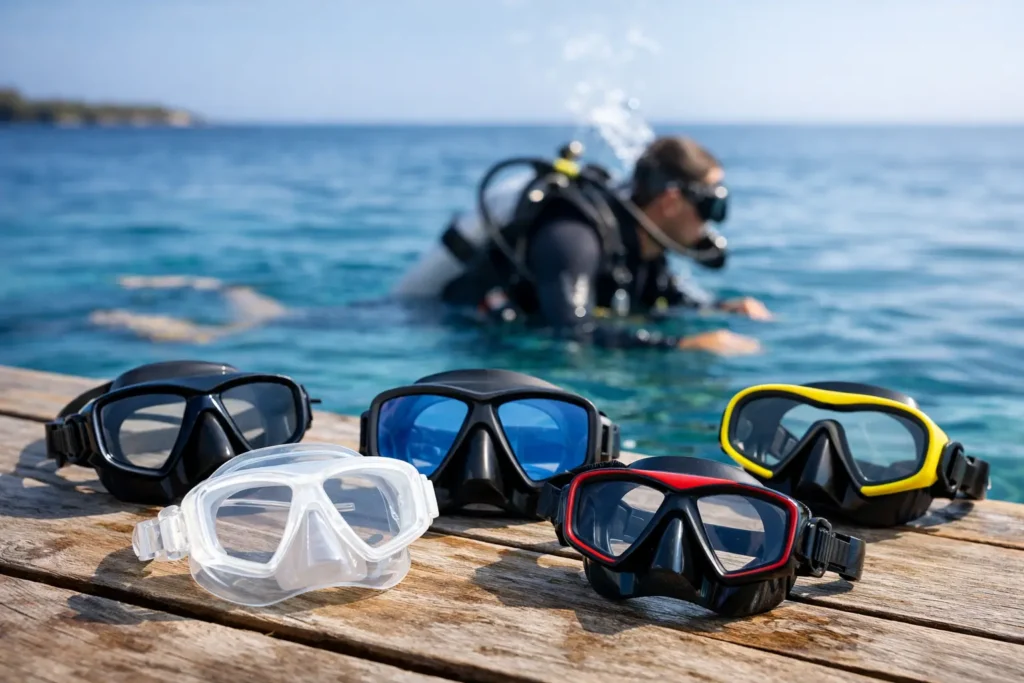
A mask can turn your first underwater view into a crystal-clear Caribbean memory – or turn it into 40 minutes of clearing water from your eyes. That is why the best scuba masks for beginners are not necessarily the most expensive or the most technical. They are the ones that fit your individual face, feel comfortable, and let you relax enough to enjoy what is swimming past you.
For a first Try Scuba experience or an SSI Open Water course, your dive center will provide properly maintained equipment. But if you plan to keep diving after vacation, buying a mask that truly fits is one of the smartest early gear decisions you can make. A good fit creates confidence. Confidence makes every skill, from equalizing to buoyancy control, feel easier.
What Makes a Scuba Mask Beginner-Friendly?
The right mask is surprisingly personal. Two divers can try the same model: one gets a dry, comfortable seal, while the other gets a slow leak with every smile. Your facial shape, nose bridge, cheekbones, and even facial hair all affect the seal.
Beginners usually benefit from a soft silicone skirt, tempered-glass lenses, an easy-to-reach nose pocket, and a field of view that feels open rather than restrictive. Skip masks with rigid plastic skirts or fashion goggles marketed for casual swimming. They are not built for the pressure changes or reliable sealing required on scuba.
A lower internal volume is another advantage. It means there is less air inside the mask, so clearing it underwater takes less effort. It also makes equalizing the air space in the mask easier as you descend. That said, an ultra-low-volume mask is not automatically the best choice if it presses uncomfortably against your face.
8 Best Scuba Masks for Beginners Worth Considering
Rather than chasing a logo, start by trying these beginner-friendly mask styles. The best choice is the one that seals without strain and suits the kind of diving you want to do.
- Single-lens masks have one broad piece of glass across the front. They often feel open and natural, making them a favorite for first-time divers who do not want a frame in the middle of their vision. Look for a model with a soft skirt and a lens positioned close to the face.
- Two-lens masks use separate lenses, usually with a small frame between them. They can offer a lower-profile fit and may work especially well for narrower faces. Many also accept prescription lenses, which is a major practical benefit for divers who need vision correction.
- Low-volume masks are designed to sit close to your face. They are easier to clear and can be excellent for people who want a compact, streamlined feel. Try one carefully before buying, because some low-volume designs can feel too close around the nose or brow.
- Wide-view masks use angled side windows or a broad front lens to improve peripheral vision. They can make a beginner feel less enclosed underwater, particularly on colorful reefs where there is life in every direction. The trade-off is that side-window masks may have slightly more internal volume.
- Frameless masks use the silicone skirt as part of the structure, creating a flexible, lightweight design. They pack easily for travel and often provide a close fit. Because their shape is flexible, they are worth trying in person rather than ordering blindly.
- Prescription-ready masks allow corrective lenses to be fitted or swapped in. If you cannot comfortably read a boat gauge, recognize a hand signal, or see a turtle at a distance without glasses, this option can change your entire experience. Contact lenses can work for many divers, but prescription lenses remove one more thing to worry about.
- Small-fit masks are not just for children. Adults with smaller or narrower faces often get a better seal from masks labeled compact, mini, or small-fit. A standard-size mask that is too wide can leak at the temples or under the cheekbones, no matter how carefully you adjust it.
- Soft-skirt travel masks are an excellent choice for vacation divers who want personal gear without overpacking. Prioritize durable silicone, tempered glass, and an adjustable strap over a bulky hard case or unnecessary accessories. A sturdy protective box is useful, but the mask itself should still be simple.
The Fit Test That Matters Most
A mask cannot earn a place among the best scuba masks for beginners unless it seals naturally. Do this simple dry-land test before purchasing: hold the mask gently against your face without using the strap, then inhale lightly through your nose. If it stays in place without effort, that is a promising start.
Now check for pressure points. The skirt should sit smoothly around your face, with no hair caught underneath it. It should not press painfully on the bridge of your nose, pinch below your eyes, or push uncomfortably against your upper lip. Move your jaw, smile, and wrinkle your nose. You will do all of those things underwater, especially when communicating or clearing your mask.
Do not tighten the strap to force a seal. This is one of the most common beginner mistakes. An overtightened strap can distort the silicone skirt and actually cause more leaking. The strap is there to hold the mask in position, not squeeze it onto your face.
If you have a mustache or beard, use a little extra care. A clean-shaven area beneath the nose offers the most reliable seal, but a neatly trimmed mustache can work well with the right mask and a small amount of appropriate silicone sealant. Your instructor can help you test what works before the dive.
One Lens or Two? Choose Comfort Over Theory
Single-lens masks are often recommended to beginners because they feel expansive and unobstructed. For many people, that is exactly right. Seeing a school of blue tangs, a ray crossing the sand, or the reef opening beneath you feels more immediate with a broad uninterrupted view.
But a two-lens mask may fit you better, clear more easily for you, or allow prescription lenses. In that case, it is the better mask. Comfort and seal beat broad generalizations every time.
The same principle applies to black versus clear silicone skirts. Clear skirts can feel brighter and more open, especially in shallow, sunny water. Black skirts reduce side glare and can help underwater photographers focus on the scene in front of them. For a new diver, either is perfectly suitable if the fit is right.
Tempered Glass Is Non-Negotiable
A real scuba mask should use tempered glass. It is designed to handle the demands of diving and, if damaged, breaks into smaller pieces rather than dangerous sharp shards. Plastic-lens snorkeling masks are fine for floating at the surface but do not belong on scuba equipment.
Check the lens marking and buy from a recognized dive retailer or dive center. Avoid ultra-cheap masks with vague descriptions, weak straps, or no clear indication that the lenses are tempered glass. Saving a few dollars is not worth a foggy, leaking, uncomfortable first dive.
How to Stop a New Mask From Fogging
Even a perfectly fitted mask can fog if it has not been prepared properly. New masks often retain a thin manufacturing film on the inside of the lens. A dive professional can recommend the best first-clean method for your specific model, since materials and manufacturer guidance vary.
Before each dive, apply a small amount of defog solution, rinse lightly in the water, and avoid touching the inside of the lenses afterward. Saliva is a traditional backup, but purpose-made defog is more consistent and more pleasant when you are sharing a boat with other guests.
Fogging is also a reminder to breathe calmly through your regulator and keep your mask in the correct position. If it happens underwater, do not panic. Pause, signal your buddy if needed, and use the mask-clearing skill you learned with your instructor.
Bring Your Mask to Your First Course or Guided Dive
Owning your mask means you know how it fits, how much strap tension it needs, and how it behaves when you clear it. That familiarity is valuable when you are learning new skills. It also makes a great vacation investment because a mask takes up little luggage space and travels well from tropical reefs to local quarry dives.
At Diving DR in Bayahibe, our instructors see every kind of mask fit issue, from straps set too tight to skirts sitting over a few stray hairs. Bring a mask you are considering, or ask before your first session. A quick fit check on land can save a lot of distraction once you are floating above a reef.
Your first mask does not need to be flashy. Choose the one that disappears from your attention after a few minutes, leaving you free to watch the bubbles rise, listen to your breathing, and enjoy the extraordinary world waiting below the surface.
