


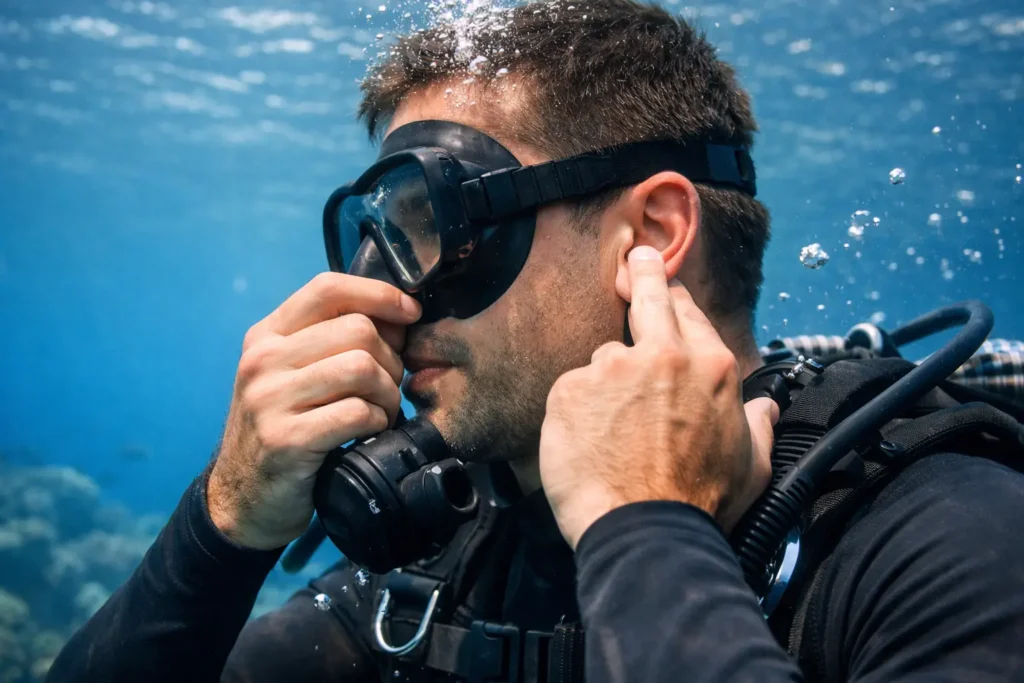
The first few feet of descent can decide how the whole dive feels. Learning how to equalize scuba ears is not about powering through pressure or waiting for discomfort to disappear. It is about giving the tiny air spaces behind your eardrums time to adjust, early and often, so you can focus on the reef, the wreck, and the incredible blue water around you.
A little ear awareness goes a long way, especially for new divers. Even experienced divers can have a stubborn day after a long flight, seasonal allergies, dehydration, or a restless night. The right response is never to force it. Slow down, communicate with your buddy or instructor, and treat your ears with the same respect you give your air supply.
Why scuba ears need equalizing
As you descend, the water pressure around you increases. Your middle ears contain air, and that air must be brought up to the same pressure as the water outside your eardrums. You do this by opening the Eustachian tubes, the narrow passages that connect the middle ear to the back of your throat.
If those tubes do not open, your eardrums bend inward. At first, that may feel like fullness, a faint crackle, or mild pressure. Keep descending without equalizing and it can become sharp pain. That is a warning, not a challenge to overcome. Continuing can lead to an ear squeeze, injury, and a dive that ends much sooner than planned.
The good news is that equalizing is a skill. Most divers improve quickly once they stop waiting until their ears hurt and start using a calm, repeatable routine.
How to equalize scuba ears before you descend
Start on the surface, before the descent signal. Swallow a few times, move your jaw from side to side, or make a gentle yawning motion while you are breathing through your regulator or snorkel. Many divers can feel a light pop or click. That is a useful sign that the tubes are opening.
Do not wait until you are already dropping down the line. Begin equalizing before pressure builds, then continue every few feet during the early part of the descent. This is especially helpful in the first 10 to 15 feet, where pressure changes are felt most quickly.
Your body position matters. Descending feet first gives many divers a simpler time because the head stays above the chest. If you are having trouble on a head-first descent, switch to a feet-first position, hold the line if one is available, and go slowly. A relaxed descent is not a delay. It is good diving.
Hydration and rest also make a difference. Dry air on airplanes, a late night, and congestion can all make equalizing less predictable. If you wake up with a cold, blocked sinuses, or ears that already feel plugged, speak honestly with your dive professional before getting in the water. A spectacular dive site will still be there another day.
The best ear-equalizing techniques
There is no single method that works perfectly for every diver. Try the gentle options below during training and learn which one feels most natural for you. The goal is a light opening sensation, never a hard blast of pressure.
Swallow, wiggle, and yawn
Swallowing opens the Eustachian tubes for many people. You can pair it with a jaw wiggle or the motion of a yawn. This is often enough for small pressure changes, and it is the least forceful place to start.
The gentle Valsalva maneuver
Pinch your nose closed through your mask and breathe out very gently, as though you are trying to fog a pair of glasses without making a sound. The pressure should be brief and light. If nothing happens, do not blow harder. Pause, swallow, reposition, or ascend slightly before trying again.
A forceful Valsalva can irritate the ears and may make the problem worse. Think finesse, not strength.
Toynbee maneuver
Pinch your nose and swallow at the same time. This technique works well for some divers who find that blowing against a pinched nose feels awkward or ineffective. It can be particularly useful once you have already started a slow, controlled descent.
Frenzel maneuver
More advanced divers often learn the Frenzel maneuver, which uses the tongue and throat to send a small amount of air toward the ears while the nose is pinched. It is efficient and gentle when learned correctly, but it can feel confusing at first. Ask an SSI instructor to demonstrate and coach it rather than trying to muscle through from a written description.
A calm descent routine that works
At the start of descent, signal that you are okay, take a breath, and equalize before you leave the surface. Then descend a little, equalize again, and repeat. Many divers do this every foot or two at first. It may sound excessive, but frequent easy equalizations are far better than trying to fix a painful blockage later.
Keep your body relaxed and your breathing steady. Tension in the jaw, neck, and shoulders can make it harder to equalize. If you are holding a descent line, use it to control your pace rather than pulling yourself down quickly. Watch your instructor or buddy, but do not let anyone else’s pace pressure you into descending before your ears are ready.
If one ear feels slower than the other, tilt the slower ear slightly upward. You can also gently angle your head from side to side while swallowing or using your preferred technique. Sometimes that small change is enough to help the tube open.
Equalize before every hint of pain. Once discomfort begins, stop your descent immediately. The next move is up, not down.
What to do when your ears will not equalize
First, signal your buddy or instructor. Then ascend a few feet until the pressure eases. Do not simply stop at the painful depth and keep trying hard. Ascending slightly reduces the pressure difference and gives your ear a chance to recover.
At the easier depth, relax your jaw, take several normal breaths, swallow, and attempt a gentle equalization. If it works, resume your descent slowly. If it does not work after a couple of patient attempts, end the dive. That can be disappointing, particularly when clear Caribbean water is waiting below, but it is the smart call.
Never descend through ear pain. Never let a buddy, schedule, camera plan, or boat departure make that decision for you. A painful ear can become a damaged ear, and a damaged ear can affect the rest of your vacation.
Avoid using decongestants as a shortcut unless a medical professional has advised you to do so. Some products wear off during a dive, which can create problems when the air spaces need to adjust again on ascent. If congestion, recurring difficulty, ringing, hearing changes, dizziness, or ear pain persists, skip diving and seek medical guidance from a clinician familiar with diving medicine.
Equalizing on the way up
Most ears vent naturally during ascent as expanding air leaves the middle ear. You may hear gentle squeaks, pops, or crackles. Usually, you do not need to do anything beyond ascending slowly and breathing normally.
If you feel pressure building on ascent, slow down or stop, and descend a little if needed until it settles. This may indicate a reverse block, where expanding air is having trouble escaping. Do not forcefully equalize against that pressure. Get your buddy’s attention and follow your dive professional’s direction.
After the dive, your ears should feel normal or close to normal fairly quickly. Mild temporary fullness can happen, but pain, ongoing muffled hearing, fluid, dizziness, or ringing deserve attention. Do not make another dive just to see if it clears.
Make your next dive easier
The most comfortable divers are not necessarily the ones born with easy ears. They are the ones who prepare, equalize early, and are willing to slow the plan down. A well-fitting mask helps because pinching your nose should be effortless, while a calm instructor-led descent gives beginners the time to build confidence without feeling rushed.
At Diving DR, our small-group approach means you can tell the crew exactly what you need before entering the water, whether that is a little more time on the line, a feet-first descent, or a refresher on technique. The reef does not care whether you take an extra minute to get comfortable. It is waiting for you.
Your ears are giving you useful information on every descent. Listen early, respond gently, and let comfort set the pace. That is how a first dive, or your hundredth, starts with confidence instead of a wince.
