


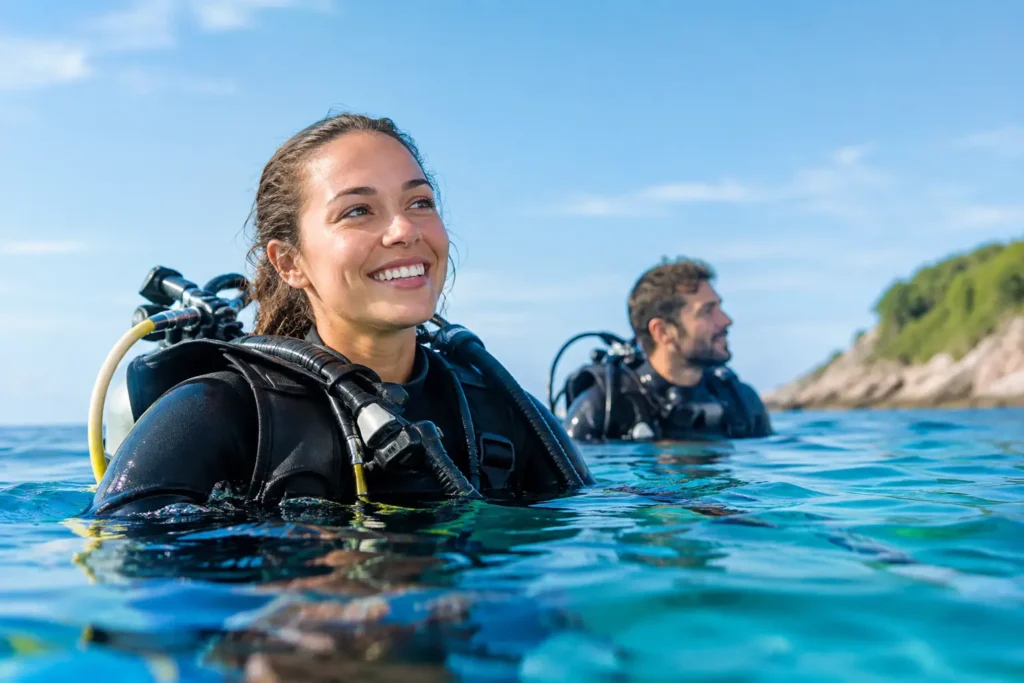
A Try Scuba review should answer one question before anything else: will your first breath underwater feel thrilling or intimidating? For most first-time guests, it is both for about 30 seconds. Then the mask clears, the breathing settles, and a completely different Caribbean appears below the surface – reefs, schooling fish, and the calm realization that you are actually doing this.
A Try Scuba experience is designed for travelers who want that moment without committing their vacation to a full certification course. It is a supervised introductory scuba session, not a shortcut to being certified. You learn the essentials, practice a few skills in shallow water, and make a closely guided dive with an instructor. Done well, it is one of the most memorable ways to spend a day in the Dominican Republic.
What a Try Scuba Experience Actually Includes
The best intro dives move at the pace of the person with the least experience, not the person who is most eager to get in the water. Before anyone enters the sea, your instructor should explain how the equipment works, how to breathe from the regulator, what hand signals mean, and what to do if water reaches your mask or you feel uneasy.
You do not need to memorize a textbook. The point is to understand a few simple responses well enough that the underwater portion feels controlled. You will usually begin in shallow, calm water where you can stand or easily reach the surface. There, you practice breathing through the regulator, clearing your mask, recovering the regulator, and communicating with your instructor.
Once those skills feel comfortable, the actual dive begins. A professional instructor stays beside you, managing the route, depth, buoyancy support, and pace. You are free to focus on the experience: your first look at a coral reef, a bright parrotfish crossing your path, and the strange quiet that makes even a busy reef feel personal.
A Try Scuba session does not certify you to dive independently. If you fall in love with it, though, it can be an excellent first step before an SSI Open Water course.
Try Scuba Review: What Makes It Worth Doing?
The real value is not simply checking “scuba diving” off a vacation list. It is getting access to a place that swimmers and snorkelers can only see from above. Snorkeling is beautiful in clear Caribbean water, but scuba lets you stay at reef level, notice the small details, and move through the landscape rather than look down on it.
For beginners, the strongest Try Scuba experiences have three things in common: patient instruction, calm conditions, and a low guest-to-instructor ratio. Those details matter more than flashy promises. A crowded group may be cheaper, but it can leave nervous guests feeling rushed while the instructor has to divide attention across too many people.
With a private or small-group format, there is time to pause. If you need another minute in shallow water, you get it. If your ears need a slower descent, the dive adjusts. If one partner is ready and the other is anxious, a good crew handles both without making anyone feel like they are holding up the day.
That personalized pace is especially valuable for couples where only one person has prior water confidence, families with older teens or adults trying scuba together, and corporate groups looking for a genuine shared challenge. The first person to surface with a huge grin tends to make the rest of the group braver.
Who Should Try Scuba – And Who Should Wait?
You do not need previous scuba experience to participate, and you do not need to be an elite swimmer. You do need to be comfortable enough in the water to listen, practice, and communicate honestly with your instructor. Being nervous is normal. Pretending not to be nervous is less helpful than simply saying, “I need to go slowly.”
Try Scuba is a strong fit for travelers who want a guided introduction, are curious about certification, or want to share one extraordinary activity with a partner or friends. It also works well when your trip is short and you would rather spend one morning underwater than several days in a classroom and training sessions.
It may not be the right choice on every day of every vacation. Anyone with a medical condition that could affect diving should discuss it in advance and complete the required health screening honestly. Congestion, ear pain, a recent illness, or certain medications can change the decision. So can pregnancy, major heart or lung concerns, and an inability to equalize pressure comfortably.
There is no prize for forcing a dive. A responsible operator would rather reschedule, suggest snorkeling, or keep the session in shallow water than pressure someone past their comfort level. Also plan your itinerary carefully: flying after scuba diving requires a surface interval, and your dive professional can advise on the timing that applies to your activity.
The Parts First-Timers Worry About Most
Most questions center on breathing, ears, and sharks. Breathing underwater feels unusual at first because your instincts tell you that your face belongs above the surface. The regulator provides air when you inhale, and the key is slow, steady breathing. Within a few minutes, most guests find the rhythm surprisingly natural.
Equalizing your ears is another common concern. As you descend, you gently equalize pressure early and often, with your instructor watching for signs that you need to stop. There is never a reason to push through discomfort. A slower descent is still a successful descent.
As for marine life, the reef is the guest of honor. You may see rays, trumpetfish, angelfish, lobster, and countless reef species depending on the site and season. Sharks are not what makes an introductory Caribbean reef dive stressful. Poor supervision and rushed instruction are. Choose the crew carefully, follow the briefing, and the underwater world becomes much more fascinating than frightening.
Why Bayahibe Is a Smart Place for a First Dive
Bayahibe has a major advantage for beginners: access to warm Caribbean water and protected reef areas that can suit an easy, unhurried introduction. Conditions always vary with weather, wind, and the sea state, so no ethical dive center should promise the same visibility or route every day. But experienced local captains know how to choose the best available plan rather than forcing a group toward a site that does not fit the conditions.
That local judgment is part of the experience. It influences departure time, boat ride comfort, the entry point, and which reef offers the right balance of beauty and ease for new divers. A first dive should feel adventurous, not like an endurance test.
At Sharky’s Crew, the approach is built around small or private groups, multilingual guidance, and nearly two decades of operating in these waters. That does not mean every guest will react the same way underwater. It means the crew can read the situation, make smart adjustments, and give first-time divers the attention that a milestone moment deserves.
How to Get More From Your First Dive
Arrive rested, hydrated, and willing to ask questions. Avoid treating the briefing as a formality. The few minutes you spend understanding hand signals and equalization make the underwater portion far more relaxed.
Tell your instructor about anything that makes you uneasy, whether that is deep water, mask claustrophobia, ear pressure, or simply the idea of not being able to touch the bottom. A good instructor wants that information before the dive, not after you are already stressed.
Finally, leave the pressure to “go deep” behind. Your first scuba dive is not about a depth number. It is about taking a calm breath, looking around, and realizing the reef is no longer a picture from a brochure. It is right in front of you, and you are part of it.
