


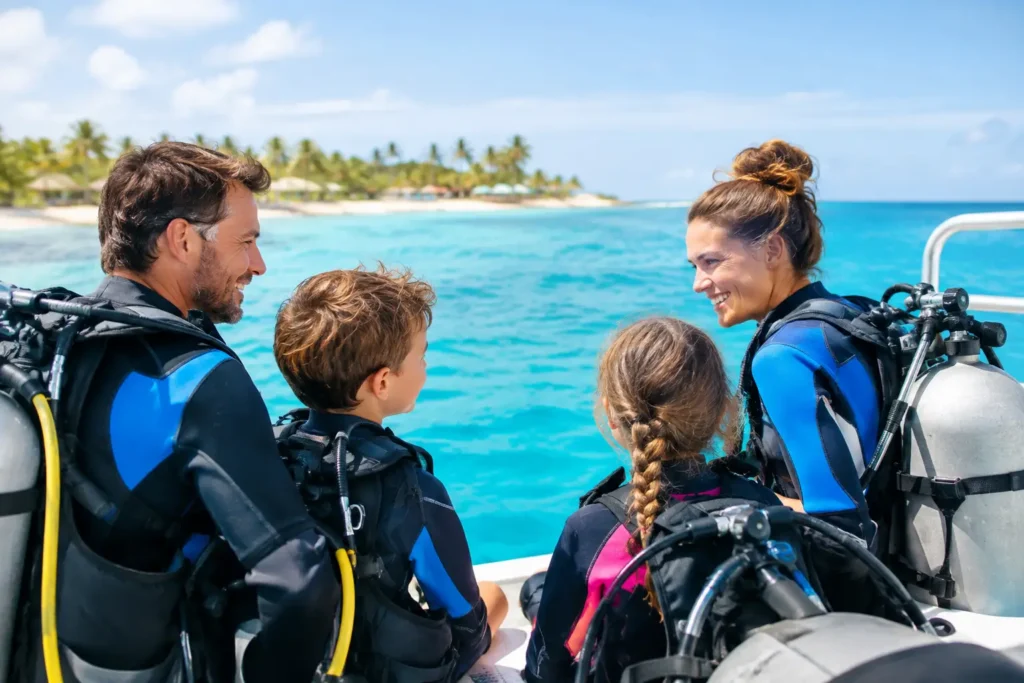
The best family scuba trips do not begin with a giant gear list. They begin with an honest conversation at the breakfast table: Who is excited to get underwater? Who wants to stay on the boat? Who needs a slower morning? This family scuba vacation planning guide is built around that reality, because a great Caribbean day works when every member of the crew feels included, not rushed.
Bayahibe is especially well suited to that kind of trip. Warm water, clear reefs, sheltered conditions, and easy access to places such as Saona Island make it possible to combine underwater adventure with the beach time, boat rides, and unhurried moments that turn a vacation into a family story.
Start With the Family, Not the Dive Site
A certified teen, a curious first-timer, and a parent who prefers dry land can absolutely enjoy the same vacation. They may not enjoy the exact same itinerary. Trying to force everyone into one activity is where family dive planning can become stressful.
Start by separating your group into comfort levels. Certified divers may want guided reef or wreck dives. Adults and older teens who have never dived might be ready for a Try Scuba experience in calm, supervised conditions. Younger children, non-divers, or anyone who simply prefers the surface can still have a brilliant day snorkeling, swimming, watching for sea life, or enjoying a private beach stop.
Age is only one part of the picture. Confidence in the water, medical history, swimming ability, and willingness to follow instructions matter more than whether someone is the oldest or youngest person in the group. A professional dive center should ask questions before promising a particular activity. That is not a barrier to fun. It is how the right kind of fun gets planned.
Choose a Destination That Makes Flexibility Easy
A family scuba vacation can look completely different depending on where you stay. Remote liveaboard trips can be extraordinary for experienced divers, but they demand commitment, fixed schedules, and comfort with long days on the water. For many families, a land-based Caribbean destination offers a much better balance.
Look for short or manageable boat runs, protected dive areas, warm conditions, and options beyond diving. In Bayahibe, the proximity to Parque Nacional del Este and the Saona coastline gives families a choice: spend a morning exploring reefs, then shift the pace with a beach stop, snorkeling, or a private boat excursion.
The size of the boat group matters too. A large excursion can be lively and affordable, but its schedule is usually set long before your family steps aboard. Private or small-group trips cost more, yet they allow the captain and crew to adjust the rhythm around your family. That can mean an earlier departure, more time at a quiet beach, a gentler route for someone prone to motion sickness, or simply not sharing your special day with a catamaran full of strangers.
Build Your Family Scuba Vacation Planning Guide Around One Big Activity a Day
The temptation is understandable. You have flown to the Dominican Republic, everyone is excited, and there is so much to see. But an itinerary packed with back-to-back boat days, resort dinners, early alarms, and long transfers can leave even enthusiastic divers worn out.
Plan one main water activity per day, especially at the start of the trip. If someone is taking an introductory experience or beginning an SSI course, give them room to absorb the new skills without feeling like they are holding up the family. If certified divers are doing a two-tank morning, make the afternoon optional: pool time, a slow lunch, a nap, or a walk along the shore all count as vacation.
This approach is even more valuable when children are involved. Hunger, sun exposure, and fatigue can change a cheerful boat ride quickly. A flexible afternoon gives everyone space to reset before the next adventure.
A simple five- to seven-night rhythm might include an arrival day with no water commitments, a beginner session or refresher, a family boat day to Saona or Catalina Island, and a separate morning for certified divers. Keep at least one fully open day. Weather, energy levels, and spontaneous beach plans deserve some room on the calendar.
Book Courses and Guided Dives Before You Arrive
Last-minute bookings can work during quiet periods, but families have more moving parts than a couple traveling light. If anyone wants an SSI Open Water course, private instruction, a Try Scuba session, or a specific guided dive, reserve it before the trip.
Advance planning lets the crew prepare the right equipment sizes, assign an appropriate instructor or guide, and build a schedule around your group rather than squeezing you into an available slot. It also gives you time to complete any required digital learning before vacation. Nobody wants to spend a perfect beach afternoon reading course material on a phone because they left it too late.
Certified divers should check their certification cards, logbook details, and last dive date. If it has been a while, be open to a refresher. The goal is not to prove anything. It is to return to the water feeling calm, capable, and ready to enjoy the reef.
Treat Safety Planning as Part of the Experience
The most memorable dives feel effortless because the safety work happened before the boat left the dock. Choose an operator that takes time for briefings, checks conditions honestly, maintains equipment, and keeps groups appropriate for the experience level of the divers.
Before booking, share relevant medical information and answer health questionnaires truthfully. Certain conditions, medications, recent surgeries, pregnancy, and respiratory concerns may require a physician’s clearance or may make diving unsuitable. If there is any doubt, resolve it before travel rather than hoping it will sort itself out at the dock.
Families should also plan their flights carefully. Scuba diving and flying need time between them, so schedule your final dives with your departure day in mind. Your dive professional can advise on the appropriate surface interval based on your diving plan. This is one reason a last-day beach excursion is often a smart choice: everyone can enjoy the water without creating pressure around flight timing.
Bring reef-safe sun protection, rash guards, hats, reusable water bottles, and motion-sickness medication if needed. The Caribbean sun is part of the magic, but dehydration and sunburn can end a boat day early. A dry bag for phones, a light layer for the ride home, and snacks for younger travelers are small details with a big payoff.
Give Non-Divers a Real Role in the Day
A family trip should never make non-divers feel like spectators waiting for the divers to return. Choose experiences where the surface is part of the adventure. Clear shallows and snorkeling stops allow family members to see colorful fish, rays, and coral without scuba gear. Beach time gives younger children freedom to play while adults settle into the pace of the island.
On private boats, the crew can often shape the day around what the group enjoys most. One family may want a reef stop followed by a long lunch on the sand. Another may want a quiet morning cruise, a swim in turquoise water, and an early return before the heat peaks. That personal pacing is not a luxury for its own sake. For multi-generation groups, it is often the difference between a good day and an exceptional one.
At Sharky’s Crew, the advantage of a family-run Bayahibe operation is practical as much as personal: experienced captains know the local routes, instructors can meet first-timers at their level, and the day can be designed around your group rather than a generic timetable.
Set Expectations Before the Boat Leaves
A little pre-trip honesty prevents most family friction. Tell children and teens what the day will actually involve: an early start, a boat ride, instructions that must be followed, time in the sun, and moments when a parent will be underwater with a guide. Let them know what they can look forward to as well, whether that is snorkeling, spotting fish, jumping in for a swim, or reaching a white-sand beach.
For first-time divers, avoid overselling the experience as fearless adventure. The first breath underwater can feel thrilling, strange, or both. A patient instructor, shallow practice, and permission to stop if it does not feel right are far more valuable than pressure to complete a photo-worthy dive.
Experienced divers can help by keeping the mood encouraging. Let beginners own their progress. The family member who decides to snorkel instead of scuba is still making the right choice for themselves, and they may be the first one ready for an introductory dive next time.
Make Space for the Moments Between Dives
The reef may be the headline, but families often remember the smaller moments most clearly: a child pointing out a fish from the surface, the quiet ride toward Saona before the crowds arrive, a shared laugh while adjusting a mask, or sandy feet at the end of the day.
Plan carefully, choose a crew that listens, and leave a little space for the Caribbean to surprise you. The best family scuba vacation is not the one where everyone does the same thing. It is the one where everyone comes home with a story they cannot wait to tell.
