


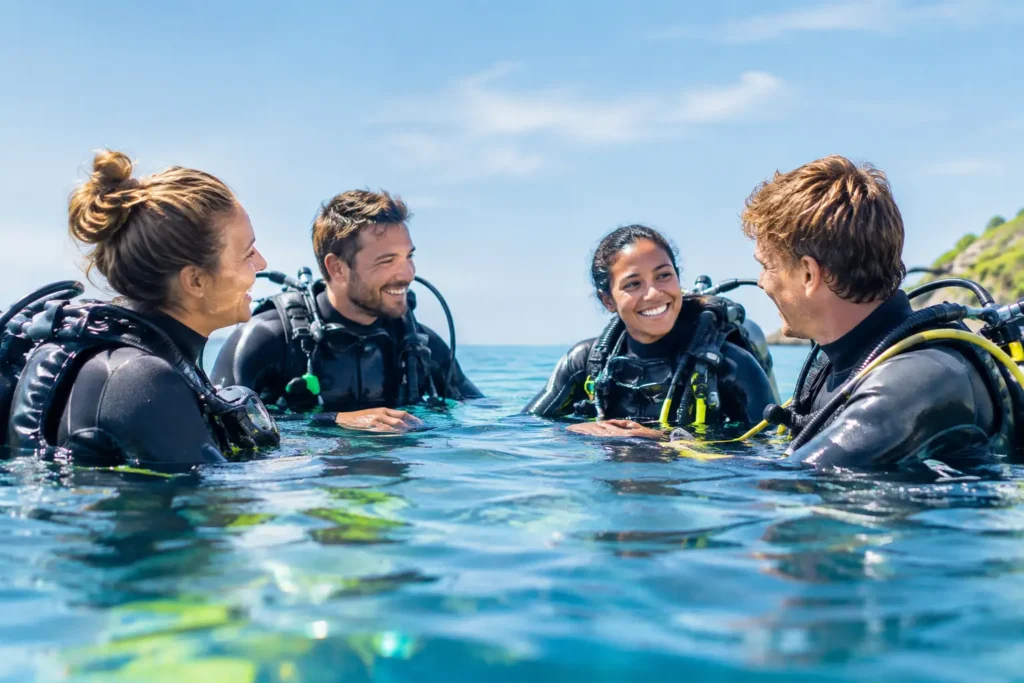
A team can sit through a polished workshop and still fall back into the same office patterns by Monday. Put that same group in clear Caribbean water, give them a shared mission, and something different happens. Scuba team building replaces forced icebreakers with a memorable experience that asks people to communicate clearly, stay calm, and look out for one another.
It is not about turning every colleague into a serious diver. It is about creating the kind of shared first that people talk about long after the trip: the first breath underwater, the first sea turtle spotted together, the moment a nervous teammate realizes they can do this. For corporate retreats, incentive groups, and private teams visiting the Dominican Republic, that feeling has real value.
Why Scuba Team Building Works
The water changes the usual hierarchy. Job titles, meeting rooms, and presentation skills matter less when everyone is learning a new environment together. A senior executive who has logged hundreds of hours underwater may be paired with a first-time diver who needs reassurance. A quiet colleague may become the person who notices a buddy is low on air or points out a hidden ray on the reef.
That is the strength of the experience. Participants do not need to perform enthusiasm on command. They have a real reason to listen, ask questions, and support the people around them.
Scuba also provides a healthy amount of challenge. Before entering the water, guests learn the signals, equipment basics, breathing techniques, and the importance of staying close to their buddy and guide. Underwater, communication becomes simple and intentional. A thumbs-up, an OK sign, a point toward a passing fish – every gesture has a purpose.
The lesson is not that the ocean works like an office. It does not. The lesson is that teams build confidence when they share responsibility, receive calm instruction, and have room to celebrate progress together.
The Best Format Depends on Your Group
A strong scuba team-building day should never be designed around a one-size-fits-all itinerary. The right plan depends on group size, comfort in the water, available time, and whether the goal is a high-energy reward, a meaningful retreat activity, or an introduction to scuba diving.
For complete beginners: Try Scuba
For groups with little or no dive experience, a Try Scuba program is usually the right place to start. Participants receive a proper orientation from a professional instructor, practice essential skills in controlled conditions, and then experience the underwater world with close supervision. No previous certification is required.
This option keeps the day welcoming. Nobody should feel excluded because they have never worn a mask or used a regulator. The pace matters here. Small groups and patient, multilingual instruction give first-timers the space to get comfortable rather than feeling rushed to keep up.
Not everyone will be equally relaxed at first, and that is normal. Some guests take to breathing underwater immediately. Others need extra time at the surface. A good operator treats both reactions with respect. The win is not getting every person to the same depth. It is helping each person feel safe, supported, and proud of what they achieved.
For certified divers: Guided reef and wreck dives
If your team includes certified divers, guided diving can raise the adventure level considerably. Bayahibe offers warm water, strong visibility on many days, colorful reefs, and wreck experiences that make a corporate outing feel far removed from a standard resort activity.
Certified divers can enjoy a more exploratory day while still benefiting from local guidance. Site selection should reflect the group’s experience, sea conditions, and comfort level. The most dramatic-looking dive is not automatically the best choice. A relaxed reef with abundant marine life may produce more conversation and more enjoyment than a demanding site that leaves part of the group anxious or fatigued.
For mixed groups, it often makes sense to create parallel experiences. Certified divers can head out with a guide while beginners complete an introduction program tailored to them. Everyone shares the boat ride, the excitement, and the stories afterward without asking newcomers to take on more than they are ready for.
For a full retreat day: Pair diving with a private boat experience
A scuba session can be the centerpiece of the day, but it does not have to carry the entire agenda. A private boat gives teams time to settle in, enjoy the coastline, swim, snorkel, and share a meal or refreshments at an unhurried pace. That is often where the experience becomes personal.
Early departures are especially valuable for corporate groups. Reaching the water before crowded boats arrive creates a quieter, more exclusive feeling and gives the group more flexibility. A stop near Saona Island, Catalina Island, or the Chavon River can turn a half-day activity into an incentive experience people genuinely want to earn.
Safety Is What Lets People Enjoy the Adventure
The best team-building experiences feel effortless to guests because the planning behind them is precise. Scuba is exciting, but it is never casual. Professional instruction, equipment checks, briefings, weather awareness, sensible group sizes, and experienced boat captains are the foundation of a great day.
Before confirming an itinerary, collect the details that shape safety and comfort: participant count, ages, swimming confidence, certifications, recent diving activity, medical considerations, dietary needs, and the group’s travel schedule. It is also wise to identify anyone who prefers to stay above water. They can still be fully included through snorkeling, beach time, boat-based activities, and the social part of the day.
The most common mistake is treating a group adventure as a race. Trying to fit too many activities into one itinerary can make the day feel like another obligation. Build in time for equipment fitting, questions, breaks, photos, and a relaxed return. When people are not watching the clock, they engage more naturally with one another.
At Sharky’s Crew, nearly two decades of operating in Bayahibe has taught us that local knowledge is more than knowing the prettiest route. It means reading conditions, choosing sites thoughtfully, and knowing when a small change to the plan will make the day better for the people on board.
How to Make the Day Feel Like Team Building, Not a Tour
The activity itself creates connection, but a little intention makes it more meaningful. Start with a clear purpose. Perhaps the group is celebrating a milestone, welcoming new leaders, rewarding a strong quarter, or simply taking time away from the pace of work. Share that purpose briefly before departure, then let the experience do the rest.
Avoid over-programming. A branded towel, a short welcome, or a group photo can be a nice touch. Long speeches and mandatory reflections are less effective when the ocean is right there. Let conversations happen organically during the boat ride and after the water session.
It also helps to recognize different kinds of wins. The person who completes their first underwater skill deserves as much encouragement as the experienced diver who spots an eagle ray. This creates a culture where courage and support matter as much as confidence.
Afterward, give the group time to talk. The best debrief is often simple: What surprised you? What was your favorite moment? Who helped make you feel comfortable? Questions like these bring the experience back to the human level without turning a Caribbean day into a conference room exercise.
Planning Your Scuba Team Building Experience
Book early if your group needs a private boat, personalized schedule, or a particular mix of diving and island time. Retreat calendars tend to be fixed, while the most comfortable private formats require enough preparation to arrange instructors, guides, equipment, food, and transportation around the group.
Be candid about your team’s abilities and expectations. A skilled local crew can tailor an exceptional day, but only when they understand who is coming. If half the group is nervous around water, say so. If your team wants a premium, quiet day rather than a party atmosphere, say that too. Personalization starts with honest planning.
Most of all, choose an experience that leaves room for people to be present. A shared breath underwater, a quiet ride across turquoise water, and the sight of teammates cheering one another on can do more for connection than another round of name tags ever could. Give your team a story worth bringing home.
