


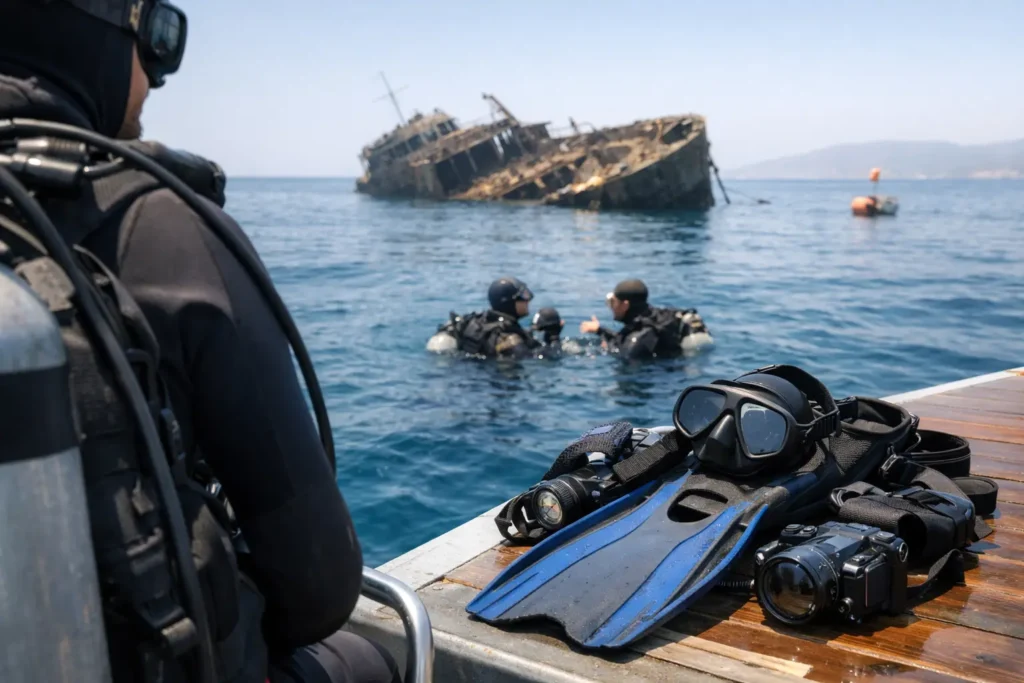
A wreck is not just another reef with a little more history. It has edges, openings, lines, changing light, and sometimes a current that makes every decision matter more. Knowing how to prepare for wreck dive adventures means arriving ready to enjoy the story of the site, not spending the dive catching up with your equipment, your buoyancy, or the plan.
For many certified divers, a Caribbean wreck is a highlight of the trip: a ship transformed into a living reef, with schooling fish around the rails and coral gradually claiming the structure. The experience can be unforgettable, but the best wreck dives begin long before the boat leaves the dock.
How to prepare for a wreck dive before your trip
Start by being honest about your recent diving. If your last dive was years ago, or if you have only logged a few dives since certification, a refresh is a smart move. Wreck environments ask more of your position in the water than an open sandy bottom does. You may need to hold a stable depth beside a hull, descend or ascend on a line, and stay close to your buddy while paying attention to the briefing.
Comfort matters more than chasing a particular depth or photo opportunity. A guided wreck dive can be suitable for a range of certified divers when the site conditions and route match their experience. Penetrating a wreck, however, is a different activity. Going inside an overhead environment requires specialized training, redundant equipment, strict gas planning, and discipline about lines and exits. If you are not trained for it, enjoy the exterior. There is usually more than enough to see.
Before booking, share the useful details with your dive center: your certification level, total dives, date of your last dive, any current concerns, and whether you use air or nitrox. A good crew can then recommend the right wreck, route, and pace rather than placing you in a one-size-fits-all group.
Refresh the skills that protect your dive
The most valuable preparation is not complicated. Practice a controlled descent, a slow ascent, safe mask clearing, and out-of-air procedures with your buddy or instructor. Above all, work on buoyancy and trim. A diver who can stop calmly without using their hands, finning hard, or touching the structure is safer around a wreck and gets a much better look at it.
If you have access to a pool or an easy local dive before vacation, use it. Check your weighting while wearing the exposure protection you will actually use. Saltwater, a thicker suit, and an unfamiliar rental setup can all change the amount of weight you need. Being overweight may feel reassuring at first, but it often leads to constant inflator adjustments, poor body position, and accidental contact with the wreck.
Learn the site plan, not just the site name
A wreck briefing should tell you more than its depth and history. Listen for the entry method, descent reference, maximum depth, current direction, planned route, turnaround point, ascent procedure, and where the boat expects to collect divers. Ask whether the wreck lies upright, whether there are swim-throughs on the exterior route, and what marine life you may encounter.
In Bayahibe, local knowledge can make a meaningful difference. Conditions can shift with wind, current, and boat traffic, while a crew that visits the sites regularly knows which side of a wreck is most protected and how to time the route. Sharky’s Crew plans dives around the conditions rather than treating every wreck day as identical.
Do not be shy about asking what happens if you become separated from your buddy or group. The answer should be clear: look for a brief, agreed period, then ascend safely according to the plan. Improvising a search around a large structure is how a small problem becomes a stressful one.
Prepare your equipment with wreck-specific care
Your usual scuba kit is the starting point, but a wreck dive rewards careful setup. Check that your mask strap is secure, your fins fit without rubbing, and your BCD inflates and deflates smoothly. Test both regulators, verify your tank valve is fully open, and make sure your gauges or computer are easy to read at a glance.
A compact surface marker buoy and reel are useful safety tools when your guide recommends them and you know how to deploy them. A whistle or audible signaling device helps the boat crew locate you at the surface. A small slate is handy for communicating a number, depth, or simple concern underwater. For darker sections beneath an overhang or along the shaded side of a hull, a reliable dive light reveals detail and helps your buddy see you.
Keep accessories streamlined. Dangling octopus hoses, long camera lanyards, loose pressure gauges, and decorative clips can snag on structure or fishing line. Secure everything close to your body before entering the water. This is also why wreck divers should avoid carrying more gear than they can manage comfortably.
If you plan to bring a camera, make it a second priority. Set your camera up on the boat, confirm the housing is sealed, then put it down during the safety briefing. The best image is never worth losing awareness of depth, gas supply, current, or your buddy.
Build a conservative gas and depth plan
Wrecks often have their most interesting features deeper than the surrounding reef. That makes air management especially important. Check your pressure before the descent, at regular intervals during the dive, and whenever the route changes. Do not wait until your guide signals the turn to discover you have used more gas than expected.
Agree with your buddy on the pressure that means “turn the dive” and the pressure that means “end the dive.” Your guide’s plan comes first, but personal limits still matter. If you are cold, anxious, working hard against current, or breathing faster than usual, signal early. Ending a dive with plenty of gas is good judgment, not a missed opportunity.
Stay within your computer’s limits and follow the profile your guide gives you. Avoid dropping deeper simply because the wreck’s lowest point looks close. A few extra feet can shorten your available bottom time, particularly when you are already carrying nitrogen from a previous dive. If you are diving nitrox, analyze your cylinder, label it correctly, and set the right mix in your computer before leaving shore.
Respect the wreck and the life living on it
Wrecks are artificial reefs, but they are still fragile habitats and, in some cases, protected cultural sites. Keep your fins off the structure. Do not pull on rails, enter openings without the proper training, remove souvenirs, or chase animals sheltering in the metalwork.
Good buoyancy protects coral, sponges, and the marine life that has made the wreck home. It also protects you. Rusted metal can be sharp, and touching an apparently solid surface can stir sediment or dislodge something you did not expect. Look closely, stay neutrally buoyant, and let the wreck remain exactly where you found it.
The morning of the dive: slow down and check in
Get real sleep, hydrate steadily, and eat a light meal that agrees with you. Skip heavy drinking the night before. Dehydration, fatigue, and a hangover make equalizing harder and can turn a straightforward day on the boat into an uncomfortable one.
Arrive with enough time to assemble your equipment without rushing. Do a complete buddy check: buoyancy, weights, releases, air, and final confirmation. Tell the crew about ear trouble, congestion, medication changes, or any concern that could affect your ability to equalize. Forcing a descent through ear pain is never the answer. Signal, pause, ascend slightly, and try again only if it clears easily.
Once you are on the boat, let the crew handle the operational details and give them your full attention during the briefing. Confirm hand signals, stay close to your buddy, and choose the pace that lets you remain calm. A wreck rewards patience. The quiet moment beside a coral-covered mast or a school of fish slipping through a doorway will be there when you arrive prepared.
Your best preparation is simple: bring current skills, a tidy setup, a conservative mindset, and the confidence to speak up. Then let the wreck show you why it has become one of the most memorable dives of your Caribbean trip.
