


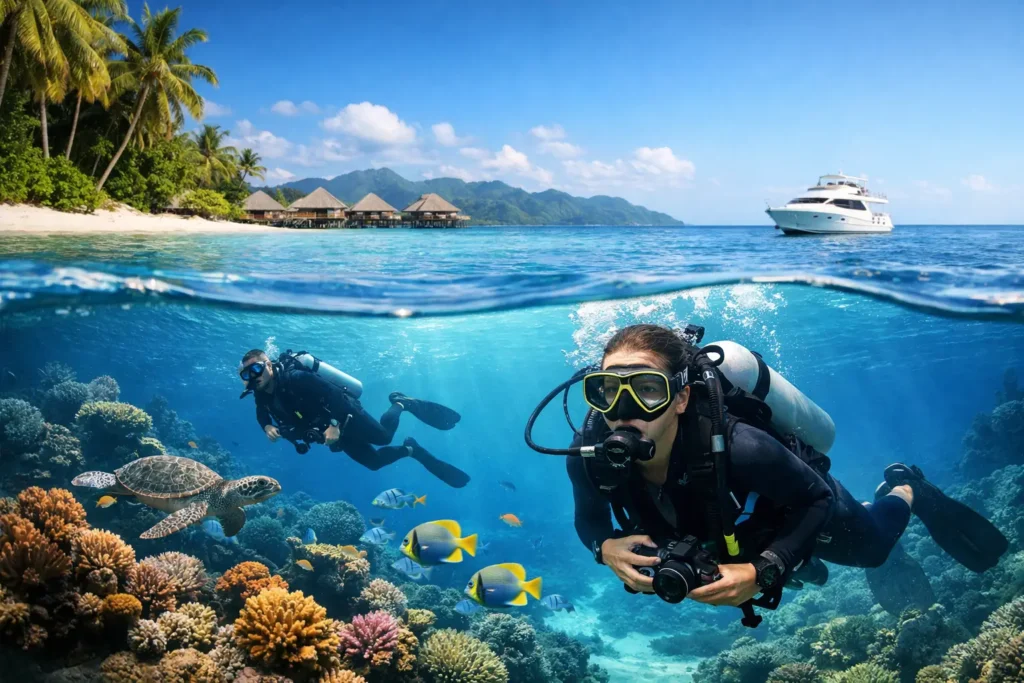
The first boat leaving Bayahibe has a different feeling from the packed excursion boats that follow. The water is still glassy, the reef is quiet, and there is time to talk through the plan before anyone puts on a mask. That is the side of diving tourism worth traveling for: not simply collecting an underwater photo, but having access to a place at the right moment, with people who know how to share it well.
For some travelers, that means taking their first breath underwater with an instructor who does not rush the process. For others, it means a wreck descent, a wide-open reef, or a private ride toward Saona Island with no fixed schedule beyond the weather, the sea, and what your group wants from the day. The Dominican Republic can offer all of it. The real decision is how you want to experience it.
What Makes Diving Tourism Worth the Trip?
A great dive vacation is rarely about depth alone. Visibility, water temperature, marine life, boat travel time, group size, and the quality of guidance shape the day just as much as the site itself. Caribbean conditions are especially appealing because they allow beginners and experienced divers to enjoy the water without fighting cold temperatures or complicated logistics.
Bayahibe stands out because it is close to Parque Nacional del Este and the Saona coastline, where protected waters support healthy reef environments and a broad range of boat experiences. On many days, divers can expect warm water, bright visibility, and manageable conditions that make it easier to settle in, whether it is day one of a course or your hundredth logged dive.
That does not mean every dive is identical, or that “easy Caribbean diving” is a promise with no variables. Wind, current, rain, and seasonal marine activity all matter. A professional crew should read the conditions that morning and choose sites accordingly. The best plan is the one that gives your group a memorable experience without forcing a site that is wrong for the sea or the divers aboard.
Diving Tourism Is Not One Kind of Vacation
The phrase can sound broad, but travelers arrive with very different goals. A couple may want one private Try Scuba session and an afternoon on a quiet beach. A family may need a schedule that lets certified divers go out while non-divers enjoy a boat day. A group of friends might be looking for a reef-and-wreck combination, while a corporate team may want a shared experience that feels adventurous without being intimidating.
The advantage of a small-group or private format is flexibility. It creates room for a few extra minutes practicing mask skills, a slower descent for a nervous new diver, or a change of pace when the kids decide the natural pool is the highlight of the day. It also makes the experience more personal for certified divers. Rather than disappearing into a large line of strangers, you can talk with your guide about buoyancy, marine life, photography, or the kind of sites you enjoy most.
For first-time divers: confidence comes first
A first underwater breath can be thrilling, but it should never feel like a test you have to pass under pressure. The right introduction starts with a clear briefing, properly fitted equipment, and simple skills in shallow water. You should understand how to breathe from the regulator, clear your mask, communicate, and stay close to your instructor before heading farther out.
Try Scuba experiences are a strong option for travelers who have limited time but want to see if scuba is for them. If you know you want a full certification, an SSI Open Water course gives you a foundation that travels with you well beyond the Dominican Republic. The better choice depends on your schedule, comfort in the water, and whether you want scuba to become part of future trips.
Do not choose a first dive based on the lowest price or the fastest promised schedule. Patient instruction, small ratios, and a crew that pays attention to your comfort are worth far more than shaving a few minutes off the briefing.
For certified divers: variety matters
Experienced divers often want more than a pleasant reef. They want a destination with enough variety to make the trip feel layered: colorful coral, schools of tropical fish, different topography, and the occasional wreck or more adventurous outing. Bayahibe gives guides options to match depth, current, and experience levels while keeping boat rides practical.
A reef dive can be relaxed and full of detail if you slow down. Look beneath ledges, along coral heads, and into the blue rather than racing from one “big” sighting to the next. Wreck dives bring a different kind of atmosphere, with structure, history, and fish life that has made the site its own. Spearfishing, where permitted and organized responsibly, adds another level of focus and requires sound local knowledge, appropriate skills, and respect for regulations.
Tell your operator what you have done recently, not only your certification level. A diver with an Advanced card but no dives in three years needs a different plan from someone diving monthly. Honest information lets the crew build the right day.
Why the Boat Experience Changes Everything
A dive site may be beautiful, but the boat is where your day begins and ends. It affects comfort, timing, safety, and the tone of the whole outing. On a well-run boat, equipment is organized, briefings are easy to hear, water and shade are available, and the captain has a clear route in mind. There is no need for theatrics. Quiet competence is what guests remember when the sea gets choppy or a plan needs to change.
Private boat excursions also broaden what a water-based vacation can be. You may combine snorkeling, beach time, and a stop at Saona Island or Catalina Island with a schedule built around your group. The Chavon River offers a dramatic contrast to open Caribbean water, particularly for travelers who want scenery and a slower cruise as part of the day.
Leaving early is often the simplest luxury. Reaching a famous beach or snorkeling area before the largest boats arrive can turn a crowded checklist stop into a genuine Caribbean escape. It is now or never if your idea of a vacation includes hearing the water instead of a speaker system from the next catamaran.
How to Choose a Responsible Dive Operator
The most polished photos do not tell you how an operator handles safety. Ask practical questions before booking: Who leads the dive? What certification agency do they teach through? How many guests are assigned to each guide or instructor? Is the itinerary adapted for weather and experience? What happens if a guest is uncomfortable in the water?
Look for a center that treats safety as part of hospitality, not as a cold set of rules. Good crews explain why a site changes, help guests with equipment without making them feel inexperienced, and make conservative decisions when conditions call for them. They also respect local ecosystems. Reefs are not props, and marine life is not there to be chased, touched, fed, or crowded for a video.
Your own choices matter, too. Maintain neutral buoyancy, secure dangling gauges and cameras, use reef-safe habits, and follow your guide’s direction around wildlife. Take only photographs and leave the reef exactly where it belongs. The places that make diving tourism special stay special only when visitors and operators both protect them.
Plan for the Experience You Actually Want
Be clear about your priorities before you reserve. If your group includes non-divers, ask how the boat day works for everyone. If you are prone to seasickness, plan ahead and tell the crew. If you have not dived recently, build in time for a refresher rather than assuming your body will remember every skill. If a private day matters to you, book it early instead of hoping a crowded trip will somehow feel exclusive.
Bring a swimsuit, sun protection, a towel, and a willingness to listen. Let the crew handle the local details. A family-run team with years on these waters knows which route is smoother, when a site is at its best, and how to make a first-timer feel looked after without slowing down the whole group.
At Sharky’s Crew, the goal is not to push every guest into the same itinerary. It is to make the water feel like it was waiting for you – whether that means a careful first descent, a two-tank day, or a private boat pointed toward a beach before the crowds arrive.
Choose the Caribbean experience that leaves room to breathe, look around, and stay a little longer when the moment is right. Those are the days people talk about long after the sand is gone from their shoes.
