


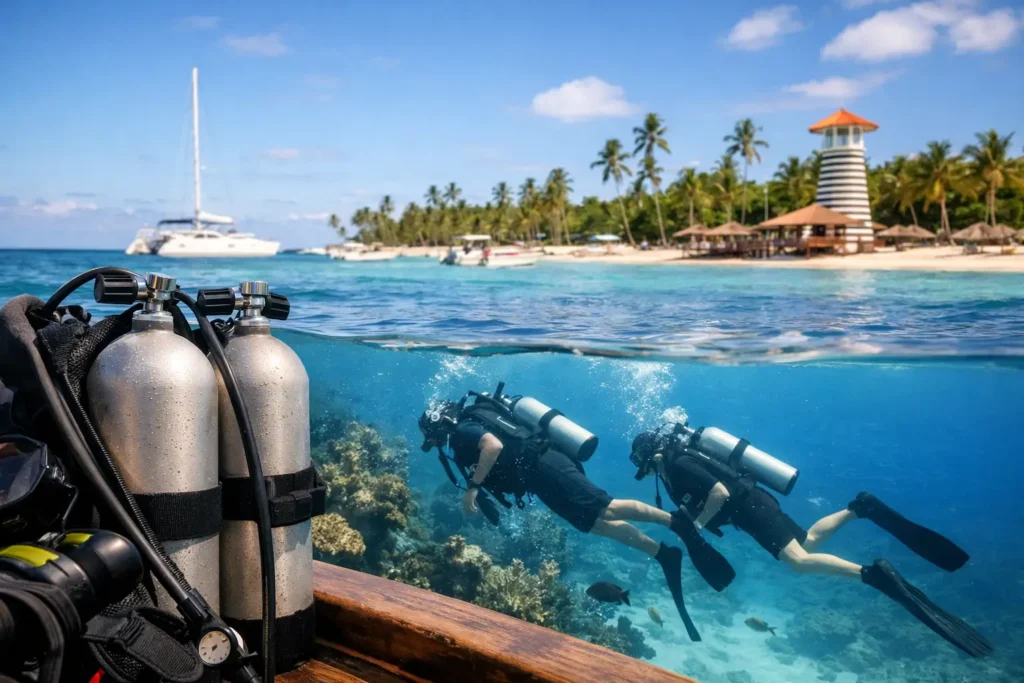
Most travelers arrive in Bayahibe thinking they need to choose between easy Caribbean vacation days and serious scuba. The truth is, a good bayahibe scuba diving travel guide should tell you that this stretch of coast gives you both. You can wake up to flat, blue water, spend the morning on a reef or wreck, and still be back in time for a long lunch, beach time, or an early private boat run before the island crowds build.
That balance is what makes Bayahibe different. It is one of those rare destinations where first-time divers, vacationing couples, certified enthusiasts, and families can all have a strong day on the water without feeling like the trip was built for somebody else.
Why Bayahibe works so well for dive travel
Bayahibe has a practical advantage that matters once you are actually planning your trip, not just dreaming about it. The area sits close to protected waters, established dive sites, and some of the Dominican Republic’s most famous marine landscapes. That means less time spent on a long transfer to reach good diving and more time in the water.
Conditions are often friendly by Caribbean standards. Warm water, generally solid visibility, and a mix of reefs, walls, shallower sites, and wrecks make it easier to match the day to the diver. If you are new, you are not forced into intimidating conditions. If you are certified and want more than a casual reef loop, you have options that still feel rewarding.
There is also a rhythm here that suits travelers who value comfort. Bayahibe is not just for divers chasing maximum depth or technical bragging rights. It is for people who want a premium day on the water with smart logistics, experienced local crews, and sites that deliver real beauty without turning every outing into a major expedition.
Bayahibe scuba diving travel guide to seasons and conditions
The good news is that Bayahibe is not an ultra-narrow seasonal destination. Diving is possible year-round, and for many travelers the best time depends less on a single perfect month and more on what kind of trip you want.
Winter and early spring tend to be especially attractive for visitors from the US who want warm water and reliable vacation weather. This is a popular travel window, so the upside is excellent energy and generally strong conditions, while the trade-off is that hotels, beaches, and boats can feel busier overall.
Late spring and summer can be fantastic if you want a more relaxed feel. Water temperatures are warm, the sea can be beautifully calm, and the mood is often less crowded than peak holiday periods. The trade-off is heat on land and the possibility of weather shifts, especially later in the season.
Fall can reward flexible travelers with quieter conditions and good value, but it is the time of year when you need to pay closer attention to forecasts. No honest guide should pretend the Caribbean ignores storm season. A professional operator watches weather, adapts routes, and is willing to change plans when safety calls for it.
As for water conditions, many divers can expect warm temperatures that make lengthy days on the boat pleasant and reduce the need for thick exposure protection. Visibility often ranges from good to excellent, though it can change with wind, swell, and recent weather. If crystal-clear photos are your priority, ask about recent conditions instead of assuming every day looks like the brochure.
What kind of diving you can expect
Bayahibe’s appeal is variety. Reef diving is the backbone of most trips, and that is not a compromise. Healthy coral formations, tropical fish life, sponges, and the easy visual pleasure of bright Caribbean water make these dives satisfying even for experienced divers who have logged plenty of resort destinations.
Then there are wrecks, which add another layer. For certified divers, wreck sites can bring structure, scale, and a different kind of marine life interaction. They often turn a pleasant tropical dive into something more memorable. If wreck diving is a priority, ask in advance how deep the site is, what current is typical, and whether the operator treats it as a true guided experience or just another stop on a crowded cattle-boat schedule.
Some sites suit training and first-time experiences particularly well. That matters more than many travelers realize. A first breath underwater should feel controlled, supported, and enjoyable. Calm entries, manageable depth, and clear briefings make the difference between a rushed vacation activity and the start of a real love for diving.
For certified divers, the best days often come from pairing sites smartly rather than trying to chase the biggest name. One reef with excellent light and marine life, followed by a wreck or deeper site, usually makes for a more rounded day than two dives chosen only for marketing appeal.
Is Bayahibe good for beginners?
Yes, and that is one of its strongest selling points.
If you have never dived before, Bayahibe is a strong place to try because the environment can be forgiving and the experience does not need to feel extreme. Warm water reduces stress. Shorter boat rides to many sites can make the day easier. And when an operation runs in small groups with attentive instructors, beginners get the pacing they need instead of feeling like they are trying to keep up with a boat full of certified divers.
That said, beginner-friendly does not mean every day is identical. Sea state changes, confidence levels vary, and some people are natural in the water while others need a little more time. The right operator will tell you honestly whether a Try Scuba session, a private guide, or a full Open Water course makes the most sense.
Families and couples often do especially well here because one person can be learning while another is already certified, and both can still enjoy the day. That flexibility is a big part of Bayahibe’s appeal.
Is it worth it for experienced divers?
Also yes, if your expectations are realistic.
Bayahibe is not trying to be a destination defined by huge pelagic action every single day. If that is your only benchmark, you may be looking for a different style of trip. What it does offer is consistently enjoyable Caribbean diving, attractive reef topography, wreck options, warm water, and the chance to build a trip around comfort as much as underwater time.
For many experienced divers, that is exactly the point. You can get in quality dives without sacrificing the rest of your vacation. You can also mix underwater days with private excursions to places like Saona or Catalina and keep the whole trip feeling special instead of repetitive.
Choosing the right dive operator in Bayahibe
This is where the trip can go from good to excellent.
A bayahibe scuba diving travel guide should not just talk about fish and visibility. It should tell you to pay attention to boat size, guide ratio, safety culture, and how personalized the day actually feels. There is a major difference between a shop that processes guests and a crew that learns your experience level, adjusts site selection, and briefs you like your dive matters.
Ask how groups are structured. Ask whether first-timers are separated from advanced divers when needed. Ask what languages are available for instruction. Ask how the crew handles changing conditions. These are not small details. They shape your confidence before you even hit the water.
If you want a more tailored day, small-group and private formats are worth the extra investment. They usually mean a calmer pace, more direct attention, and routes chosen around your goals instead of the boat’s easiest logistics. For travelers who only have a few days in destination, that can be the difference between checking a box and having one of the most extraordinary scuba diving experiences on the planet.
Practical planning for your trip
Give yourself more than one dive day if you can. A single outing is fun, but two or three days let you adapt around weather, explore different site types, and settle into the experience.
Pack lightly but smartly. Your certification card, logbook information, reef-safe sun protection, dry clothes, and whatever personal gear helps your comfort are usually more important than overpacking equipment. If you have your own mask or dive computer and prefer the familiarity, bring them. If not, good rental gear from a professional center is usually more convenient for a vacation trip.
If you are prone to seasickness, prepare before the boat leaves, not after. Even on calm Caribbean mornings, prevention is easier than recovery.
And do not overbook your itinerary. One of the mistakes travelers make is treating every day like a race. Bayahibe rewards a little breathing room. A morning dive, a slow lunch, and an afternoon on the beach often feels better than stacking every possible excursion back to back.
One local advantage seasoned travelers appreciate is being able to combine scuba with well-timed boat days to iconic places nearby. That is where a crew with real regional knowledge stands out. A Bayahibe-based team like Sharky’s Crew knows how to build around conditions, crowds, and your pace rather than handing you the same template everyone else gets.
What kind of traveler enjoys Bayahibe most
Bayahibe is especially strong for travelers who want quality without friction. Couples like it because the days can feel romantic and active at once. Families like it because different skill levels can still fit the same plan. Small private groups and corporate travelers like it because a personalized boat and dive setup feels more premium than a generic excursion line.
If your ideal dive trip means waking up early, getting on a well-run boat with a crew that knows the water cold, and returning with the feeling that the day was built around you, Bayahibe deserves a serious look.
The best approach is simple: do not chase the loudest brochure promise. Choose the crew, timing, and dive style that fit your trip, and Bayahibe will usually give you the rest.
