


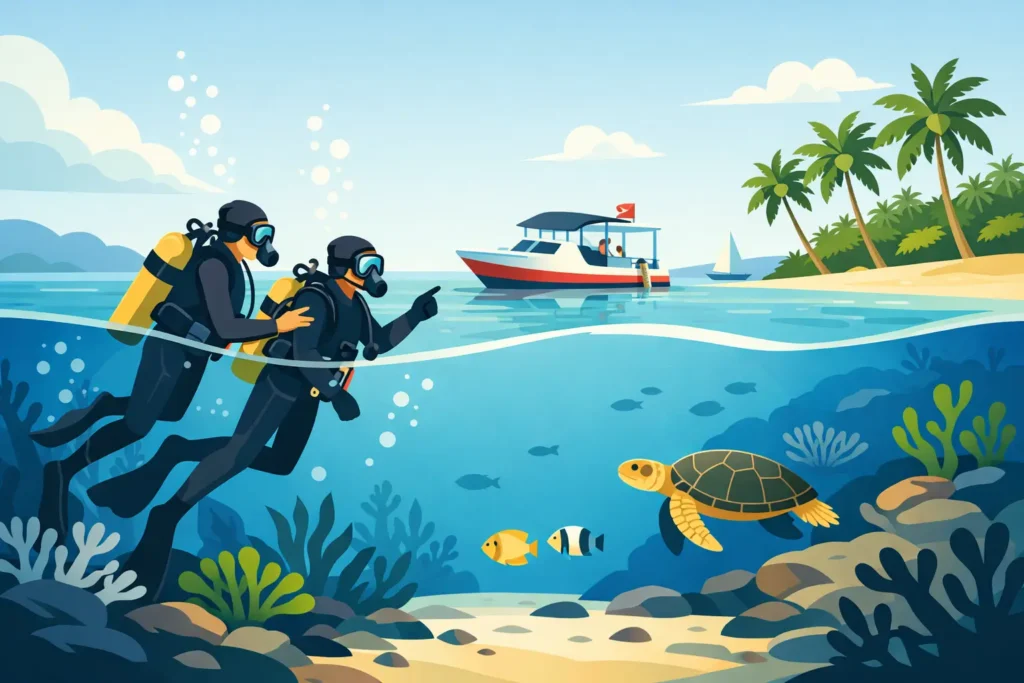
Warm, clear water, short boat rides, and reef life that starts showing up almost as soon as you descend – that is why an SSI open water course Bayahibe is such a smart choice for first-time divers. If you are already planning a Dominican Republic vacation, this is one of those rare add-ons that can completely change the trip. Instead of watching the ocean from shore, you leave with a real certification and a skill you can use anywhere in the world.
That matters more than most people realize. Learning to dive is not just about checking a box on vacation. The right course can make you feel calm underwater, confident with equipment, and genuinely excited to keep diving long after you fly home. The wrong course can feel rushed, crowded, and forgettable. Bayahibe tends to favor the first outcome, especially if you care about water conditions, personalized attention, and access to quality sites without spending half the day in transit.
Why Bayahibe works so well for beginner divers
Bayahibe has a practical advantage that experienced divers understand immediately and beginners appreciate the moment they arrive – the ocean here is often friendly. Water temperatures are warm for most of the year, visibility is frequently excellent, and many training conditions are far less intimidating than what students face in colder or rougher destinations.
For an open water course, that changes everything. When you are not fighting heavy current, thick exposure suits, or poor visibility, it is easier to focus on buoyancy, breathing, mask skills, and basic confidence underwater. You spend less energy managing discomfort and more energy actually learning.
There is also the vacation factor. Bayahibe gives students access to beautiful reefs, marine life, and boat diving that feels special from day one. Your certification dives do not need to feel like classroom leftovers. They can feel like the beginning of the kind of diving you pictured when you first thought, It’s now or never.
What the SSI Open Water Course in Bayahibe includes
An SSI Open Water course is designed to take you from complete beginner to certified diver through a mix of academic learning, confined water skill development, and open water training dives. The exact flow can vary slightly depending on scheduling and how your dive center organizes private or small-group instruction, but the fundamentals stay the same.
You begin with the theory side of scuba. This covers how pressure affects the body, how equipment works, communication underwater, dive planning, and the core safety rules every diver needs to understand. SSI’s learning system is accessible and practical, which is a big plus for travelers who want to prepare before arrival and spend more vacation time in the water.
Then comes skill training. You learn how to set up and use your gear, clear water from your mask, recover your regulator, control buoyancy, and respond to common underwater situations in a calm, systematic way. For nervous beginners, this stage is often where the mental shift happens. Scuba starts to feel less mysterious and much more manageable.
The course finishes with open water dives where you apply those skills in actual sea conditions. This is where Bayahibe really shines. Instead of seeing certification as a hurdle, many students end up remembering these dives as a highlight of the trip.
SSI open water course Bayahibe: who it is best for
This course works especially well for adults, couples, families with eligible teens, and small groups who want a meaningful activity rather than a rushed tourist experience. If you have always wanted to get certified but kept putting it off, Bayahibe is one of the easier places to finally do it.
It is also a strong fit for travelers who value personal attention. Not everyone learns at the same pace underwater. Some students are comfortable right away. Others need a little extra time with mask clearing, equalizing, or simply getting used to breathing through a regulator. A smaller, more hands-on training style makes a huge difference.
That said, the best course format depends on you. If your top priority is the cheapest possible certification, you may find larger group options elsewhere. If your priority is quality instruction, comfort, flexibility, and a smoother first diving experience, Bayahibe makes a stronger case.
What to expect day by day
Most students want to know one thing before booking – how much of my vacation will this take? The answer depends on whether you complete the academics before arrival and whether you choose a standard schedule or a more private, tailored format.
In many cases, the online theory can be done in advance. That frees up your time in Bayahibe for pool or confined water training and your checkout dives in the ocean. Some guests spread the course across a few days so it feels relaxed. Others prefer a tighter schedule to leave room for island excursions, snorkeling, or extra dives after certification.
This is where a customer-focused dive center matters. A good operator does not force every student into the same rigid timetable. If you are traveling as a couple and one person is nervous while the other learns quickly, flexibility matters. If you are visiting with family, pacing matters. If you are on a short vacation, organization matters.
The real difference between private and group training
Not every open water course feels the same, even when the certification card is identical. This is one of the most overlooked parts of booking scuba training on vacation.
In a larger group, the pace is shared. That can be fine if everyone is equally comfortable, but it is not always ideal. One student may need more practice while another is ready to move on. Instructors do their best, but large groups naturally limit how personalized the experience can be.
Private or small-group instruction usually feels calmer and more efficient. You get more direct feedback, more time to ask questions, and more room to build confidence at your own pace. For first-time divers, that often leads to better buoyancy, better habits, and a much more enjoyable start to diving. It is not just about comfort. It can genuinely improve the quality of the training.
Safety, conditions, and the “can I really do this?” question
A lot of future students quietly ask the same thing: What if I am excited but also a little anxious? That is normal. Plenty of certified divers started with nerves.
The good news is that beginner-friendly conditions make a measurable difference. Warm water helps. Good visibility helps. Calm briefings, patient instruction, and a crew that treats you like a person instead of a seat number help even more. The goal is not to pressure anyone into pretending they are fearless. The goal is to teach skills in a way that replaces uncertainty with control.
You also need to be realistic. If you have serious anxiety in the water, trouble equalizing, or limited time and no flexibility, your course may require a bit more planning. That does not mean you cannot do it. It means choosing the right setup matters.
Is Bayahibe a good place to continue diving after certification?
Absolutely – and that is part of the appeal. One reason people love doing their course here is that certification does not have to be the end of the experience. Once you finish, you are already in one of the Caribbean’s most rewarding dive regions.
That means your first fun dives as a certified diver can happen right away. You can continue exploring reefs, enjoy easy conditions while your new skills settle in, and build experience without switching destinations. For many travelers, that immediate next step is what turns scuba from a one-time vacation activity into a real hobby.
It also helps that Bayahibe offers variety. Some divers want gentle reef dives packed with tropical fish. Others quickly get curious about wrecks, advanced training, or longer-term progression. Starting in a place with that range gives you options.
Choosing the right dive center for your SSI Open Water Course in Bayahibe
This is where you should be selective. Price matters, but it should not be the only factor. You are trusting a team to teach you a life-support activity in the ocean. That deserves more than a quick comparison based on who looks cheapest online.
Look for a center that prioritizes safety standards, keeps groups small, communicates clearly, and makes the course feel tailored rather than transactional. Ask how training is scheduled, how much individual attention you can expect, and whether the team is used to working with complete beginners, couples, or families. Those details shape the whole experience.
A family-run, highly personalized operation often stands out here because the service feels more consistent from first message to final dive. You are not just processed through a system. You are hosted.
Diving DR is a strong example of that Bayahibe style – premium, organized, multilingual, and built around personal attention rather than volume. For travelers who want their first certification to feel safe, polished, and memorable, that difference is hard to miss.
If you have been waiting for the right place to learn, this may be it. Bayahibe gives you the conditions, the scenery, and the kind of first underwater experiences that make people want more – and that is exactly how scuba should begin.
