


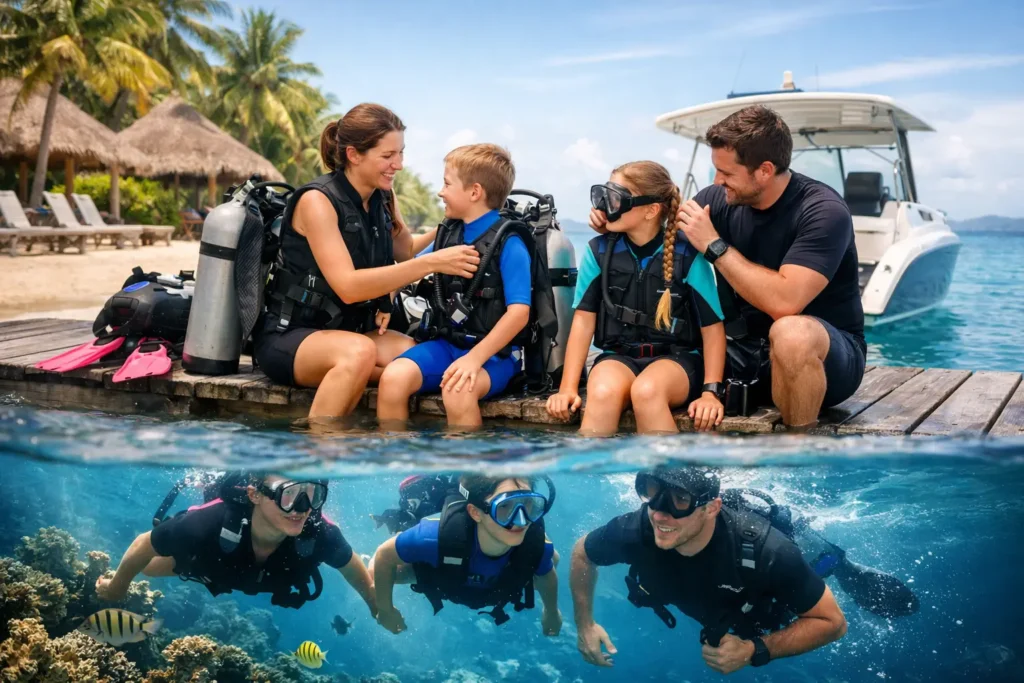
The best family dive days do not begin with everyone rushing into wetsuits at 7 a.m. They begin with a plan that gives each person something to look forward to: a first underwater breath for one traveler, a healthy reef or wreck for another, and a beautiful boat day for anyone who would rather stay above the surface. Knowing how to plan family dive trip days around those different expectations is what turns a vacation activity into a story everyone brings home.
Start by planning for the least experienced person
A family dive trip should never be built around the most confident diver in the group. Build it around the person who has the most questions, the youngest eligible participant, or the traveler who is not sure whether scuba is for them yet. That approach keeps the day relaxed and gives experienced divers a better experience too, because nobody is trying to force the pace.
Before booking, have an honest conversation about everyone’s comfort level. Separate the group into certified divers, complete beginners, children who may be old enough for junior training, and non-divers. A certified parent may be ready for a deeper wreck dive, while a teenager may be better suited to a supervised shallow-water experience. Both can be part of the same vacation, but they may not belong on the same dive profile.
Age is only one factor. Swimming confidence, recent diving experience, ear equalization, anxiety around open water, and any medical conditions matter just as much. A professional dive center should ask about these details before putting a family in the water. If someone has a health concern or takes regular medication, ask their physician and complete the required dive medical paperwork early. Do not leave that conversation for the dock.
Choose a destination that gives you options
The right destination makes family logistics much easier. Look for warm water, generally calm conditions, short boat rides to dive sites, and a mix of shallow reefs and more advanced sites. Those details reduce fatigue, motion sickness, and the amount of time children spend waiting for the fun to begin.
Bayahibe is especially well suited to this kind of trip because the coast offers protected reef areas, clear Caribbean water, and access to sites for different experience levels. A family can pair a beginner-friendly reef session with a private beach stop, a Saona Island outing, or time on the Chavon River instead of making every day revolve around diving.
That flexibility matters. If wind picks up, a child wakes up tired, or someone decides they would rather snorkel, the vacation should still feel like a win. A destination with only one type of excursion can make a family feel trapped by the itinerary. A destination with choices lets you adjust without disappointment.
Think beyond the dive itself
Ask how long the full experience takes, not just how many minutes are spent underwater. A two-tank morning may sound simple, but transportation, equipment setup, boat travel, surface intervals, lunch, and return transfers can turn it into a full-day commitment.
For families with younger children or first-time divers, a shorter private outing may be the smarter choice. You can focus on one quality underwater experience, then spend the afternoon at the pool, on the beach, or exploring together. There is no prize for packing every hour with activity.
Book the right experience for each family member
Not every newcomer needs to commit to a certification course on the first day of vacation. A Try Scuba experience can be a great introduction for adults and eligible young participants who want to discover how breathing underwater feels under close professional supervision. It is also a useful confidence check before deciding whether a full SSI Open Water course is the right next step.
Certified divers should be equally clear about their goals. Do they want colorful shallow reefs, a wreck, photography opportunities, a private guide, or multiple dives over several days? A family trip can include a dedicated dive day for certified adults while the rest of the group enjoys a boat excursion with snorkeling and beach time. Trying to make one boat schedule satisfy every wish often creates unnecessary compromise.
Private and small-group formats are particularly valuable for families. They allow the crew to slow down for a nervous beginner, adapt the route to sea conditions, and avoid the feeling that your children are being rushed by a large excursion timetable. At Diving DR, that personalized pacing is part of the experience, not an add-on afterthought.
Schedule diving early in the trip, not at the end
Plan your first dive activity near the beginning of the vacation. If a diver needs time to get comfortable, complete a course, adjust equipment, or reschedule because of weather, you have room to do it. Booking the only dive for the final afternoon creates pressure that no family needs.
Keep flying in mind as well. Scuba diving and air travel require appropriate surface time between the last dive and a flight. The exact recommendation depends on the dive activity and your training guidance, but the practical family rule is simple: do your diving before the final day and leave a generous buffer before departure. This is one of the easiest details to plan and one of the worst to ignore.
Avoid scheduling a demanding dive day immediately after a late arrival, a long road transfer, or a night of too little sleep. Hydration, rest, and a calm start make a real difference to comfort underwater. The Caribbean is supposed to feel easy.
Pack for comfort, not just photos
Most dive operators provide the core scuba equipment, but families should still bring the personal items that make a boat day more comfortable. Reef-safe sunscreen, hats, sunglasses, reusable water bottles, dry clothes, light cover-ups, and motion-sickness medication if needed can prevent small problems from taking over the day.
If anyone has a mask they already love, bring it. A well-fitting personal mask can make a first dive far more enjoyable. For children, consider a rash guard for sun protection and warmth between water activities. Even in warm destinations, a long boat ride after a swim can feel chilly.
Bring only what you can manage easily. A crowded boat bag full of valuables, extra electronics, and loose items creates stress. Keep passports and important documents safely stored at the hotel unless specifically needed, and ask the crew what secure storage is available for phones and cameras.
Set family expectations before boarding
The most useful briefing may happen at breakfast. Explain that diving is calm, slow, and team-based. Nobody has to prove bravery. Anyone can ask a question, signal that they are uncomfortable, or choose to stay on the boat. When children and hesitant adults know they have a real choice, they are often more willing to try.
For certified divers, this is also the moment to agree on priorities. One parent may want to focus on the child’s first experience while the other wants time for photos or a second dive. Decide that before the boat leaves. You can rotate support roles over multiple days rather than expecting everyone to get the same experience at the same moment.
A good crew will conduct a proper safety briefing, explain hand signals, review equipment, and make the plan clear. Listen closely, encourage your children to do the same, and do not hesitate to ask for clarification. Professionalism should feel reassuring, never intimidating.
Leave room for the moments you did not plan
The family memory may be a sea turtle passing over the reef. It may be your child announcing they want to become certified. It may be the quiet ride back from Saona, with wet hair, salty skin, and nobody looking at a screen.
Plan carefully enough that safety and comfort are handled, then leave space for the Caribbean to surprise you. That is where a family dive trip becomes more than an item on the vacation schedule.
