


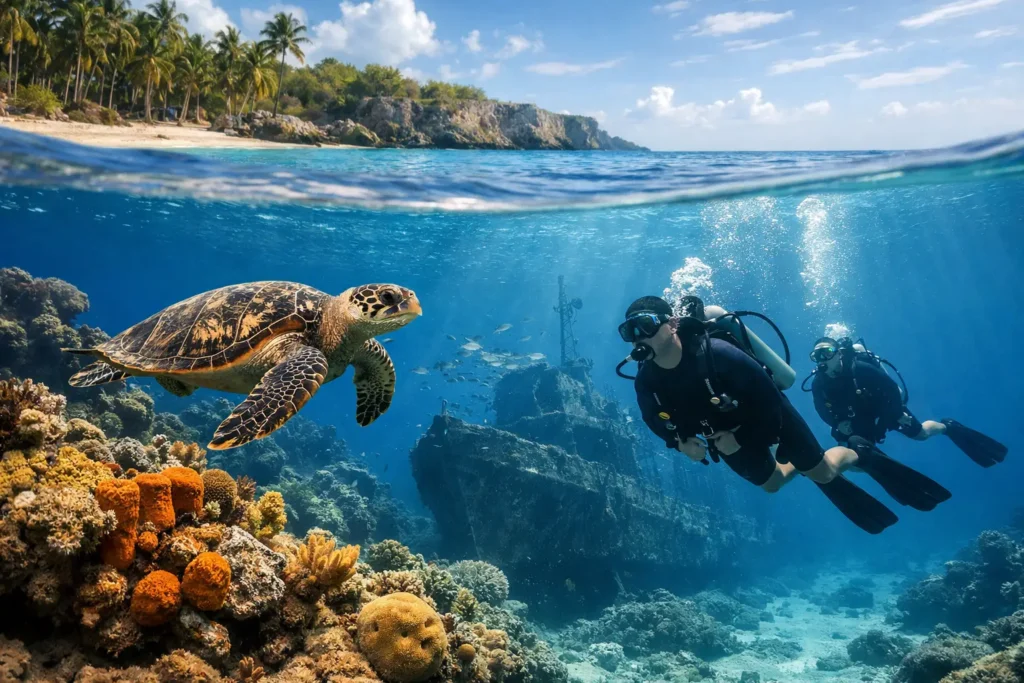
A parrotfish flashes cobalt blue across a coral ledge, then disappears into water so clear the reef seems close enough to touch. That is why the best Dominican Republic dive spots are not simply names on a map. The right site depends on your certification, the day’s conditions, and whether you want an easy first descent, a wreck with real character, or a remote reef day that feels far from the resort shoreline.
For consistently calm Caribbean conditions, Bayahibe is hard to beat. It sits beside Parque Nacional del Este, with protected reef systems, short boat rides, and access to the Saona coastline. Water temperatures are generally comfortable year-round, while visibility is often at its best when wind and sea conditions settle. Here are the sites worth planning a trip around.
Best Dominican Republic Dive Spots for Every Level
1. St. George Wreck, Bayahibe
The St. George is the Dominican Republic’s signature wreck dive and a favorite for good reason. This large former cargo ship rests upright in roughly 130 feet of water, with the upper sections accessible to advanced divers at shallower depths. Its open structure, towering profile, and coral-covered rails create the kind of scene divers remember long after vacation ends.
Schools of grunts, jacks, and barracuda move around the wreck, while sponges and soft corals steadily claim more of the steel each season. Conditions can vary with current and depth, so this is best for certified divers with solid buoyancy control. It is not the site for rushing through a first advanced dive. Take time to circle the exterior, watch the blue water beyond the hull, and let the wreck reveal itself.
2. Atlantic Princess, Bayahibe
The Atlantic Princess offers a very different wreck experience. Smaller, shallower, and wonderfully photogenic, it is a strong choice for Open Water divers who want their first purpose-sunk shipwreck without the commitment of a deep profile.
The vessel has become part of the reef. Marine life gathers around its outline, and sunlight reaches the structure beautifully on clear mornings. It also works well as part of a two-tank day with a nearby reef, especially for couples or families with different comfort levels underwater.
3. Dominicus Reef
Not every memorable dive needs a wreck. Dominicus Reef is a colorful, easygoing reef dive where healthy coral formations, fans, and schools of tropical fish make the entire route feel alive. It is often suitable for newer certified divers, refresher dives, and guests taking their first guided boat dives in the Caribbean.
This is the kind of place where slow is better. Hover over the reef instead of chasing the next feature. Look into small crevices for lobster and juvenile fish, and keep an eye above the reef for passing jacks. On a calm day, the relaxed conditions make it an excellent introduction to Bayahibe diving.
4. Guaraguao Reef
Guaraguao is a reliable choice when you want depth options and plenty of reef detail. The site can offer coral ridges, sandy channels, and sections where divers at different experience levels can enjoy the same outing with an appropriate route.
It is particularly good for practicing the habits that make every dive better: controlled descents, careful finning, and taking the time to spot the smaller life. Trumpetfish, moray eels, and schooling reef fish are often the reward for divers who do not race over the coral.
5. La Cueva
La Cueva, or “the cave,” brings a little extra atmosphere to a reef dive. This is not a technical cave dive. Rather, it is known for reef formations and swim-through-style features that add a sense of discovery while staying within recreational diving limits when conditions and training are appropriate.
The appeal is the changing light. A bright reef can suddenly give way to a shadowed overhang, then open back into blue Caribbean water. Divers should always follow a guide’s route, respect overhead-environment limits, and skip the site if they feel uneasy with enclosed spaces. Confidence is built one comfortable experience at a time.
Saona’s Reefs: The Remote Side of the Caribbean
6. El Faro, Saona Island
A day around Saona Island is about more than reaching a famous beach. Offshore, sites such as El Faro can deliver pristine-feeling reef scenery, with less boat traffic and a genuine sense of distance from the mainland. Coral gardens, reef fish, and broad blue-water views make the journey worthwhile.
Because these sites are more exposed to weather and require longer navigation, they are not an automatic daily option. The best captains make the call based on wind, swell, and the group’s experience. When the conditions line up, a Saona dive day can feel like a private Caribbean escape rather than a standard resort activity.
7. Catuano Reef, Saona Island
Near the eastern edge of Saona, Catuano Reef is valued for its natural beauty and quieter setting. Expect a reef landscape with hard corals, soft corals, and the kind of fish activity that rewards a patient observer. It is a lovely option for divers who have already checked off the famous wrecks and want a less structured, more exploratory day.
This area also makes a compelling combination for private groups. A morning dive can be followed by time on a calm beach or a stop in shallow water, paced around the group rather than a crowded excursion schedule. That flexibility matters, particularly for mixed groups of divers and non-divers.
8. Catalina Island’s Aquarium
Catalina Island’s Aquarium is often named among the country’s best shallow reef experiences. The name fits: colorful fish are the headline, with clear water and bright reef structure creating a lively underwater scene that photographs well even without complicated dive profiles.
It is an excellent pick for newly certified divers and anyone who wants a high-reward, low-stress dive. More experienced divers may appreciate it as a relaxing second tank after a deeper site. The trade-off is popularity. Timing your departure early can make a major difference in how peaceful the reef feels.
9. The Wall, Catalina Island
Catalina’s Wall offers a sharper change of scenery. The reef drops away, creating a dramatic edge where divers can watch the wall descend into deep blue water. The experience is visually powerful, but it demands disciplined depth awareness. It is easy to become absorbed in the view and drift deeper than planned.
For Advanced Open Water divers and confident certified guests, the wall can be a highlight of a multi-site itinerary. Stay close enough to the reef to enjoy its detail, glance into the blue for larger passing fish, and follow the profile your guide sets. The best wall dives feel unhurried, not ambitious.
10. Silver Bank, for Whale Encounters
Silver Bank belongs in any honest conversation about extraordinary Dominican Republic water experiences, though it is very different from a standard scuba day. During humpback whale season, permitted liveaboard-style expeditions offer carefully managed in-water encounters under strict rules. Scuba diving with the whales is not the format. Snorkeling and surface observation are typically the focus.
This is a specialized trip requiring advance planning, favorable weather, and an operator authorized for the area. It is not a substitute for a Bayahibe reef itinerary, but for travelers visiting at the right time of year, seeing humpbacks in their breeding grounds can be one of the Caribbean’s most moving wildlife experiences.
How to Choose the Right Dive Day
The best site is not always the deepest or most famous one. First-time divers are usually better served by a protected, shallow reef with an instructor who keeps the pace calm and personal. Certified divers returning after a long break may benefit from a refresher before heading to a wall or deep wreck. Experienced guests can build a day around the St. George, remote Saona reefs, or a mix of wreck and reef profiles.
Weather has the final say. Wind direction can change surface conditions quickly, and responsible crews adjust routes instead of forcing a plan that looked good on paper. Ask about boat travel time, expected depth, current, and whether the site is suitable for your exact certification level. Those details turn a good dive into a comfortable, confident one.
A small-group format also changes the day. There is more room to match buddy teams, spend extra time on skills, and choose a route based on what the group actually wants to see. Sharky’s Crew, based in Bayahibe for nearly 20 years, plans dive days around those local conditions rather than sending every guest through the same preset schedule.
Bring curiosity, listen closely to the briefing, and leave room in the itinerary for the crew’s local recommendation. The reef that looks ordinary in a brochure may be the one that gives you your favorite moment underwater.
