


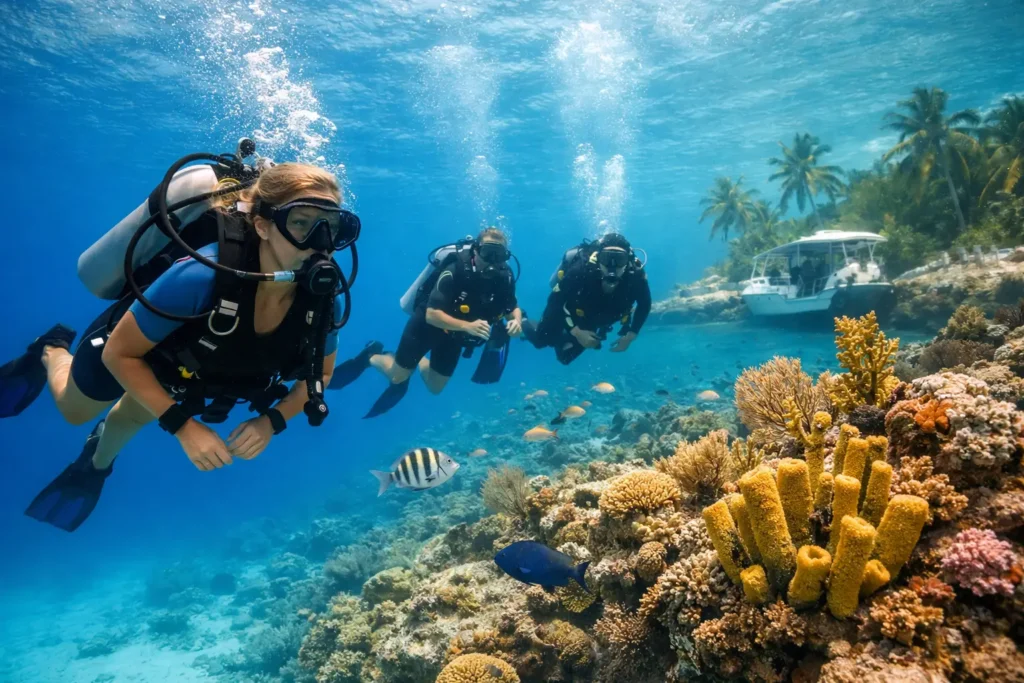
One crowded boat can ruin a great dive day before you even hit the water. If you’ve ever shuffled into oversized gear, waited on 20 other divers, or surfaced feeling rushed instead of amazed, you already know why small group scuba diving Caribbean trips stand out. The Caribbean is full of beautiful reefs, wrecks, and warm-water entries, but the format of the trip matters almost as much as the destination.
For many travelers, the difference comes down to one simple question: do you want to be processed, or do you want to be hosted? Small-group diving gives you more room, more attention, and a much better chance of experiencing the day the way it should feel – relaxed, safe, and memorable.
Why small group scuba diving in the Caribbean feels different
The Caribbean is often sold as easy diving, and in many places that’s true. Warm water, solid visibility, and boat-accessible reefs make it one of the best regions in the world for both first-time divers and experienced underwater travelers. But “easy” doesn’t always mean “well run.”
When dive boats are overloaded, everything tightens up. Briefings get shorter. Entry timing gets less flexible. Newer divers can feel pressure to keep up, while experienced divers may feel held back by a large, mixed-ability group. That’s where smaller operations have a real advantage.
A small group changes the pace of the whole day. You get more direct contact with the guide, clearer communication, and a dive plan that can actually reflect the group in front of the crew – not a generic script delivered to a crowd. That matters if you’re a nervous beginner, a couple diving together for the first time, or a certified diver hoping to enjoy the site instead of racing through it.
Who benefits most from a small group format?
Beginners usually feel the difference first. If you’re trying scuba for the first time, calm coaching is everything. A guide who has time to watch your breathing, adjust your setup, and answer questions without rushing can turn anxiety into excitement within minutes.
Families and couples also tend to prefer smaller groups because the day feels more personal. You’re not trying to keep track of everyone else’s schedule. You can move at a pace that suits your comfort level, and that creates better memories than a packed, transactional outing ever will.
Certified divers benefit too, especially when they care about site quality and not just the number of tanks. A smaller boat often reaches sites earlier, before bubbles, boat traffic, and snorkel crowds change the atmosphere. In places like Bayahibe, that early timing can completely change how a reef or island stop feels.
Safety improves when the group stays small
This is where the sales language usually gets dramatic, but the truth is more practical. Smaller groups are safer because guides can actually supervise them properly.
That shows up in small but meaningful ways. Gear checks are less rushed. Briefings can be more specific. Guides notice who is over-weighted, who is burning through air too quickly, and who needs a calmer descent. If conditions shift, the crew has more flexibility to adapt instead of forcing everyone through the same plan.
For newer divers, that kind of attention builds confidence fast. For experienced divers, it removes frustration. Nobody wants to feel like a number on a manifest when they’re entering open water.
What to look for in a Caribbean small-group dive operator
Not every operator that says “small group” means the same thing. Sometimes it means a small guide ratio. Sometimes it just means the boat is smaller, even if it’s still full. It’s worth asking a few smart questions before you book.
Find out how many divers are usually assigned per guide. Ask whether beginners and certified divers are mixed together. Ask what happens if one diver in the group is anxious, low on air, or slower on descents. The answers will tell you a lot about whether the operator is built around guest experience or around moving volume.
It also helps to look beyond the dive itself. Good small-group operators tend to be strong in the details: multilingual communication, realistic pickup planning, well-maintained equipment, captains who know the sites intimately, and a team that adjusts the day around weather and conditions rather than forcing a fixed routine.
That local knowledge is especially important in the Dominican Republic, where site access, current, and timing can make a big difference. In Bayahibe, for example, early departures and experienced captains often mean calmer conditions and a more relaxed start at top reef and island locations.
The best small group scuba diving Caribbean experiences are not all the same
This is where expectations matter. Some travelers hear “small group” and picture a luxury charter with total privacy. Others just want a boat that doesn’t feel chaotic. Both are valid, but they’re not the same product.
A shared small-group trip is usually the sweet spot for many vacationers. You still get the social energy of diving with others, but without the crowding and rigid pace of a mass-market excursion. For couples, solo travelers, and friends, this often delivers the best balance of value and experience.
Private diving is different. It costs more, but it gives you maximum flexibility. That can be worth it if you’re learning, celebrating something special, diving with children, returning to scuba after a long break, or simply wanting a premium day on the water without compromise.
There’s also the question of site type. If your priority is wreck diving, your ideal small-group trip may look different from a relaxed reef day or a mixed dive-and-island experience. Some operators are strongest in training. Others in marine life spotting. Others in full-day adventure planning. The right fit depends on what kind of day you actually want.
Why Bayahibe deserves a close look
If you’re comparing Caribbean dive destinations, Bayahibe deserves more attention than it usually gets. The area offers warm water, strong visibility, accessible reefs, notable wrecks, and the kind of boat-based geography that works especially well for small groups. You can combine scuba with island stops, snorkeling, and early-morning departures that help you enjoy iconic places before they fill up.
That’s one reason this format works so well here. A family-run operator with a skilled crew and purpose-built boats can shape the day around your group instead of forcing you into a generic excursion model. For travelers who want premium service without the stiffness of a luxury resort activity desk, that’s a powerful combination.
Diving DR has built much of its reputation around exactly that approach – small or private groups, strong safety standards, multilingual guidance, and a local team that knows how to create a day that feels personal from boarding to final surface interval.
Is small-group Caribbean diving worth paying more for?
Usually, yes – but it depends on what kind of traveler you are.
If your goal is simply the cheapest possible dive, small-group service may feel like an upgrade you can skip. Large boats can be fine for confident, low-maintenance divers who are comfortable in busy settings and don’t mind a standardized experience.
But most vacation divers are not looking for the bare minimum. They’re looking for a highlight of the trip. In that case, paying more for better attention, better timing, and a smoother day on the water is often money well spent. The value is not just in the dive profile. It’s in how the whole experience feels.
That becomes even more obvious when one person in your party is less confident than the others. A rushed group dynamic can turn that into stress. A well-run small-group trip can turn it into a breakthrough moment.
How to choose the right trip for your skill level
If you’re a first-time diver, look for a small-group or private introductory experience in calm water with direct instructor support. You want patience, clear communication, and a crew that treats your comfort as part of the plan, not as an obstacle to the schedule.
If you’re newly certified, choose sites known for manageable conditions and good visibility. This is the stage where many divers gain confidence fast, especially when the guide ratio is low and the briefing is tailored to the site.
If you’re experienced, ask about marine life seasonality, wreck access, current patterns, and whether the crew can match you with a group of similar ability. Strong divers often assume small-group means slower, but with the right operator, it can actually mean better site selection and more rewarding dives.
The best small group scuba diving Caribbean trip is the one that matches your pace, your expectations, and your reason for being there in the first place. Some people want skill-building. Some want quality time together. Some want one extraordinary morning in clear blue water that reminds them why they travel.
If that sounds like you, don’t settle for the biggest boat and the fastest briefing. Choose the day that gives you room to breathe, space to enjoy the water, and a crew that treats your vacation like it matters.
