


The first flash of color often appears before you have fully adjusted your mask: a blue tang slipping past the coral, a school of silvery grunts turning as one, or a parrotfish crunching away at the reef. If you are wondering what marine life Bayahibe has to offer, the short answer is plenty – from easy-to-spot Caribbean reef residents to occasional encounters that make an already great day on the water unforgettable.
Bayahibe sits beside the protected waters and island coastline of Cotubanamá National Park, with reef systems, seagrass beds, sandy bottoms, and wreck structures all within reach. That variety matters. A relaxed first dive can reveal completely different animals from a deeper reef or a calm stop along the Saona coastline. Nature never works on a schedule, but local conditions and a crew that knows the sites make a real difference in where you look.
What Marine Life Does Bayahibe Have?
Reef fish bring the color
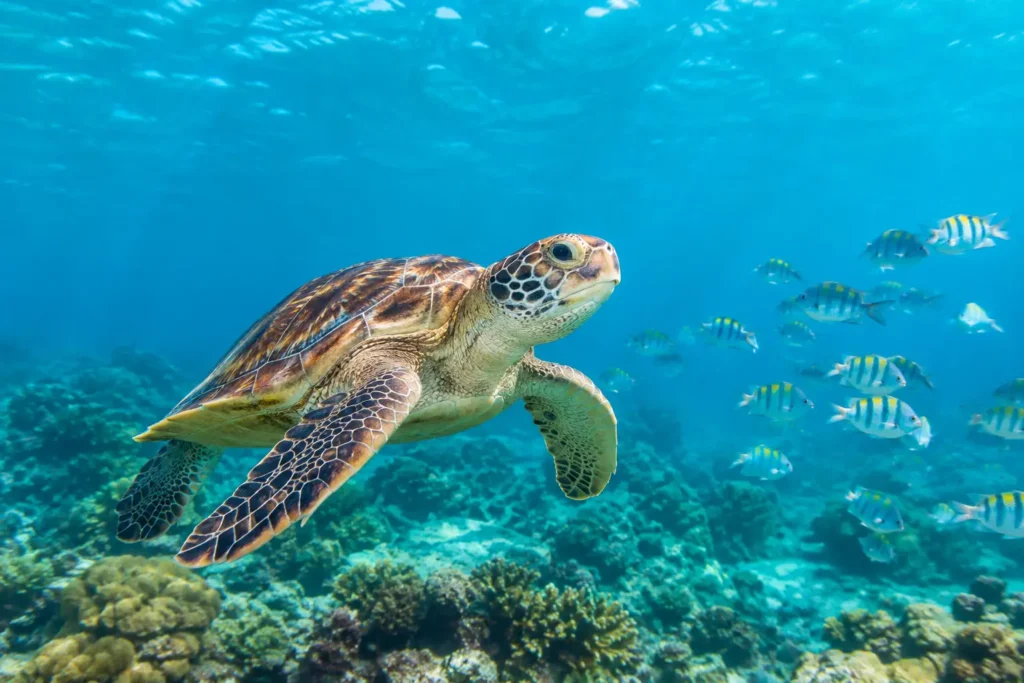
For most guests, the reef fish are the immediate stars. Blue tangs, French angelfish, queen angelfish, doctorfish, and bright yellowtail snapper give the reef its constant movement. Stop for a moment instead of swimming past, and the scene becomes even richer: tiny blue chromis hover over coral heads, trumpetfish hang nearly motionless in a vertical position, and squirrelfish retreat beneath ledges during the day.
Parrotfish are especially important to notice. Their bold colors make them easy to photograph, but their work is even more impressive. By grazing algae from the reef, they help corals compete for space. You may hear their distinct crunch before you see them. In shallower water, look for schools of grunts and snappers sheltering around coral formations, while barracuda often hold position just beyond the busier fish.
These are excellent sightings for first-time divers because they do not require deep water or advanced skills. Even on a Try Scuba experience, there is a strong chance of seeing an active, colorful reef within the first few minutes underwater.
Turtles, rays, and the special encounters
Sea turtles are one of the most requested sightings around Bayahibe, and for good reason. Hawksbill turtles may be seen around reefs, where their narrow beaks help them feed among sponges and crevices. Green turtles are more often associated with seagrass areas, though wildlife does not always follow the script. A turtle encounter can last a few seconds or several peaceful minutes, depending on the animal and how respectfully divers give it space.
Southern stingrays are another memorable possibility, particularly over sandy patches near reefs. They often rest partly covered by sand, so a careful, slow approach is far better than racing from coral head to coral head. Spotted eagle rays may also appear, gliding through open blue water with a grace that makes everyone stop finning.
Nurse sharks can be seen resting beneath ledges or moving slowly along the bottom. They are generally calm animals, but they are still wild sharks and should never be touched, cornered, or chased. Larger pelagic visitors, including reef sharks, are far less predictable. They are possible rather than promised – and that unpredictability is part of what keeps each dive exciting.
Small Creatures Reward Patient Divers
The biggest mistake underwater is looking only into the blue. Some of Bayahibe’s most fascinating marine life is hiding in plain sight on the reef.
Search the edge of a coral head and you may find a spotted moray eel peering from a hole, its open mouth helping it breathe rather than signaling aggression. Watch the sand closely for flounder, whose camouflage can be so effective that they seem to disappear. Cleaner shrimp, arrow crabs, sea stars, and small gobies reward divers who slow down and let their eyes settle.
Octopuses are the ultimate prize for many observant guests. They are masters of camouflage and may change color and texture in seconds. A good guide may spot one tucked under a ledge that most divers would pass without a second glance. The same is true for juvenile fish, which often look nothing like their adult forms and hide among sponges, soft corals, and protected reef pockets.
At night, the cast changes again. Lobsters emerge from cover, sleeping parrotfish tuck themselves into reef crevices, and hunting fish become more active. Night diving is best suited to certified divers who are comfortable with their buoyancy and lights, but it offers a completely different view of the Caribbean reef.
Reefs, Wrecks, and Seagrass Each Tell a Different Story
Bayahibe is not one single underwater habitat. Choosing the right type of site shapes what you are likely to see.
Shallow reefs are often ideal for colorful fish, healthy sponge growth, and easy conditions for beginners or families. Coral formations provide shelter for countless small animals, while open sections can attract schools of jacks and passing barracuda. Visibility is frequently excellent, although wind, rain, currents, and seasonal changes can affect conditions on any given day.
Wreck dives create their own ecosystem. Structures become covered in corals, sponges, and schooling fish over time, while shaded openings attract creatures that prefer cover. Certified divers often enjoy the contrast between the wreck’s dramatic shape and the life that has claimed it. The best wreck choice depends on certification level, comfort in the water, weather, and the day’s sea state.
Seagrass and sandy-bottom areas may look quiet at first, but they support turtle feeding grounds, rays, conch, and juvenile fish. On boat trips toward Saona Island, clear shallows can offer excellent opportunities to watch marine life from the surface as well. Snorkeling is not a replacement for scuba if you want to inspect reef details, but it can be a fantastic option for non-divers and younger family members.
How to See More Marine Life in Bayahibe
The best marine-life encounters are rarely about swimming faster or covering more distance. They come from being calm, properly weighted, and aware of your surroundings. A controlled diver does not stir up sand, crash into coral, or send shy fish into hiding.
Keep your hands to yourself, even when an animal seems close enough to touch. Corals are living animals, turtles can be stressed by pursuit, and rays need room to move. Never feed fish for a photo. It changes natural behavior and takes the moment away from what makes it special in the first place.
It also pays to tell your guide what you hope to see. A first-time diver may want the fullest possible introduction to reef color and easy fish encounters. A photographer may prefer a slower, more detailed route. Certified divers might be looking for a wreck, deeper reef contours, or a chance to spot turtles and rays. With nearly 20 years on these waters, Sharky’s Crew can shape the pace and site choice around the experience you actually want, while keeping safety at the center of the day.
A Few Expectations Worth Bringing Along
No ethical operator can guarantee a turtle, ray, shark, or any other wild animal. Some days the reef seems to reveal something new at every turn; on others, the most memorable sighting may be a tiny shrimp, a perfectly camouflaged flounder, or a school of fish moving through sunbeams. That is not a lesser experience. It is the honest rhythm of the ocean.
Water temperature is generally warm enough for comfortable Caribbean diving, but exposure time, personal comfort, and depth still matter. A light wetsuit may be welcome for longer dives, and sunscreen should be reef-conscious and applied well before entering the water. If you are prone to seasickness, plan ahead and mention it before departure so the crew can help you choose the most comfortable setup.
Bring curiosity, move slowly, and let the reef set the pace. The animal you came hoping to see may appear, or the reef may introduce you to something you did not know to look for – which is often how the best Bayahibe stories begin.
