


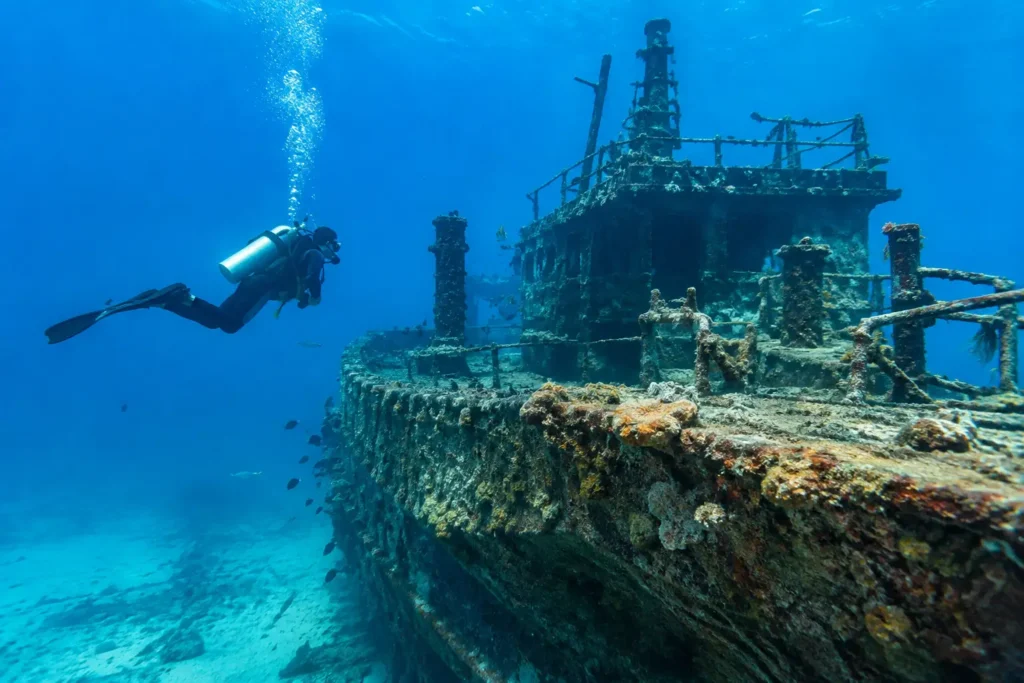
The first glimpse of the St. George is the moment the descent turns serious. Its dark steel outline rises from blue water, schools of fish gather around the rails, and a former cargo ship becomes a living part of the reef. This wreck dive review looks at what certified divers can genuinely expect from one of Bayahibe’s most memorable underwater sites – including the exciting parts, the practical considerations, and who will enjoy it most.
Wreck Dive Review: The St. George Experience
The St. George is not a small wreck you circle in ten minutes before moving on to the reef. It is a substantial shipwreck with enough structure, depth changes, and marine activity to reward a slow, observant dive. Deliberately sunk as an artificial reef in 1999, the vessel has spent years becoming part of the Caribbean seascape rather than simply sitting on it.
Descending along the mooring, divers often see the ship emerge gradually. First come the fish – silversides flickering in the water column, schooling grunts near the structure, and the occasional barracuda holding position in the blue. Then the deck, mast, rails, and long shape of the ship begin to appear below. Good visibility makes the scale especially dramatic, but even on a day with softer light, the wreck has a presence that photographs do not fully capture.
This is what makes the St. George special: it offers both a wreck story and a reef dive in the same immersion. Corals, sponges, and marine life have softened the ship’s industrial edges. You are not looking at a museum piece behind glass. You are moving through an evolving habitat, with every season adding another layer of growth.
Depth, Conditions, and the Real Skill Requirement
The St. George lies in deeper water than a typical introductory reef dive. Depending on the route and the part of the wreck being explored, divers may encounter depths that suit Advanced-level profiles, with the deeper sections reaching roughly 100 feet or more. The exact maximum depth, current, visibility, and planned bottom time should shape the dive plan on the day.
That is why this site is best for certified divers who are comfortable with buoyancy control, controlled descents, and monitoring no-decompression limits. An Advanced Adventurer or Advanced Open Water certification is often the right fit for the deeper portions. Open Water divers may still be able to experience appropriate sections when conditions and the dive plan allow, but a responsible operator will not force a dive beyond your training or comfort level.
The trade-off for depth is time. A wreck this large deserves attention, yet deeper profiles mean the crew must manage bottom time carefully. You may not see every feature in one dive, and that is a good reason to return rather than rush. A well-run wreck dive feels unhurried underwater while still respecting the plan, the group’s air consumption, and safe ascent procedures.
Bayahibe is known for warm Caribbean water and frequently clear conditions, but the ocean always has a vote. Visibility can shift after weather, and currents can be mild one day and more noticeable the next. The best approach is simple: arrive ready for an adventure, listen closely to the briefing, and let the day’s conditions determine the route.
What the Briefing Should Cover
Before leaving the surface, your guide should make the plan feel clear rather than complicated. Expect an overview of maximum depth, the intended route, current direction, turnaround pressure, and the location of the ascent line. You should also know whether the group will stay outside the wreck structure or whether any limited overhead areas are part of the plan.
For recreational divers, admiring the exterior is often the best choice. The ship’s outline, decks, openings, and fish-covered rails provide plenty to see without entering enclosed spaces. Wreck penetration requires specific training, equipment, and procedures. No impressive photo is worth turning a relaxed recreational dive into an unnecessary risk.
Marine Life: More Than a Ship on the Sand
A wreck becomes great when it attracts life, and the St. George earns its reputation here. Schools of grunts and snappers commonly move around the superstructure, while trumpetfish may hover close to the rails. Look into the blue for barracuda, jacks, and larger passing visitors. Closer to the metalwork, you may find cleaner shrimp, colorful sponges, and small reef fish using every ledge as cover.
The experience changes with your pace. Divers who race along the hull may come away talking about the ship’s size. Divers who slow down often notice the details: a juvenile fish tucked into a crevice, a pair of angelfish near a sponge, or the contrast between bright Caribbean color and weathered steel.
Keep your fins off the wreck and the reef. Much of the site’s appeal comes from the growth that has established itself over time. Good trim, a respectful distance, and careful positioning for photos help protect the habitat for the next group of divers – and for your own return visit.
Is the St. George Right for You?
If you are a newly certified diver, the wreck can be an exciting goal to work toward. Build confidence first on shallower reefs, practice neutral buoyancy, and consider continuing education before choosing a deeper wreck profile. The anticipation is part of the fun, and arriving prepared lets you enjoy the site instead of managing stress.
If you are already comfortable at depth, the St. George is an excellent change of pace from coral gardens. It has that rare combination of scale and accessibility: dramatic enough to feel like a true expedition, yet close enough to Bayahibe that it can fit naturally into a vacation dive schedule. Couples with different experience levels should be candid with the crew about certifications and recent dive history so the day can be planned around the less experienced diver, not the most ambitious one.
For underwater photographers, bring a wide-angle mindset for the ship’s silhouette and a willingness to switch focus for fish portraits near the structure. A guide who knows the site can help position the group where the light, current, and marine activity are working best. The goal is not to recreate someone else’s image. It is to catch the wreck looking alive on your day.
How to Get More From the Dive
A few practical choices make a meaningful difference. Check your computer battery and confirm your exposure protection before departure, even in warm water. A light wetsuit or rash guard can add comfort during longer dives and surface intervals. If you have not dived recently, say so. There is no prize for pretending that your buoyancy skills are fresher than they are.
On the descent, resist the urge to rush toward the wreck. Equalize early, stay with your buddy, and let the whole form of the ship reveal itself. Once you reach the planned depth, follow your guide’s route rather than breaking away for a closer look at every opening. Wrecks can make distances deceptive, and the safest route is usually also the one that shows the most.
At Sharky’s Crew, our local knowledge is not limited to finding the mooring line. It means reading the day, matching the route to the group, and helping each diver feel looked after from the boat briefing to the final safety stop. That personalized approach matters most on a site where depth, conditions, and comfort level all shape the experience.
The St. George is worth doing when you want a dive with a little more gravity than a standard reef circuit. Come with the right certification, honest expectations, and enough curiosity to look beyond the ship itself. The best moment may be the first view of the wreck in the blue – or it may be a tiny reef creature you only notice because you paused long enough to look.
