


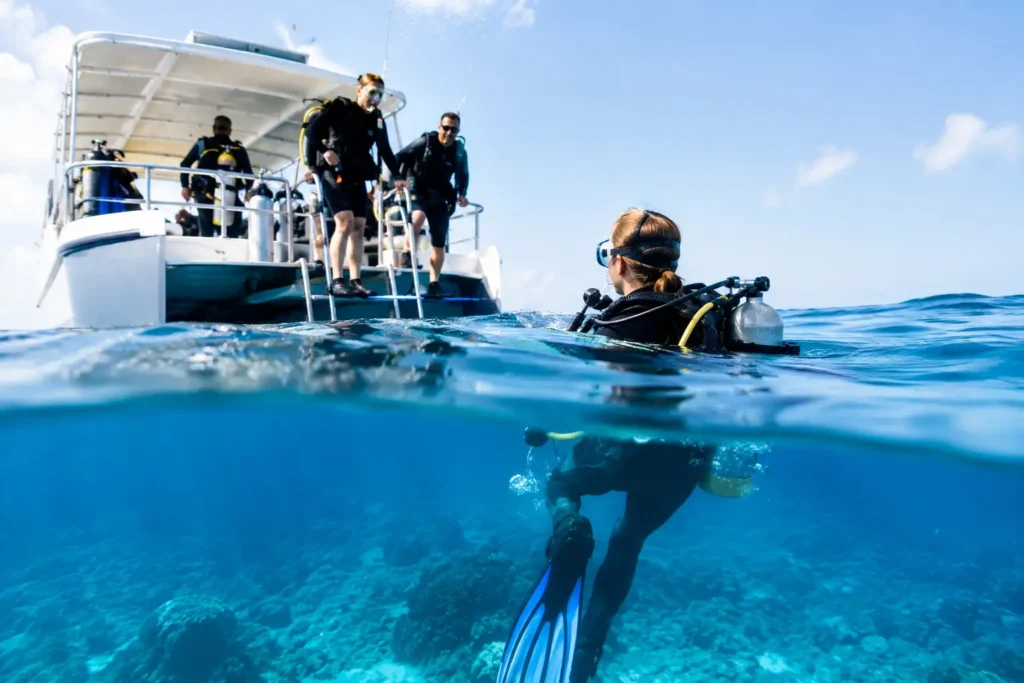
A conference room can bring people together. A quiet reef, a shared first breath underwater, and a boat ride along the Bayahibe coast can do something more lasting. Corporate dive planning turns a standard incentive day into a genuine shared experience, provided it is designed around the people in the group rather than a one-size-fits-all schedule.
For executive retreats, sales incentives, and company off-sites, the strongest water days balance excitement with comfort. Some guests will arrive with hundreds of logged dives; others may never have worn a mask. The goal is not to make everyone perform at the same level. It is to create a day where every person feels included, well looked after, and genuinely excited to be there.
Start Corporate Dive Planning With the Group, Not the Itinerary
The first question is not, “Which dive site should we visit?” It is, “Who is coming?” A successful corporate group may include certified divers, curious first-timers, non-swimmers, spouses, and team members who would rather enjoy the boat, the beach, and the Caribbean view than put on scuba equipment.
That mix is normal. It also shapes every operational decision, from the boat layout and departure time to instructor ratios and the length of the day. Ask participants privately about swimming confidence, medical considerations, prior dive certifications, and what they hope to get from the experience. Private information should stay private, but the answers help organizers build a plan that does not leave anyone feeling exposed or left behind.
For groups with beginners, a Try Scuba experience is often the right fit. Participants receive a clear briefing, practice key skills in calm shallow water, and enter the sea with a qualified professional at close supervision. It is a real underwater experience, not a rushed photo opportunity. Certified divers can often enjoy a separate guided reef or wreck dive, coordinated within the same private outing when group size and conditions allow.
If scuba is not right for every guest, that is not a problem to solve by pressure. Snorkeling, a private Saona Island stop, time aboard the boat, or a relaxed beach lunch can make the day feel complete for non-divers. The best team events give people a choice while preserving the feeling that everyone is part of one occasion.
Set the Right Goal for the Day
Corporate events can fail when too many objectives are forced into too little time. A dive day is not the place for a packed agenda of speeches, icebreakers, awards, multiple activities, and a long transfer. Let the water be the centerpiece.
A team-building objective works especially well when it is specific. Perhaps the company wants to reward high performers, welcome a newly merged team, celebrate a milestone, or give leaders unstructured time together away from the office. Those intentions affect the tone of the trip.
A reward day may call for an early private departure, premium food and drinks, a beautiful beach stop, and plenty of open time. A team-development retreat may benefit from a short, thoughtful conversation before departure and a relaxed debrief after the water activity. Keep the formal program brief. No one flies to the Dominican Republic to watch a presentation from a boat deck.
There is also a trade-off between adventure and accessibility. A group of experienced divers may want deeper profiles, a wreck, or multiple dives. A mixed corporate group usually gets more value from calm conditions, manageable travel time, and a pace that lets beginners settle in. The most impressive itinerary is not always the best one. The best one is the itinerary your team will remember fondly.
Build Safety Into the Experience, Not Around It
Water activities feel effortless only when the planning behind them is serious. Choose an operator that explains its safety approach plainly: instructor credentials, equipment standards, briefing process, weather decisions, emergency procedures, and realistic participant limits. A polished boat alone is not a safety plan.
For scuba activities, guests must complete the appropriate health questionnaire before participation. Some medical histories require physician approval, and this should be addressed well ahead of travel rather than at the dock. Certified divers should bring or provide proof of certification, and organizers should confirm that participants understand the difference between a refresher, a guided certified dive, and an introductory experience.
Weather and sea conditions deserve the same respect. The Caribbean can be beautifully calm, but no responsible crew guarantees a specific site or route months in advance. A good corporate plan includes a clear backup option, whether that means selecting a more sheltered site, adapting the schedule, or shifting the focus to a private island or coastal excursion. Flexibility is not a compromise. It is what protects the quality of the day.
It also helps to set expectations around alcohol. Save celebratory drinks for after diving and water activities are complete. This is simple, professional, and far better for everyone’s comfort and safety.
The advantage of a private boat
Private boat service changes the entire rhythm of a corporate outing. Your team is not waiting for strangers, competing for shade, or working around a fixed mass-tourism timetable. The crew can adjust stops, create space for guests who need extra support, and keep the day moving at the group’s natural pace.
For companies, privacy also matters. Leaders can speak freely, teams can celebrate without an audience, and photos feel more personal when the setting belongs to your group. In Bayahibe, an experienced local crew can time departures to reach extraordinary areas near Saona Island before the busiest boats arrive, which is often the difference between a crowded excursion and a true incentive experience.
Plan the Logistics Guests Never See
The smoothest corporate dive days are built long before boarding. Confirm the final participant count early, but leave room for reasonable changes. Collect shoe sizes and equipment needs in advance, identify guests who require dietary accommodations, and communicate transportation pickup details in one easy-to-read message.
Timing deserves special attention. An early departure can mean gentler seas, cooler temperatures, and more peaceful stops. It may also be a harder sell after a late company dinner. For many groups, an earlier evening meal the night before is worth it. Starting well rested helps beginners absorb their briefing and helps everyone enjoy the day without feeling rushed.
Think through the guest experience from hotel lobby to return transfer. Is there drinking water before departure? Is there secure storage for phones and valuables? Will there be towels, shade, dry seating, and a simple way to manage seasickness concerns? These details are rarely the headline, yet they are often what guests mention afterward.
Photography should be planned with care as well. A few well-timed group shots and natural in-water images can give the company lasting memories. But do not turn the outing into a content shoot. People relax when they know they can be present rather than perform for a camera all day.
Make It Feel Personal, Not Programmed
The difference between a good corporate outing and an extraordinary one is usually human. Guests remember the instructor who calmed their nerves, the captain who found a quiet stretch of water, and the crew member who knew exactly when to offer a cold drink after the swim.
That is why small groups matter. They allow instructors to respond to individual confidence levels and let every guest ask questions without feeling like they are slowing down the schedule. They also create better conversations. A newly promoted manager and a teammate from another department are more likely to connect while floating in clear water or sharing lunch on a beach than during a mandatory networking session.
At Sharky’s Crew, corporate groups can be shaped around diving, private island time, or a combination of both, with experienced captains and multilingual professionals who know these waters intimately. The experience should feel polished, but never stiff. Your team is on vacation, even if the trip has a business purpose.
Give Your Team a Story Worth Bringing Home
A corporate water day does not need manufactured competition to create connection. Learning something unfamiliar, trusting a guide, encouraging a colleague, and seeing the reef together already provide the moments that matter.
The most useful question for your planning call is simple: what do you want your guests to feel when they step back onto the dock? If the answer is cared for, energized, proud, and closer to the people around them, the right itinerary will follow.
