


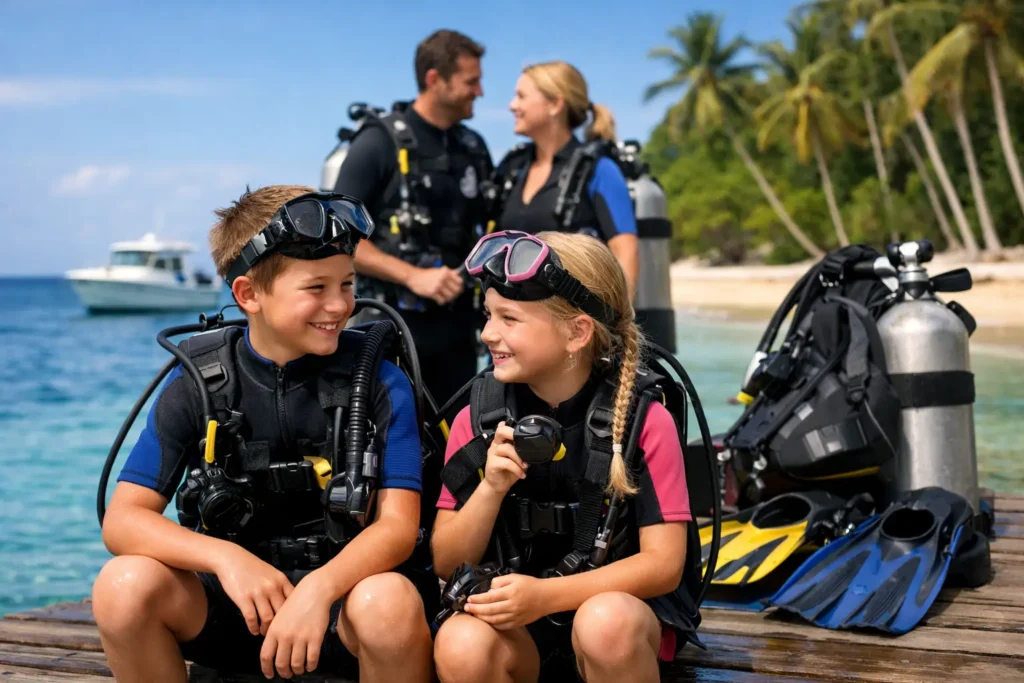
The moment a child sees a parrotfish glide over a coral reef, the question stops being whether they want to go underwater. It becomes: is scuba safe for families? With the right age-appropriate program, calm conditions, properly fitted equipment, and a crew that never rushes the day, it can be an extraordinary shared experience.
Scuba is not a theme-park ride. It asks each person to listen, communicate, stay calm, and follow a few non-negotiable rules. That is exactly why a family dive day should be built around the people in the group, not around a fixed schedule or a packed boat. For some families, that means an introductory experience in shallow water. For others, it means a junior certification course, a guided reef dive for certified parents, and snorkeling for younger siblings. The best day is the one where everyone feels included and confident.
Is Scuba Safe for Families? Yes, With the Right Plan
Scuba diving has an excellent safety record when training standards, medical guidance, equipment checks, and environmental conditions are taken seriously. Families add one more consideration: people of different ages and comfort levels are participating together.
A confident 14-year-old may be ready for a junior certification course, while their 10-year-old sibling may prefer a closely supervised introductory session. One parent may be a seasoned diver, while the other has never put their face in the water. None of this is a problem when the crew plans around the family rather than expecting the family to fit a one-size-fits-all trip.
For first-time divers, a proper experience begins before anyone enters the sea. An instructor explains the equipment in plain language, reviews the hand signals, and lets each guest practice breathing from a regulator in shallow water. There should be time to clear a little water from a mask, recover the regulator, and get used to buoyancy. These are not tests to pass under pressure. They are skills that make the underwater world feel familiar.
The safest family experiences tend to be unhurried. Small groups and private guides allow an instructor to notice when a child is excited, when a parent is tense, or when someone simply needs another minute at the surface. A good crew would always rather shorten a dive than push a nervous guest past their comfort zone.
Age, Health, and Readiness Matter More Than Bravery
Children are not simply smaller adults underwater. They need programs designed for their age, physical development, and attention span. Recognized training agencies offer youth programs, but minimum ages and depth limits vary by activity and certification level. A reputable SSI dive center will explain the current requirements clearly and choose the appropriate program for each child.
As a general rule, children who meet the age requirement still need to be comfortable in the water, able to understand instructions, and willing to speak up if something does not feel right. A child who is afraid to put their face in the water is not failing. They may just be better suited to snorkeling, a pool session, or a future dive trip.
Health matters for adults and children alike. Asthma, ear or sinus concerns, heart conditions, recent surgery, certain medications, and pregnancy can affect whether scuba is appropriate. Every participant should complete the required medical questionnaire honestly. If an answer calls for medical clearance, get it before the trip. This is a simple step that protects the whole family and prevents a disappointing surprise on dive day.
Flying also deserves attention. After scuba diving, guests need to observe recommended surface intervals before boarding a plane. Families often try to squeeze one last dive into the final morning of vacation, but a smart itinerary gives diving its own space and leaves the final day for the beach, Saona Island, or an easy trip along the coast.
The Parent Rule: Never Talk Someone Into Going Down
Encouragement is wonderful. Pressure is not.
Children often read their parents closely. If a parent treats nerves as normal, listens carefully, and accepts a change of plan without disappointment, the child is far more likely to enjoy the experience. The same applies to adults. A first-time diver can stop at any point, including before the boat leaves the dock, and still have made the right decision.
A strong family dive operation will offer alternatives when scuba is not the best fit that day. Snorkeling above a healthy reef can be every bit as memorable for younger children or hesitant swimmers. On a private boat, the family does not need to split into separate experiences. One person can dive with an instructor while others snorkel, swim, or relax nearby.
What Makes a Family Dive Day Safer
Safety is built through many small decisions, not one dramatic precaution. The crew checks the weather and sea state, selects a site suited to the group, verifies equipment, gives a complete briefing, and keeps a close eye on every guest from the first step off the boat to the final return to shore.
For families, the most useful safeguards are straightforward:
- A certified instructor or dive professional who stays close to beginner and junior divers.
- Properly sized masks, fins, buoyancy devices, wetsuits, and weights, especially for children.
- Conservative depth and time limits based on the least experienced diver in the group.
- Calm, clear sites with easy entries and exits instead of challenging currents or deep profiles.
- A boat crew equipped with oxygen, first-aid supplies, communications, and an emergency plan.
Equipment fit deserves special attention. A leaking mask, loose fin, or bulky buoyancy device may sound minor, but it can quickly turn excitement into frustration for a child. Experienced instructors take time to adjust straps and weights, test comfort, and make changes before the dive begins. That extra ten minutes is never wasted.
Why Bayahibe Works Well for First Family Dives
Bayahibe offers conditions that make the learning curve feel much more welcoming: warm Caribbean water, frequent clear visibility, sheltered reef areas, and marine life that is easy to spot without chasing it. For families, that can mean a shorter boat ride, a calmer surface interval, and a first descent where the reward arrives quickly in the form of colorful fish, rays, and coral formations.
Still, no destination is automatically safe every day. Wind, waves, rain, and currents can change plans. The professional choice is sometimes to select another site, delay departure, replace a dive with snorkeling, or cancel. A crew with local knowledge does not see that as an inconvenience. It is how a premium experience stays safe and enjoyable.
At Sharky’s Crew, nearly two decades on these waters means the team knows which routes and sites suit a relaxed family morning and which ones should wait for confident certified divers. That local judgment matters just as much as the boat, the tanks, or the view.
Choose the Right Experience for Your Family
A family does not have to commit to a full certification course to share the underwater world. An introductory Try Scuba-style session can be a great first step for eligible beginners who want professional supervision and a gentle introduction. It gives everyone a chance to find out how breathing underwater feels before making a bigger commitment.
If your child or teen loves the experience, junior training can create a more lasting foundation. Courses teach more than skills. They build judgment, responsibility, buddy awareness, and respect for the ocean. However, courses require focus and time. Trying to fit one between beach days and late nights can create unnecessary stress. Give the learning process room to breathe.
Certified families have different options. A private guide can select a reef dive that matches the newest diver’s level, while experienced adults can plan a separate wreck or deeper adventure later in the trip. There is no prize for making every family member do the same profile. The goal is to return to the boat with stories everyone is excited to tell.
Questions Worth Asking Before You Book
Ask who will be in the water with your family, how many guests are in each group, and what happens if someone decides not to dive. Ask about age requirements, the expected water conditions, equipment for children, and the emergency equipment carried onboard. A professional operator will answer directly, without vague promises or pressure.
It is also reasonable to ask how much time the experience allows for practice. Families benefit from a slower pace. A rushed briefing or a crowded boat can be manageable for experienced divers, but it is rarely the best setting for a first family scuba memory.
The ocean has a way of making families slow down together. When the planning is thoughtful and the crew puts comfort ahead of a rigid schedule, scuba can become more than an activity on a vacation checklist. It can be the moment your family discovers a whole new world, side by side.
