


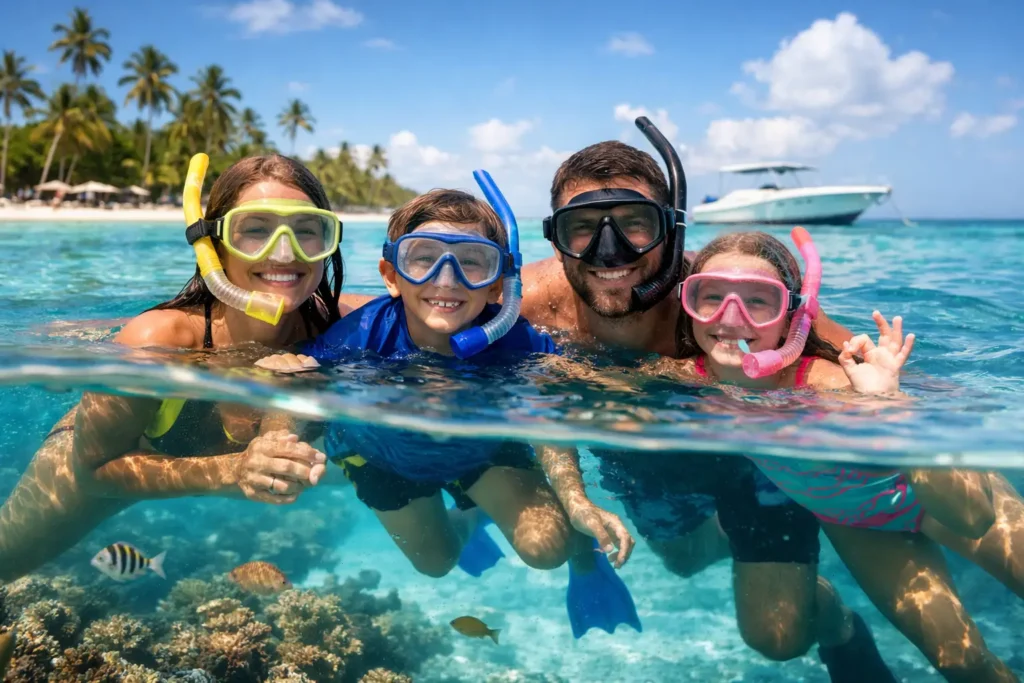
The best family snorkeling Bayahibe trips usually start before anyone gets tired, sunburned, or overwhelmed. That matters more than most parents expect. A beautiful reef is only part of a great day on the water. The real difference is calm timing, the right boat setup, patient guides, and a plan that works for both confident swimmers and the child who needs ten extra minutes just to get comfortable with a mask.
Bayahibe is one of those rare places where snorkeling can genuinely work for mixed-age groups. The water is often warm, visibility is usually very good, and many nearby areas are protected enough to feel manageable for beginners. That does not mean every trip is equally family-friendly. Some are built for volume, not comfort. Others move too fast, stop too briefly, or pack so many people on board that parents spend the day managing logistics instead of enjoying the ocean.
Why family snorkeling Bayahibe works so well
For families, the biggest advantage here is not just marine life. It is accessibility. You do not need a long, rough ride or advanced water skills to have a memorable experience. In the right conditions, children can see colorful fish, coral formations, and clear Caribbean water without the pressure of a full scuba program.
Bayahibe also gives families options. Some want a short snorkeling stop as part of a broader island day. Others want the snorkeling itself to be the main event. That difference matters. If your kids have never used fins before, a relaxed half-day format may be far better than a full itinerary with multiple stops, beach time, and a long return ride. If your family already loves the water, adding a second site can be fantastic.
The other major plus is predictability. Compared with more exposed areas, many local routes can offer gentler conditions, especially in the morning. That is why experienced local operators often push early departures. It is not just about beating crowds. It is about giving families the smoothest sea state, the clearest water, and the best chance of a stress-free first hour.
What makes a snorkeling trip truly family-friendly
A family-friendly trip is not the same thing as a trip that allows kids onboard. Those are very different standards.
The first thing to look at is group size. Small groups or private trips change everything. Kids move at their own pace. Parents can ask questions without feeling rushed. Guides can help with mask fitting, entry techniques, and confidence in the water rather than trying to manage a large crowd. If one child wants to stay close to the boat while another is ready to explore, that flexibility becomes a huge advantage.
The second factor is supervision in the water. Good family snorkeling is active guiding, not just dropping guests at a reef and pointing toward the fish. The crew should be watching comfort levels, current, floating position, and energy. For younger snorkelers, even simple details like how they enter the water or whether they hold a flotation aid can shape the whole experience.
Boat design matters too. Easy entry and exit, shade, a stable ride, and enough space to sit comfortably can make a bigger difference than families assume when booking. If a child gets cold, nervous, or tired, having a calm place to reset onboard is part of the experience, not an extra.
The trade-off between private and shared trips
Shared trips can absolutely work for some families, especially with older kids who are confident swimmers and easy travelers. They are often more budget-friendly and can still be enjoyable if the operator keeps numbers under control.
But there is a trade-off. Shared departures usually run on tighter timing and a fixed rhythm. Private outings cost more, yet they allow for slower starts, extra instruction, more time at the best spot, and less pressure if someone needs a break. For families with young children, first-time snorkelers, or grandparents joining the day, private often feels less like a splurge and more like the smartest way to protect the vacation.
How to choose the right trip for your family
Start with the youngest or least confident person in your group. That is the real pace of the trip. If your six-year-old is excited but hesitant in open water, choose a route and crew that can support that. If you plan around the strongest swimmer instead, the day may look great on paper and feel frustrating in reality.
Think about duration next. A shorter trip is often the better call for young kids, even if adults would happily stay out longer. Energy drops fast after sun, salt water, and boat time. A two to four hour window is ideal for many families. Once you move into full-day territory, snacks, shade, bathroom access, and downtime all become more important.
You should also ask what the snorkeling site is actually like. “Good for beginners” can mean different things depending on the operator. Families should want clear water, easy boat access, limited current when possible, and reef areas that are interesting without requiring strong swimming. It also helps when there is a backup plan if conditions shift.
What kids usually love most
Parents often imagine the highlight will be the biggest fish or the clearest reef section. Sometimes it is. More often, children remember the simple moments – spotting a bright blue fish close to the surface, floating next to a parent, jumping from the boat, or wearing the gear successfully for the first time.
That is why patience is everything. Some kids are instantly comfortable. Others need a full stop just to practice breathing through a snorkel while holding onto the side of the boat. Neither response is a problem. The best crews know how to keep the mood relaxed and positive instead of making the child feel behind.
It also helps when guides know how to explain the ocean in a way kids can connect with. A short, friendly briefing about fish, coral, and how to float calmly can turn nerves into curiosity. Families are not just buying transport to a reef. They are buying confidence, attention, and the chance to share something new together.
Safety questions smart parents should ask
You do not need to turn booking into an interrogation, but a few questions are worth asking. Are life jackets or flotation devices available for children and nervous adults? Will a guide be in the water? How many guests are typically on the boat? What happens if sea conditions are not ideal that day?
A professional answer is usually clear and calm. If the response sounds vague, rushed, or overly salesy, pay attention. Family ocean trips should never feel improvised.
Good operators also help set expectations honestly. Not every child will snorkel for a full hour. Not every day will have mirror-flat water. Sometimes the best decision is shortening a stop, choosing a calmer site, or spacing the trip around your family’s energy. That kind of flexibility is a sign of experience, not a lack of ambition.
When to go for the smoothest experience
Morning is usually the winning move for family snorkeling Bayahibe. Conditions are often calmer, visibility can be better, and the heat is easier on younger children. Just as important, early departures beat the heavy traffic that builds around popular island routes later in the day.
That timing changes the feel of the entire outing. A reef that feels peaceful at 9 a.m. can feel busy by midday. If your goal is a relaxed family memory rather than just checking a box, those early hours are worth it.
Season matters less than many travelers think, but weather and daily sea conditions always matter. A trustworthy local crew will guide you on whether your planned day looks ideal or whether another time is likely to be better.
Setting expectations for a better day
Bring the basics, but keep the mindset simple. Families do best when they treat snorkeling as an experience, not a performance. Your child does not need to become a perfect snorkeler in one outing. They just need to feel safe enough to enjoy the water.
That usually means avoiding overpacked schedules. If you are combining snorkeling with a longer island tour, leave room for breaks. If your child gets motion sickness easily, say so in advance. If a grandparent wants to come along without spending much time in the water, choose a boat and pace that make that comfortable too.
This is where local expertise matters. A seasoned family-run crew can read the day, adjust timing, and recommend the route that fits your group instead of forcing your group to fit the route. That is a big reason many traveling families prefer a more personalized operator over a mass-market excursion.
Diving DR has built its reputation around exactly that kind of approach – small groups, strong safety standards, local knowledge, and trips that feel cared for rather than processed. For families, that difference is easy to feel once you are onboard.
A great snorkeling day does not have to be extreme to be unforgettable. In fact, for most families, the best version is simple: calm water, a patient crew, a reef full of life, and enough personal attention that every person on board gets to enjoy it in their own way. If that is the kind of memory you want from the Caribbean, Bayahibe is a very smart place to make it happen.
