


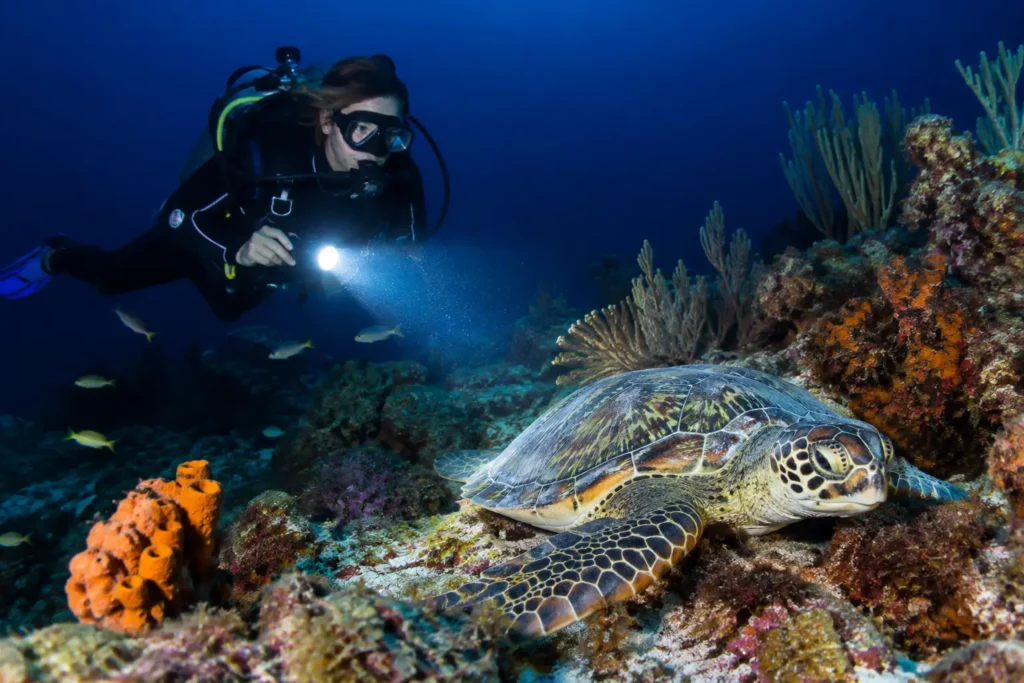
The reef changes shift by shift after sunset. Daytime parrotfish tuck into crevices, coral polyps open to feed, and creatures that were invisible at noon begin crossing the sand in the beam of your light. That is why the best Caribbean night dives are not simply daytime sites in darker conditions. They are a completely different encounter with the sea.
For travelers who have already seen a Caribbean reef by day, a guided night dive can be the moment the trip becomes unforgettable. But the best choice is not always the most famous wreck or the deepest wall. It is the site with calm conditions, a healthy shallow reef, a crew that knows every entry point, and a pace that lets you look closely rather than race through the dark.
What Makes the Best Caribbean Night Dives Special?
Warm water and generally clear conditions give the Caribbean a natural advantage after dark, but a successful night dive depends on more than visibility. A great site has structure close to the surface, modest current, predictable navigation, and enough marine life to reward slow, patient observation.
Shallow reef ledges are often better than dramatic deep drop-offs. At 20 to 40 feet, divers have more bottom time, colors stay vivid under a quality dive light, and instructors or guides can keep the group comfortably together. You do not need to chase depth to find the action. The smallest coral heads can hold sleeping fish, arrow crabs, lobsters, basket stars, brittle stars, and octopus hunting along the bottom.
Timing matters, too. The hour just after sunset offers a beautiful transition from blue water to darkness, especially for divers new to night diving. Later departures bring full darkness and a stronger sense of isolation, which experienced divers may prefer. Neither is automatically better. It depends on your comfort level, the moon, sea state, and what the local crew is seeing at the site that week.
Caribbean Night Dive Destinations Worth Planning Around
Across the region, several destinations have earned their reputation for night diving. Each offers a different kind of underwater evening.
Bonaire: Shore Diving Freedom and Healthy Reefs
Bonaire is a favorite for independent certified divers because many reefs begin just beyond the shoreline. Its well-known shore access makes planning flexible, and the island’s reef protection has helped preserve the kind of fish-filled shallows that shine at night.
The trade-off is that self-guided night diving asks more of you. You need excellent navigation, a reliable buddy, appropriate lights, and a clear understanding of local access rules. Divers who want the freedom of a shore entry often love Bonaire. Those who want a captain, boat crew, and local guide handling the logistics may prefer another destination.
Grand Cayman: Walls, Wrecks, and Easy Conditions
Grand Cayman pairs clear water with polished dive infrastructure. Its walls create a dramatic backdrop, while wreck sites can feel especially atmospheric after dark. A wreck night dive is less about covering the whole structure and more about seeing it change: silversides gathering near openings, shrimp shining from railings, and fish resting in places that seem empty by day.
Not every wreck is right for every diver at night. Penetration should only be considered with the right training, equipment, and a specific plan. For most recreational divers, enjoying the exterior with a qualified guide delivers all the excitement without adding unnecessary risk.
Curaçao: Colorful Reefs and Relaxed Entries
Curaçao’s fringing reefs offer colorful coral formations and protected conditions that suit an unhurried evening dive. This is an especially appealing option for couples or small groups who want the night-dive experience without making the whole vacation about advanced diving.
Look for operators who keep groups small and choose sites according to wind direction. A sheltered reef with a simple entry is much more valuable than a famous site that is exposed, choppy, or carrying current that evening.
Bayahibe, Dominican Republic: Reef Life Close to Shore
Bayahibe has one of the Caribbean’s strongest advantages for a guided night dive: access to the reefs along Parque Nacional del Este, where shallow coral terrain and warm water create excellent conditions for slow exploration after sunset. The coastline is not just beautiful by day. At night, its protected reef sections can reveal the quieter, stranger side of Caribbean marine life.
This is where local knowledge makes a real difference. The right site can change with wind, swell, visibility, boat traffic, and the group’s experience. A Bayahibe crew that works these waters week after week knows which reefs stay comfortable after dark, where the current is likely to build, and when to postpone rather than force a trip.
At Sharky’s Crew, night diving is approached as a personal guided experience, not a crowded departure with divers following a rope in a line. That matters when you want time to pause over a hunting octopus or watch a sleeping parrotfish without fins and flashlights surrounding you.
What You May See on a Caribbean Night Dive
The thrill of night diving is not guaranteed by a checklist. Marine life follows its own schedule, and no responsible guide should promise a particular animal. Still, Caribbean reefs often become wonderfully active after dark.
Octopus are among the most exciting sightings because they are alert, curious, and constantly changing color and texture as they move. Spiny lobsters leave their daytime shelters. Crabs emerge from cracks in the reef. Moray eels may be seen hunting with only their heads exposed. Tarpon can appear at the edge of the light, using your beam to spot smaller prey.
Then there are the details many daytime divers miss. Coral polyps extend their tentacles. Tiny shrimp reflect pinpoints of light. Basket stars unfurl into the current. Resting fish settle into the reef, sometimes wrapped in a thin mucus cocoon for protection. Go slowly, keep your light controlled, and the reef begins to reveal itself.
If conditions and local practices allow it, your guide may finish with a brief lights-out moment. With every flashlight covered, you can see the dark water as it is, often with faint flashes of bioluminescence when you move your hands. It lasts only seconds, but it is the kind of silence people remember years later.
How to Choose a Night Dive You Will Actually Enjoy
Night diving should feel exciting, not like an endurance test. If you are a newer certified diver, choose a shallow reef, a guided boat dive, and a small group. Tell the dive center honestly about your recent dive history, buoyancy comfort, and any anxiety about darkness. The best crew will match the plan to you rather than treating the dive as one-size-fits-all.
Experienced divers should still ask practical questions. How deep is the site? Is there current? Will the group use a descent line? What is the navigation plan? How many divers will be in the water? Is the route an out-and-back, a loop, or a drift? Clear answers are a sign that the operation is planning carefully.
Bring a primary light, a backup light, and a reliable way to signal your buddy. Keep your beam pointed down or toward the reef instead of into another diver’s face. Good buoyancy is even more important at night because a careless fin kick can damage coral or stir up sand that ruins visibility for everyone.
A red-light setting can be useful for observing some animals without bathing the entire reef in bright white light, but it is not a substitute for a strong main beam. Your guide will also establish hand signals and what to do if separated. Review these before entering the water, when everyone is relaxed and listening.
Why Small Groups Change the Experience
A night dive is naturally more intimate than a daytime boat trip. That feeling disappears when too many divers crowd a small section of reef, each waving lights in different directions. Small groups give the guide room to lead deliberately and give every diver a better view of the life below.
They also improve the practical side of safety. Your guide can check buoyancy, air consumption, comfort, and positioning throughout the dive. Couples and families can stay close together. First-time night divers can take a few extra moments at the surface before descending. That personal pace is not a luxury. It is often what turns nervous anticipation into real confidence.
The best Caribbean night dive is rarely the one with the longest species list. It is the one where you surface calm, warm, and wide-eyed, already replaying the small strange moments your daylight dive could never show you. Choose a crew that knows the water, listen to the briefing, and give the reef time to come alive.
