


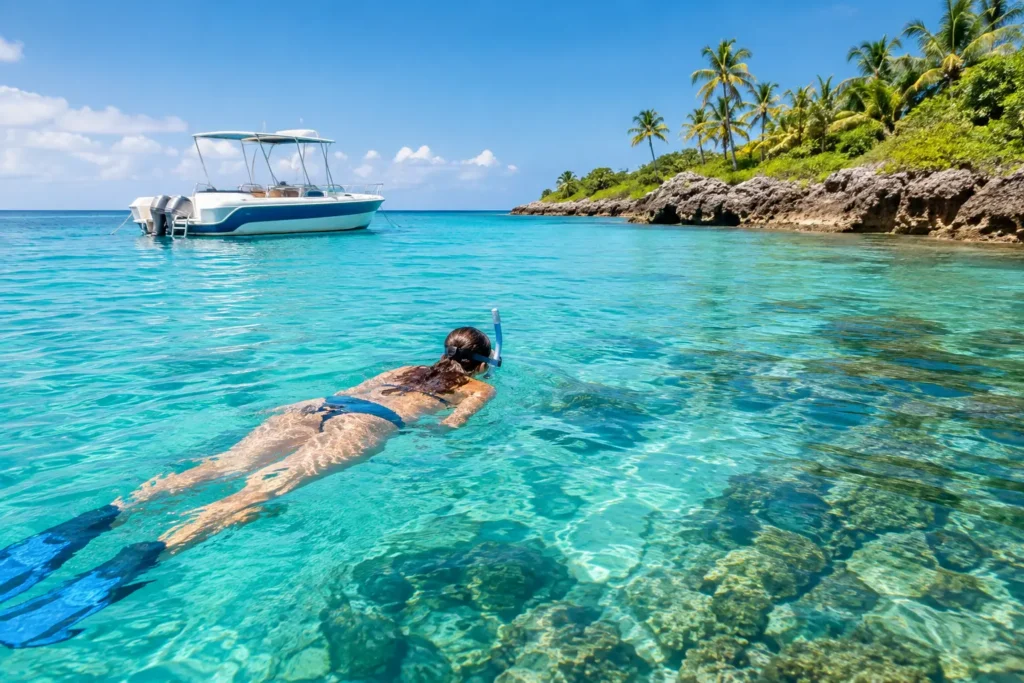
The best Bayahibe marine park visitor guide starts with one simple decision: do not treat this coast like a quick photo stop. The protected waters, reefs, seagrass beds, mangroves, and islands near Bayahibe reward travelers who give the day some breathing room. Leave early, choose a crew that knows the routes, and you can trade crowded boats and rushed beach stops for clear water, quiet coves, and time to actually look beneath the surface.
Bayahibe is the practical gateway to Parque Nacional Cotubanamá, still widely known by many visitors as Parque Nacional del Este. The park stretches across a remarkable section of the southeast Dominican Republic and includes the Saona coastline, offshore cays, reefs, and coastal habitat. People often use “Bayahibe marine park” as convenient shorthand, but it is not one small, fenced-off attraction with a single entrance. It is a living protected landscape, and your experience depends heavily on where you go, when you depart, and how your boat day is run.
What Makes the Bayahibe Marine Park Special
This stretch of Caribbean water has variety that is easy to underestimate from shore. One morning can include a shallow reef with schools of bright tropical fish, a stop over pale sand in water so clear it seems unreal, and a beach backed by palms on Saona Island. For divers, the appeal goes deeper: reef structures, walls, wreck opportunities, and conditions that can suit both a first underwater experience and a certified diver looking for more than a resort swim.
The park’s value is not just the postcard color. Seagrass meadows provide feeding grounds for marine life, mangroves shelter juvenile fish, and coral reefs form a complex habitat that needs careful visitation. Sea turtles, rays, reef fish, seabirds, and occasionally dolphins may be seen, but wildlife is never an item on a guaranteed checklist. A responsible crew will never chase an animal just to create a better video.
Water conditions are generally inviting year-round, with warm temperatures and often excellent visibility. Still, the Caribbean sets the agenda. Wind direction, current, seasonal weather, and recent rain can affect sea state and visibility. The right itinerary is the one matched to the conditions, not the one copied from a brochure.
Choose Your Day: Saona, Reef, or Dive Site
For many visitors, Saona Island is the headline destination. Its long white beaches and turquoise shallows are extraordinary, but the experience can vary dramatically. Large catamaran excursions tend to arrive on a fixed schedule, often concentrating people at the same beach areas around midday. A private or small-group boat can depart earlier, adjust its stops, and seek calmer or quieter sections when conditions allow.
A Saona day is best for couples, families, and groups who want a blend of beach time, swimming, scenery, and easy snorkeling. It is also the better choice if not everyone in your party wants to scuba dive. Ask how much time is spent traveling versus enjoying the water, whether lunch is flexible, and how the captain chooses stops when popular areas are busy.
Reef snorkeling is a different kind of day. It works especially well for travelers who want to stay active and see marine life without committing to a dive course. The key question is depth. Some reefs look beautiful from a boat but sit too deep for relaxed snorkeling, while others offer plenty to see in shallow water. If anyone in your group is a nervous swimmer, say so before departure. A good operator can choose a gentler site, provide flotation support, and avoid turning a vacation highlight into a stressful hour.
Scuba diving gives you the closest look at the underwater side of the region. Certified divers can seek guided reef and wreck dives, while beginners can start with a supervised Try Scuba experience or an SSI course. Do not choose a dive solely because it is described as “advanced” or “exclusive.” Current, depth, surface conditions, air consumption, and comfort level all matter. The best dive is the one that lets you stay calm, curious, and present.
When to Go and Why Early Departures Matter
An early start is one of the most valuable upgrades you can make. Morning water is often calmer before afternoon winds build, and arriving ahead of the main excursion traffic changes the feel of Saona’s beaches and natural pools. It also gives your captain more room to adapt if weather shifts later in the day.
For snorkeling and diving, early departures can mean better light and less disturbed water. For photography, the difference is obvious: empty stretches of sand, cleaner horizons, and fewer boats in every frame. It is not about racing through the day. It is about earning a slower day once you arrive.
The Dominican Republic is warm throughout the year, but no month is identical. Summer can bring hotter days and very warm water. Winter often feels especially comfortable for travelers escaping colder climates, though wind can influence boat routes. Hurricane season deserves practical respect rather than alarm. Reputable operators watch forecasts, sea conditions, and official guidance, then change or cancel plans when safety requires it.
What to Bring for a Comfortable Water Day
Pack light, but pack with intention. A rash guard or sun shirt is more useful than relying on repeated sunscreen applications, especially if you plan to snorkel for a while. Bring a reusable water bottle, a dry bag for phone and valuables, sunglasses with a secure strap, a towel, and a change of clothes for the ride home.
Use reef-conscious sun protection when possible, and apply it well before entering the water. More importantly, cover up. Sun shirts, hats, and shade do more to reduce product entering the sea than any label alone. If you take prescription medication or are prone to motion sickness, prepare before boarding. The ride can be smooth one day and choppy the next.
For divers, bring certification information if applicable and be honest about your recent experience. If it has been years since your last dive, a refresher is a smart choice, not an embarrassment. Divers should also plan conservatively around flights. Your crew can advise on standard no-fly intervals after diving, but your departure schedule should never pressure you into cutting safety margins close.
How to Visit Without Loving the Park to Death
Protected water stays beautiful only when guests and operators make good choices. Keep fins, hands, and knees away from coral. Even a brief touch can damage fragile living structures or stir sediment over them. Do not stand on reef, collect shells or starfish, feed fish, or remove anything from the beach or seabed.
Give turtles, rays, and other wildlife room to choose their own path. A respectful encounter is one where the animal does not change its behavior because you are there. If you snorkel near a natural pool, remember that shallow sand is not an invitation to leave trash, plastic cups, or food behind.
Boat practices matter too. Ask whether the crew uses designated moorings instead of dropping anchor on sensitive areas, how they manage waste, and whether they limit group size. These details may sound small, but they separate a thoughtful day on the water from a high-volume outing that happens to visit a beautiful place.
Picking the Right Boat Experience
There is no single “best” trip for every traveler. A family with young children may prioritize shade, a restroom, flotation gear, and flexible swim stops. A couple may want a quieter route and unhurried beach time. Certified divers may care most about guide ratios, site selection, equipment quality, and whether the crew will accommodate their experience level.
Before booking, ask direct questions about the departure time, maximum guest count, what is included, likely route options, weather policy, food and drinks, safety equipment, and how much freedom the captain has to avoid crowds. If the answers are vague, the day may be vague too.
For travelers who want a boutique format, Sharky’s Crew combines local boat knowledge with guided dive experience and can shape private or small-group days around the people actually on board. That matters when one guest wants to snorkel, another wants to dive, and everyone wants to arrive at Saona before the busiest hours.
Let the Conditions Set the Pace
The most memorable Bayahibe water days rarely follow a rigid script. They are the days when a captain reads the wind, chooses the clearer side of an island, finds the calmer anchorage, and gives guests time to enjoy it. Come ready for the plan to flex a little, keep your expectations centered on the experience rather than a checklist, and leave the reef exactly as you found it. The Caribbean will do the rest.
