


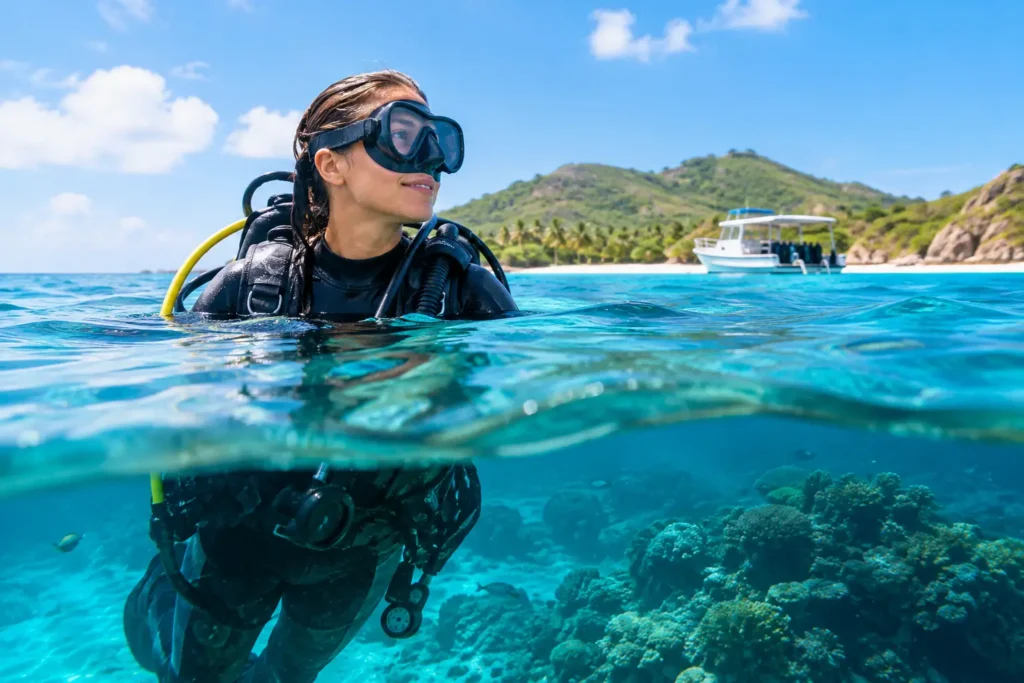
The best Caribbean scuba certification travel guide starts with one decision that shapes the whole vacation: do you want to squeeze a course between beach days, or make learning to dive one of the main reasons you came? Get the timing right and your first breaths underwater can lead to coral gardens, sea turtles, wrecks, and the kind of shared memory that outlasts any resort photo.
For travelers visiting the Dominican Republic, Bayahibe makes that choice easier. Its protected coastline, warm water, short boat rides, and access to the reefs of Parque Nacional del Este create a setting where beginners can learn without spending half the day in transit. It feels adventurous, but it does not need to feel rushed.
Choose the Right Certification Before You Book
Most travelers looking for a first certification should plan for an SSI Open Water Diver course. This is the internationally recognized entry-level certification that allows you to dive independently with a buddy, within the limits of your training, rather than only with an instructor. It is the right goal if you know you will want to dive again in Mexico, Hawaii, the Mediterranean, or another Caribbean destination.
A Try Scuba experience is different. It is an excellent introduction for someone who is curious, nervous, short on time, or traveling with a partner who wants to test the experience before committing. You will learn essential skills and dive under direct professional supervision, but it is not a full certification. For many couples and families, one person begins with Try Scuba while another starts the Open Water course, then the plan can be adjusted around everyone’s comfort level.
There is no prize for choosing the fastest path. If you have never been comfortable in deep water, have not swum in years, or simply want more time to absorb the skills, build in an extra day. A private or small-group format can make a major difference here: less waiting, more direct feedback, and a pace that respects the person who needs a second attempt at mask clearing or buoyancy control.
Caribbean Scuba Certification Travel Guide: Plan Your Days
A full Open Water course usually combines digital academics, confined-water skill practice, and four open-water training dives. When all elements are completed at the destination, allow at least three full days. Four days is more relaxed, especially if you are arriving after a long flight, traveling with children, or want a genuine vacation around the course.
The smartest itinerary puts learning first and flying last. Complete the academic portion before you travel when available, schedule your water sessions early in the trip, and leave a buffer after your final dive. Divers should avoid flying for at least 18 hours after multiple dives or multiple days of diving, and a longer 24-hour buffer is a conservative choice when your schedule allows. Your instructor can advise on the appropriate no-fly interval for your actual dive profile.
That means a seven-night trip has plenty of room to breathe. Arrive and settle in on day one. Use the next three or four days for certification. Keep a later day open for guided fun dives once certified, a private boat day toward Saona or Catalina Island, or simply an unhurried beach afternoon. Save the final full day for land-based plans before departure.
Trying to certify on the day before an international flight is not adventurous. It is unnecessary pressure, and it removes the flexibility that makes a Caribbean trip special.
Bring the Right Documents, Not Extra Gear
Your dive center will provide the core equipment, including regulator, BCD, weights, tanks, and wetsuit or rash guard as conditions require. You should bring comfortable swimwear, reef-safe sun protection for surface time, a towel, and any prescription medication you may need. A secure strap for sunglasses is useful on a boat.
The paperwork matters more than most first-time divers expect. Complete the training and medical questionnaire honestly before arriving. Some medical conditions, medications, recent surgeries, pregnancy, or a history of lung, heart, or ear issues may require clearance from a physician before participating. This is not a formality. A good dive professional would rather solve a question early than put you in an uncomfortable position at the dock.
If you wear glasses, ask about options in advance. Contact lenses work for many divers, while prescription masks can be arranged in some cases. If you are prone to motion sickness, speak to a medical professional about suitable medication and take it early enough to be effective. Calm Caribbean water is common, but no captain can promise a completely flat sea every day.
Why Bayahibe Works for New Divers
A certification destination should offer more than clear water. Beginners benefit from manageable conditions, varied depths, well-run boats, and instructors who know the site well enough to choose the right one for the day. Bayahibe’s coastal reefs offer that balance, with water temperatures that are typically comfortable year-round and visibility that can make basic skills far less intimidating.
The local advantage is practical. Shorter rides mean more energy for learning, fewer chances to feel seasick, and more time discussing what happened underwater. Protected sites can be selected for the day’s wind and sea conditions, while more experienced divers have access to deeper reefs and wrecks after certification. The Caribbean is not identical from island to island, or even from morning to afternoon, so local judgment matters.
At Sharky’s Crew AKA Diving DR, the value of nearly 20 years in Bayahibe is not just knowing the scenic spots. It is knowing when a new diver will be more comfortable at a sheltered reef, when an early departure offers the best conditions, and when a family needs a slower, more personal schedule. That level of care is what turns instruction into confidence.
Learn the Skills That Make Every Future Dive Better
Open Water certification is not about proving that you can handle a difficult situation alone. It is about practicing predictable responses until they feel calm. You will learn to set up and check equipment, control your buoyancy, clear water from your mask, recover your regulator, communicate underwater, and plan a dive with your buddy.
Buoyancy deserves special attention. New divers often imagine the ocean experience will be mostly about swimming, but the real magic comes when you can hover without touching coral or kicking sand across a reef. It protects the environment and makes you more relaxed, more efficient with air, and better able to notice the small life that hurried divers miss.
Do not judge your progress against the fastest student in the group. Some people take naturally to mask skills; others are immediately comfortable with buoyancy. A professional instructor adapts the session, explains the reason behind each skill, and gives you time to repeat it. The goal is not to finish with a signed card. The goal is to leave feeling capable enough to want the next dive.
Make the Course Part of the Vacation
Certification days should still feel like Caribbean days. Choose a center that keeps groups small, provides clear schedules, and is honest about what weather conditions mean for the plan. Ask whether you will be on a dedicated training boat, how many students share one instructor, where the confined-water sessions happen, and whether equipment is included. These details affect the experience far more than a flashy course discount.
For couples, it can be worth booking a private guide when one person is more anxious or when both want the freedom to move at their own pace. Families should ask about minimum ages, swimming requirements, and how the center manages different confidence levels. Corporate groups need similarly thoughtful planning: a shared Try Scuba session can be a memorable team day, but not everyone needs to be pushed into a certification course on a fixed timetable.
Once certified, celebrate properly. Take a guided reef dive while the skills are still fresh, then trade tanks for a private boat ride toward white-sand beaches and shallow turquoise water. The transition from student to diver happens quickly when you get to use your new skills in a place that feels extraordinary.
Your first certification should leave room for wonder. Give yourself enough days, choose people who listen, and let the Caribbean reward your patience with the moment you realize the reef is no longer something you are visiting – it is a world you know how to enter.
