


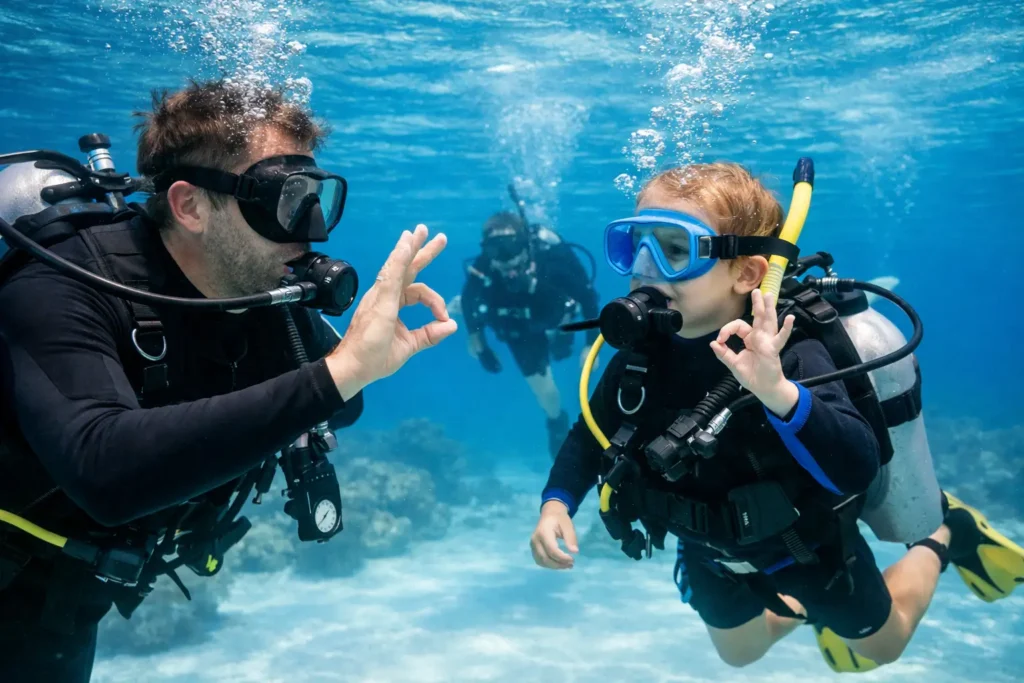
A child hovering over a bright Caribbean reef, wide-eyed behind a mask, can be one of the best family travel memories there is. But can children take scuba lessons safely? Yes, many can – when the program matches their age, comfort level, and attention span, and when the instructor keeps the experience genuinely child-centered rather than trying to rush a junior diver into an adult activity.
Scuba is not simply swimming with a tank. Children need to understand basic safety rules, equalize their ears comfortably, communicate underwater, and remain calm if something feels unfamiliar. The right first lesson turns those skills into an exciting adventure. The wrong setting can make a child feel pressured, cold, or overwhelmed.
Can Children Take Scuba Lessons at Any Age?
Not at any age. Most recognized scuba training agencies offer supervised introductory water experiences from age 8, while a junior entry-level certification usually begins at age 10. Exact course names, depth limits, and requirements vary by agency and local operating rules, so families should always confirm the details with the dive center before booking.
For children ages 8 and 9, the focus is typically on shallow-water activities designed specifically for young divers. These sessions introduce breathing from a regulator, mask skills, buoyancy, and underwater communication in a closely controlled environment. They are not a shortcut to adult certification, and that is a good thing. At this age, success looks like comfort, curiosity, and a child who wants to come back smiling.
At age 10, many children can begin a Junior Open Water program. The academics and core skills are serious, but instructors should teach them at a pace appropriate for a young learner. Junior certifications also come with depth limits and supervision requirements that change as the diver gets older. A responsible center will explain those limits clearly, rather than treating a junior card as identical to an adult certification.
Children younger than 8 are generally better suited to snorkeling, swimming, and boat adventures. In Bayahibe’s warm, clear water, a child can see plenty from the surface: reef fish flashing beneath the boat, sea grass, and calm blue water that makes snorkeling feel like a real expedition. There is no prize for starting scuba early. The goal is to start when the child is ready.
Readiness Matters More Than a Birthday
Age is the starting point, not the whole answer. One confident 10-year-old may be ready to learn, while another may need a season of snorkeling and pool time first. Parents know their child best, but a good dive professional should also ask questions before the session begins.
A child is often a strong candidate for lessons if they are comfortable in water, can listen and follow multi-step instructions, and can tell an adult clearly when they are worried, cold, or uncomfortable. They do not need to be fearless. In fact, a little healthy caution is often better than overconfidence. What matters is whether they can pause, communicate, and respond to coaching.
Swimming ability is also relevant. Course providers set their own swim and watermanship requirements, especially for certification programs. A child who still panics when their face gets wet or refuses to float independently may enjoy a gradual swim-based introduction before adding scuba equipment.
Physical health deserves an honest conversation too. Ear problems, asthma, heart conditions, recent illness, or medication can affect whether diving is appropriate. A dive center may request a medical questionnaire and, in some cases, clearance from a physician. This is not paperwork for paperwork’s sake. Equalizing pressure in the ears and breathing underwater are not areas where guessing is acceptable.
What a Great First Scuba Lesson Looks Like
The best youth scuba session feels organized but unhurried. Before anyone enters the water, the instructor should explain the equipment in simple language and let the child handle it. A regulator can look strange on land. Once a child understands that it is simply the device that delivers air, it becomes far less intimidating.
Instruction should begin in calm, shallow water or a pool-like setting. The first skills are deliberately simple: breathing through the regulator, clearing a little water from the mask, recovering the regulator, and using hand signals. Children learn best when they can repeat a skill without feeling watched by a large group or hurried by a schedule.
Small ratios matter. A child should never feel like one face in a crowd of adults. Private or very small-group instruction gives the instructor room to notice the quiet signals: a child who is getting chilly, struggling to equalize, or nodding along without truly understanding. It also lets families enjoy the moment together without competing for attention.
A strong instructor keeps the tone positive without making promises they cannot keep. Some children love their first breath underwater immediately. Others need ten minutes, two attempts, or a decision to stop for the day. All of those outcomes can be successful when the child leaves feeling respected.
Safety Questions Parents Should Ask
Before choosing a program, ask who will be in the water with your child and how many students each instructor will supervise. Ask whether the session begins in confined, shallow water and what happens if your child decides not to continue. A professional answer should sound calm and specific, never defensive.
It is also worth asking about equipment sizing. Poorly fitted masks, fins, wetsuits, and buoyancy devices can turn a fun experience into a frustrating one. Youth equipment should fit the child now, not be improvised from adult gear that is too large.
Parents should also understand the plan for conditions. The Caribbean can be beautifully calm, but weather, wind, current, and visibility always influence a day on the water. The right operator is willing to change the site, adjust the itinerary, or reschedule if conditions are not right for junior divers. Flexibility is part of safety, especially with children.
Finally, check the center’s training affiliation, instructor credentials, emergency procedures, and approach to medical forms. An SSI dive center, for example, follows established training standards and age-specific pathways. Credentials do not replace good judgment, but they provide an important foundation.
Why Bayahibe Works Well for Family Diving
For families visiting the Dominican Republic, Bayahibe offers a particularly welcoming setting for a first underwater experience. Water temperatures are usually comfortable, and many nearby sites have clear water and gentle conditions that help new divers focus on the fun part: watching a parrotfish nibble at coral or spotting a shy ray crossing the sand.
That does not mean every site is right for every child. Open-water conditions can change, and some reef or wreck dives are better reserved for experienced divers. A local crew with real knowledge of the coastline can select a sheltered location, choose a sensible departure time, and avoid turning a child’s first lesson into an overly ambitious boat day.
At Sharky’s Crew, the best family experiences are built around that flexibility. A child’s first underwater breaths should not be squeezed between a packed schedule and a crowded boat. They deserve patient instruction, gear that fits, and a crew that understands that parents are trusting them with more than a vacation activity.
Help Your Child Arrive Ready
You do not need to turn the weeks before vacation into scuba boot camp. A few simple conversations can make a meaningful difference. Explain that they will breathe slowly through a mouthpiece, use hand signals instead of talking, and can always signal that they want to stop. Make it clear that changing their mind is allowed.
If possible, let them practice putting their face in water with goggles and blowing bubbles. Watch a short, age-appropriate explanation of scuba gear together, then let them ask every question that comes to mind. “What if I need to sneeze?” and “What if a fish comes close?” are not silly questions. They are signs that a child is imagining the experience and preparing for it.
Avoid tying the lesson to a big expectation. Instead of saying, “You have to get certified on this trip,” try, “We’ll see how it feels, and you can decide how far you want to go.” That single shift removes pressure and gives the child room to become a confident diver in their own time.
The finest first scuba lesson is not measured by depth or by a certificate handed out at the end of the day. It is the moment your child surfaces, pushes back their mask, and says, “Can we do that again?”
