


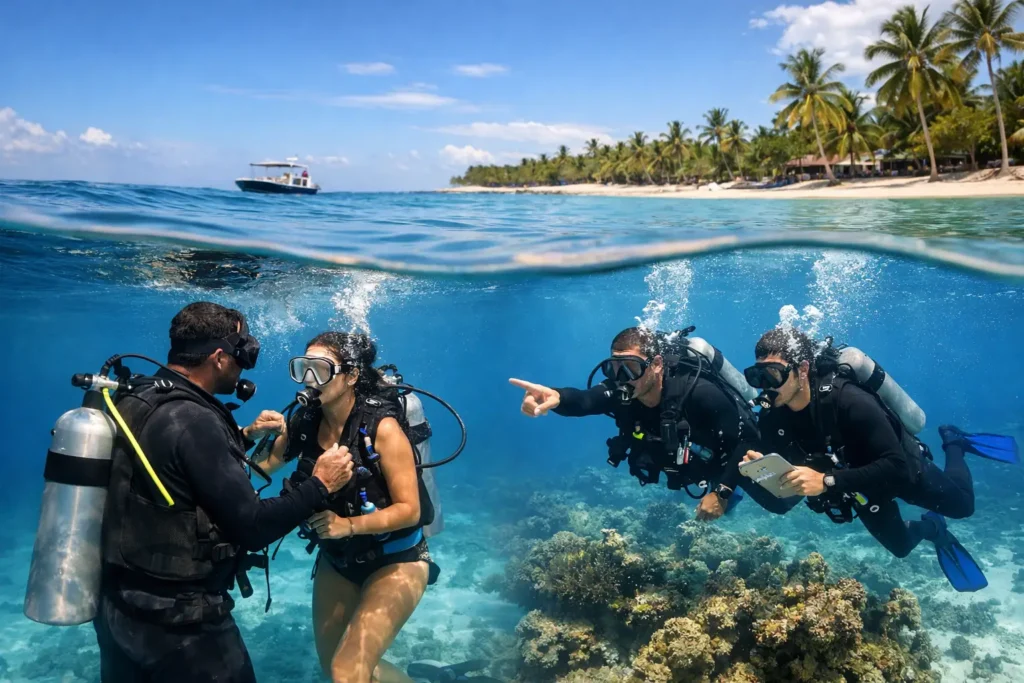
The Caribbean is right there, warm and brilliantly clear, and you are deciding whether to take one unforgettable breath underwater or start a skill that can take you around the world. Choosing Try Scuba versus a certification course comes down to more than how much time you have on vacation. It is about what you want to feel when the boat heads back to shore: thrilled by a first encounter with the reef, or ready to plan your next dive anywhere certified divers go.
Both options can be extraordinary in Bayahibe. The reefs are accessible, the sea stays inviting through much of the year, and a well-run experience makes a first dive feel personal rather than rushed. The right choice depends on your confidence in the water, your schedule, and whether this is a vacation highlight or the beginning of a new passion.
Try Scuba versus a certification course: the real difference
A Try Scuba experience is a supervised introduction to scuba diving for people who are not certified. You begin with a clear, practical briefing, learn the key equipment signals and skills, and practice in shallow water with an instructor before heading out for a closely supervised ocean dive. You remain with a professional from start to finish. No previous scuba experience is required.
An SSI Open Water certification course is training that qualifies you to dive with a buddy, within the limits of your certification, after the course is complete. It includes learning the principles behind safe diving, practicing skills until they become comfortable, and completing qualifying open-water dives. It asks more of your time and focus, but it gives you far more independence afterward.
Think of Try Scuba as a beautifully guided first taste. A certification course is the foundation that lets you keep going long after your Dominican Republic trip is over.
Choose Try Scuba when you want one great day underwater
Try Scuba is ideal when scuba is one part of a packed vacation. Perhaps you have a Saona Island day, dinner reservations, family plans, and only one open morning. Or maybe you have always been curious but do not yet know whether breathing underwater will feel natural to you.
You do not need to arrive as an expert swimmer, but you should be comfortable in the water and able to listen carefully, follow instructions, and stay relaxed. Your instructor will show you how the regulator works, how to clear water from your mask, how to communicate underwater, and how to move gently around the reef. The goal is not to test you. The goal is to help you feel prepared enough to enjoy the experience safely.
The payoff is immediate. You can float above coral, watch schools of tropical fish pass through the blue, and discover why experienced divers still talk about their first breath underwater. For couples, families with eligible teens and adults, or a small corporate group looking for a shared adventure, it is a memorable way to do something genuinely outside the usual beach itinerary.
There is also no pressure to turn the day into a bigger commitment. If you simply want a carefully supervised ocean experience led by a multilingual professional, Try Scuba is a complete adventure on its own.
What Try Scuba does not provide
The most important expectation to set is simple: a Try Scuba dive does not make you a certified diver. You cannot take that experience to another destination and book independent recreational dives based on it alone. You will need to complete a recognized certification course before doing so.
That is not a drawback. It is the correct safety boundary. A first dive is about learning how scuba feels in real conditions with direct professional supervision. Certification is about building repeatable skills, sound judgment, and comfort across several dives.
Choose certification when scuba may become part of your life
An SSI Open Water course is the better call if you already know you want to dive beyond this vacation. Maybe you have a partner who is certified, you are planning future trips to the Caribbean or Pacific, or you want access to reefs, wrecks, and marine life that are best appreciated from below the surface.
The course takes more time because it teaches the details that make independent buddy diving possible. You will learn equipment setup, buoyancy control, navigation basics, safe ascent practices, problem-solving skills, and how to make sensible decisions underwater. There is classroom or digital learning as well as pool or confined-water practice and open-water dives.
For many guests, the extra time is exactly what makes the experience more rewarding. Instead of concentrating only on the novelty of breathing through a regulator, you begin noticing the small things: how to hover without touching the reef, how your breathing changes your position, and how much calmer the underwater world becomes when your movements are controlled.
Bayahibe is a strong place to begin because local sites can offer the variety new divers need without making every session feel like a major expedition. With almost 20 years of local knowledge, the family-run team at Sharky’s Crew can tailor the pace around your comfort while keeping the standards of a professional SSI dive center firmly in place.
The trade-off is time now versus freedom later
There is no universally better option. Try Scuba wins when your priority is a low-commitment, professionally guided first experience. Certification wins when you want a skill that continues to pay off on future travels.
A Try Scuba session typically fits within a single planned experience. Certification requires you to reserve multiple sessions and arrive ready to learn, practice, and repeat skills. If you are celebrating a honeymoon and have only a few days, an introductory dive may protect the relaxed pace you came for. If you have a week or more and the idea of future diving excites you, using part of that trip for certification can be an excellent investment.
Budget deserves an honest look as well. Certification costs more because it includes more instruction, training materials, equipment use, and qualifying dives. But it is not just a longer version of an introductory dive. It is a credential and a set of practical abilities that can shape years of travel.
Confidence matters, but nerves are normal
First-time guests often assume they need to feel fearless before booking. They do not. Plenty of excellent divers began their first session feeling excited and nervous at the same time. What matters is being honest with the crew about your water experience, any concerns about equalizing your ears, and whether you prefer extra time before entering the ocean.
For a Try Scuba experience, that honesty helps your instructor set the right pace. For a course, it helps create a learning environment where questions are encouraged and skills are practiced patiently rather than rushed.
If you have asthma, heart conditions, recent surgery, pregnancy, ear issues, or any health concern that could affect diving, speak with a qualified physician before making plans. Diving also requires completing the relevant medical questionnaire. Safety is not a formality here. It is what allows the adventure to stay fun.
Ask yourself these three questions before booking
First, do you want to try scuba once on this trip, or do you want to be able to dive on future vacations? Second, can you comfortably dedicate the time and attention a certification course deserves? Third, would you rather start with a gentle supervised introduction before deciding whether to continue?
If the answer to that last question is yes, Try Scuba is a smart choice, not a lesser one. Many people use it to confirm what they suspected all along: they love the calm, the color, and the strange freedom of being underwater. Others enjoy the experience and are happy to leave it as one special vacation story. Both are valid outcomes.
If you already feel pulled toward wrecks, reef walls, night dives, and the quiet satisfaction of becoming capable in a new environment, go for certification. The work is real, but so is the reward.
The sea does not require you to choose a whole new identity before your first descent. Choose the experience that fits this trip, give yourself a crew that listens, and let that first view of the reef tell you what comes next.
