


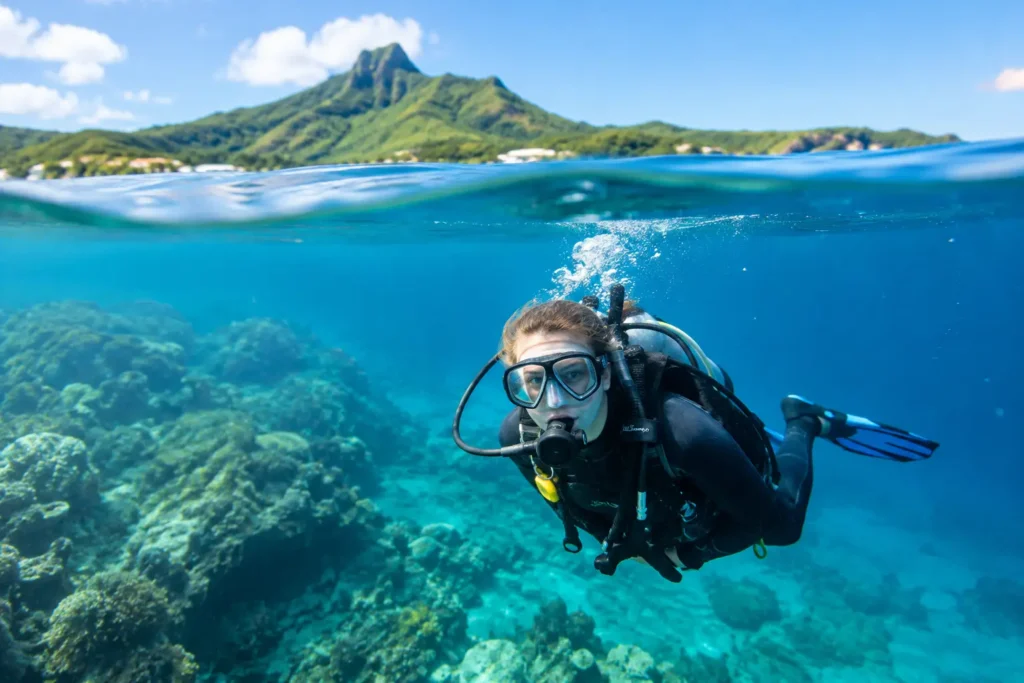
St George diving usually means diving from St. George’s, Grenada, a Caribbean destination known for dramatic wrecks, healthy reefs, and volcanic underwater terrain. It can be an excellent choice for divers who want a destination built around exploration. But if your Caribbean vacation also includes first-time divers, family members, private boating, or a day on Saona’s white-sand coast, it is worth comparing it with Bayahibe before you commit to an itinerary.
The better destination is not simply the one with the most famous site. It is the one that fits your experience level, travel style, preferred pace, and the people sharing the boat with you.
What Makes St George Diving Different?
Grenada has earned its reputation with serious recreational divers for good reason. The waters around St. George’s offer a striking mix of coral reefs, sloping walls, smaller wrecks, and the celebrated Bianca C wreck. Often called the Titanic of the Caribbean, this large shipwreck is a compelling draw for advanced divers who are comfortable with depth, current, and a more technical sense of scale.
That variety gives St. George diving a rugged, exploratory personality. A week there can include reef dives one day and wreck-focused adventures the next, with changing topography and marine encounters that reward experienced divers who enjoy seeking out details.
There are trade-offs. Conditions can vary with weather, wind, currents, and sea state, as they do throughout the Caribbean. Some of the marquee wreck diving is not designed for a nervous beginner or a diver returning after a long break. If the biggest appeal is a deep, imposing wreck, confirm the depth, certification requirements, planned profile, and whether the operator expects recent experience.
For the right certified diver, that preparation is part of the attraction. For a mixed group, it may mean some travelers spend their vacation watching from shore while others take on the more demanding dives.
Bayahibe Brings a Different Kind of Caribbean Day
Bayahibe, on the Dominican Republic’s southeast coast, is less about one famous deep wreck and more about building an easy, beautiful day on the water for a broad range of guests. Its protected location near Parque Nacional del Este and the Saona coastline often means calm conditions, warm water, and clear visibility that lets first-time divers relax while still giving certified divers plenty to enjoy.
The underwater landscape includes colorful reef systems, coral gardens, swim-throughs, and wreck options, with local sites selected according to the day’s conditions and each guest’s comfort level. Rather than treating every diver as if they want the same profile, a good local crew can shape the experience around what the group actually came for: a first breath underwater, a relaxed reef dive, underwater photography, or a more adventurous certified-diver outing.
This matters when a vacation is not only about scuba. Bayahibe is also a natural gateway for private boat days to Saona Island, Catalina Island, and the Chavon River. One traveler can snorkel in shallow turquoise water while another enjoys a guided dive, then everyone can share a beach stop without joining a crowded catamaran schedule.
That flexibility is especially valuable for couples, multigenerational families, and corporate groups. You do not need every person to be a certified wreck diver for the day to feel special.
Wrecks, Reefs, and Who Each Destination Suits
If your trip is centered on wreck diving, Grenada has an obvious advantage. St. George’s gives experienced divers access to wrecks that can be the main event, particularly for those who enjoy history, penetration training, advanced profiles, and the atmosphere of a large sunken vessel. It is a strong match for dive buddies who want to spend most of their holiday underwater.
Bayahibe is often the more natural fit for divers who want reefs and wrecks without making their entire vacation a technical project. Certified divers can still enjoy wreck dives and memorable reef exploration, but the surrounding experience is gentler and more adaptable. It is also an excellent setting for someone who has always wanted to try scuba but is not ready to commit to a full certification course before arriving.
For beginners, the question is not which destination has the better reputation. It is whether the operator provides proper briefings, well-maintained equipment, unhurried instruction, and an instructor who will not rush the first descent. Calm water and patient guidance can turn a first Try Scuba experience into the highlight of a trip. Pressure to keep up with a packed boat schedule can do the opposite.
The Real Decision: What Does Your Group Want?
A dedicated pair of advanced divers may choose St. George’s for its wreck legacy and leave thrilled. A family with two certified divers, two snorkelers, and a teenager curious about scuba may get more from Bayahibe, where the boat day can have room for everyone. Neither choice is automatically better. The group composition changes the answer.
Before booking, ask whether dives are organized by certification level, how many guests are on each boat, and what happens if conditions shift. Ask where the boat departs, how long the ride takes, and whether surface intervals happen at a marina, a beach, or offshore. These details shape your experience more than a destination photo ever will.
Private or small-group charters are particularly worth considering if you are traveling for a honeymoon, a milestone birthday, or a company retreat. The premium is not just about having more space. It is about choosing your departure time, adjusting the day for sea conditions, staying longer where the water is at its best, and having a crew that knows your names and your confidence levels.
When Visibility and Comfort Matter Most
Both Grenada and the Dominican Republic can offer excellent Caribbean visibility, but no responsible operator should promise identical conditions every day. Rainfall, wind direction, seasonal swells, and currents all affect what you see below the surface. A skilled crew watches those variables and chooses sites accordingly.
Water temperature is comfortably warm through much of the year in both destinations, although personal tolerance differs. Some divers are happy in a thin wetsuit; others enjoy a little more insulation on a longer two-tank day. If you tend to get cold, say so before departure. Comfort affects air consumption, buoyancy, and how much you enjoy the final part of the dive.
For photographers, reef health, sun angle, current, and the size of the group can matter as much as visibility. A compact group with a guide who understands the site gives you more time to settle, frame a shot, and wait for marine life instead of following a rushed parade of fins.
A Better Way to Plan a Bayahibe Dive Day
If Bayahibe fits your travel plans, start by being direct about your experience. Tell the dive center whether you are certified, when you last dived, whether you have any concerns about equalizing, and what kind of day you want. A first-time diver needs a different plan than an advanced guest hoping for a wreck, and that is completely normal.
At Sharky’s Crew, also known as Diving DR, the advantage of nearly 20 years in these local waters is not simply knowing the route to a site. It is knowing when a particular reef will suit the day, where a private group can avoid the busiest traffic, and how to pair diving with a boat experience that feels personal rather than processed.
For certified guests, bring your certification information and logbook details if available, especially after a long layoff. For newcomers, avoid treating the first underwater breath as a test of bravery. Eat lightly, hydrate, listen closely during the briefing, and give yourself permission to go slowly. The ocean will still be there when you are ready.
Choose the Memory You Want to Take Home
Choose St. George’s if a legendary wreck and a dive-first itinerary are the reason you are traveling. Choose Bayahibe if you want clear, inviting water with room for reefs, wrecks, beginner-friendly instruction, and a private Caribbean boat day that includes the people you came with.
The best underwater experiences rarely come from forcing a famous site into the wrong kind of vacation. They come from a crew that reads the water, listens to the group, and gives you enough time to enjoy the moment when the surface disappears above you.
