


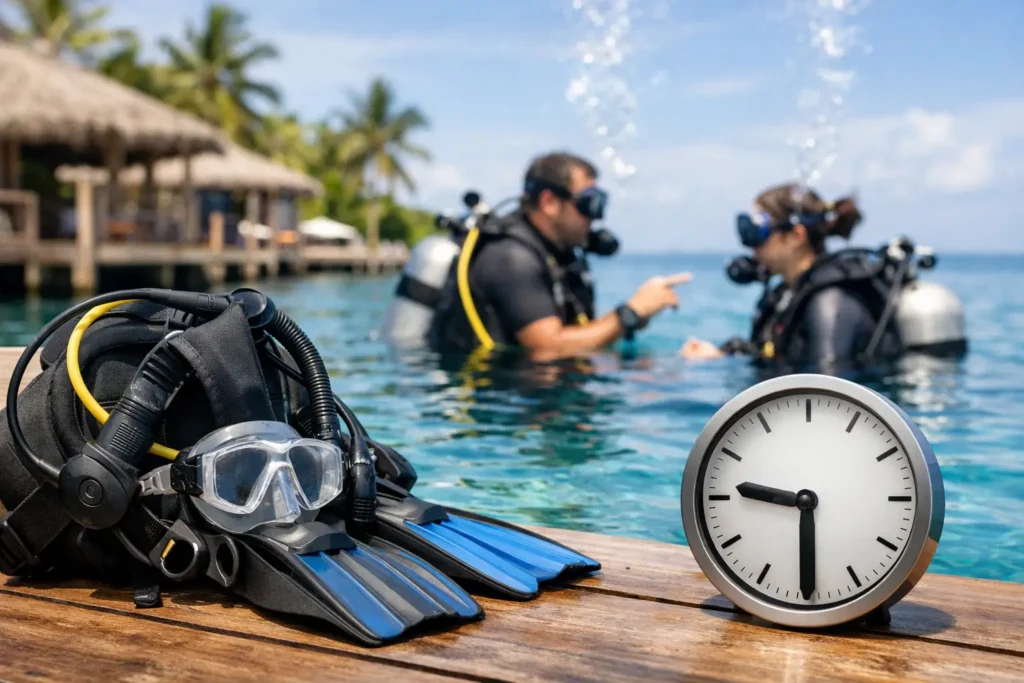
You do not need to give up half your vacation to become a certified diver. For most beginners, the honest answer to how long does scuba certification take is between 2 and 4 days. That said, the real timeline depends on the course format, how quickly you complete the academic portion, your comfort in the water, and whether you choose private training or a larger group schedule.
If you are planning a trip and trying to fit scuba into it without turning your whole itinerary upside down, that range matters. A certification course is structured, but it is not one-size-fits-all. Some people move through it smoothly in a couple of days. Others do better with a little more breathing room, especially if this is their first time using scuba gear or if they want a more relaxed pace.
How long does scuba certification take for most beginners?
For a standard entry-level Open Water certification, most people can complete the course in 2 to 4 days. That usually includes three parts: knowledge development, confined water training, and open water dives.
The academic portion can often be done online before you arrive. If you finish that ahead of time, your in-person training becomes much faster and easier to schedule. Instead of spending vacation hours in a classroom, you can focus on skills practice and your checkout dives.
Confined water training is where you learn the foundations – mask clearing, regulator recovery, buoyancy basics, and how to handle common situations calmly. Open water dives are where you apply those skills in the ocean under instructor supervision. For many travelers, these sessions are spread over 2 or 3 days. If weather, energy level, or scheduling comes into play, a 4-day plan can feel much more comfortable.
What affects how long scuba certification takes?
The biggest factor is how your course is organized. If you choose an online-first format, you can cut down a lot of in-destination time. If you do the academic work after arrival, expect things to take longer.
Your learning style matters too. Some students are confident in the water from the first session. Others need more time to get comfortable breathing underwater, equalizing, or managing buoyancy. That is normal. Scuba is not a race, and a good instructor will pace the course around actual readiness, not just a clock.
Group size also makes a difference. In smaller groups or private courses, there is often less waiting around and more direct coaching. That can make the experience smoother and, in many cases, faster. It also tends to feel better for nervous beginners, couples, and families traveling together.
Then there is the simple reality of vacation life. Flights arrive late. Kids get tired. You may want a free afternoon or a boat day in between. Building in flexibility is smart, especially if certification is one part of a bigger Caribbean trip.
The fastest route vs the best route
Yes, it is possible to get certified quickly. But the fastest route is not always the best route for every diver.
If you are already comfortable in the water, learn quickly, and complete your e-learning before arrival, an accelerated schedule can work well. Many travelers do exactly that and finish without feeling rushed.
But if this is your first real underwater experience, there is value in slowing down. A little extra time often leads to better buoyancy, more confidence, and a much more enjoyable first set of dives. That matters because certification is not the finish line. It is the beginning of everything that comes after.
A course should leave you feeling capable, not just technically passed.
A typical scuba certification timeline
Here is what a realistic beginner schedule often looks like.
Day 1: Academics and confined water skills
If your online coursework is not done ahead of time, part of the first day may include theory review. After that, you move into confined water training, where you learn core skills in a controlled environment.
This is usually the most mentally demanding day because everything is new. You are getting used to the equipment, learning hand signals, and figuring out how your breathing affects your buoyancy. With the right instructor, it is exciting, not intimidating.
Day 2: More skills and first open water dives
Many courses continue with additional confined water work if needed, then move into the first open water dives. This is where the course starts to feel real. You are no longer just practicing in a pool-like setting. You are underwater in the ocean, putting your training into action.
Day 3: Final open water dives
The remaining open water dives are typically completed on the third day. By this point, most students are noticeably more relaxed. Movements get smoother. Air consumption often improves. The whole experience shifts from task-focused to enjoyable.
Day 4: Flex day, weather buffer, or relaxed pace
Not every course needs a fourth day, but having one available is a smart move. It gives space for weather changes, extra practice, or simply a more comfortable pace. For a premium vacation experience, that extra margin can make everything feel far less stressful.
Can you get scuba certified in one day?
Not for a full Open Water certification. A proper certification requires academic learning, skills training, and open water dives. That takes more than one day.
What you can do in one day is a beginner experience, often called Try Scuba or a discovery program. This is a great option if you want to experience breathing underwater without committing to a full course during this trip. It is also ideal for travelers who want to test the waters before booking certification.
For some guests, that first experience becomes the turning point. One calm, clear dive is all it takes to realize they want the full certification next.
Is online learning faster?
Usually, yes. Completing the academics before your trip is one of the easiest ways to shorten your certification timeline.
It also makes your vacation feel more like a vacation. Instead of reading chapters and taking quizzes while everyone else is heading to the beach, you arrive ready for the practical part. That is especially useful for travelers on tighter schedules or anyone trying to balance scuba with island excursions, family time, or a few very lazy mornings.
The trade-off is simple. Online learning gives you convenience and speed, but it does require discipline before you travel. If you know you tend to procrastinate, a scheduled in-person format may keep you more accountable.
Does location make a difference?
Absolutely. Calm water, warm temperatures, good visibility, and short boat rides can make certification smoother and more enjoyable. Those conditions do not just make for prettier dives. They help beginners focus on skills without battling cold water, rough entries, or low visibility.
That is one reason so many travelers choose to learn in the Caribbean rather than at home. In places like Bayahibe, conditions often support a more comfortable training experience, especially for first-time divers who want to build confidence quickly. When the environment works with you, the course tends to feel easier.
Private lessons vs group courses
If you are wondering how long does scuba certification take in a private format, the answer is often still 2 to 4 days, but the experience can feel much more efficient.
Private instruction usually means tighter scheduling, more personalized feedback, and fewer delays between exercises. It is a strong fit for nervous beginners, families with mixed comfort levels, and couples who want a more personal pace. It is also ideal if your trip schedule is irregular and you need more flexibility.
Group courses can be a great value and a fun social experience. But they sometimes move at the pace of the slowest or least confident participant. That is not a bad thing from a safety standpoint, but it can stretch the schedule.
How much time should you actually set aside?
If you want the least stressful answer, plan for 3 to 4 days.
That gives you room to complete the course comfortably, adapt to weather if needed, and enjoy the process instead of watching the clock. If everything goes smoothly, great – you may finish sooner. If not, you will be glad you gave yourself breathing room.
For travelers booking a premium dive vacation, this is usually the smartest move. You are not just checking a box. You are learning a skill that can open up reefs, wrecks, and marine encounters all over the world.
Diving DR often sees the biggest smiles from guests who gave themselves enough time to learn properly and enjoy every step. That is where certification starts to feel less like a course and more like the beginning of a new kind of travel.
If scuba has been on your list for a while, this is your sign to stop overthinking the calendar. Set aside a few well-planned days, choose an instructor team that puts safety and personal attention first, and let your first breaths underwater be the start of something much bigger.
