


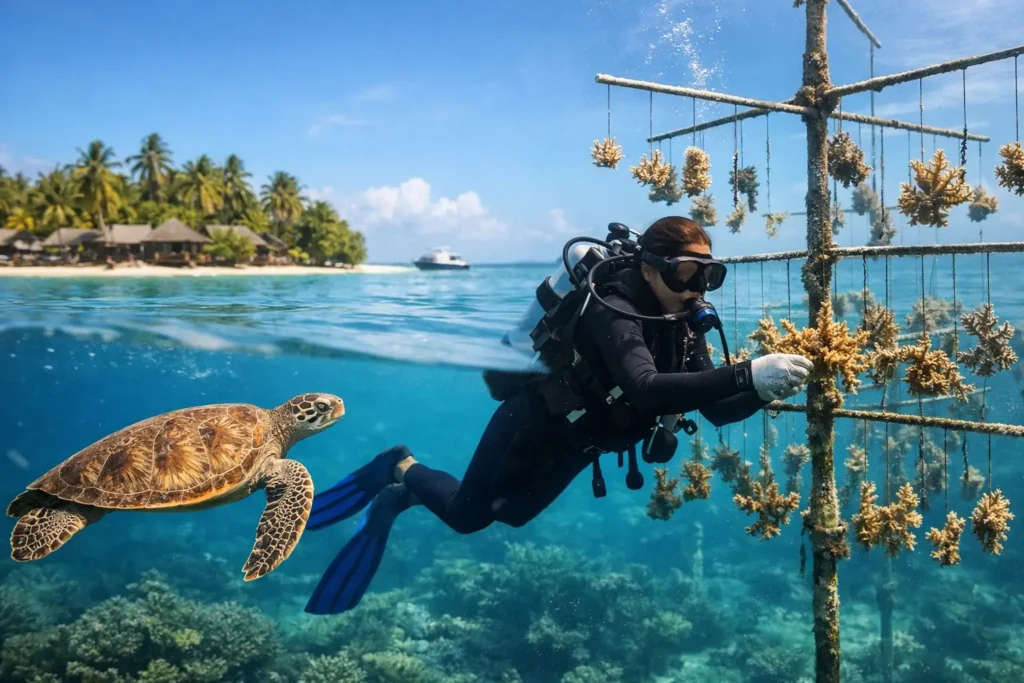
A reef can look perfectly healthy from the boat and still be under pressure. A few broken coral tips, a careless fin kick, an anchor dropped in the wrong place, or a crowded swim stop can add up quickly in warm, heavily visited Caribbean waters. That is why the future of eco dive tourism is not about adding a green label to a boat trip. It is about making better decisions before the first guest enters the water.
For travelers, this shift is good news. The best eco-minded diving and island experiences are often the ones that feel more personal, calmer, and more memorable: smaller groups, thoughtful routes, captains who know the conditions, and enough time to enjoy a place without rushing through it. Sustainability and a premium experience are no longer opposites. When done well, each makes the other better.
Eco Dive Tourism Is Moving Beyond the Checklist
Reusable cups, reef-safe sunscreen, and a quick briefing are worthwhile, but they are only the visible layer of responsible tourism. The real work happens in operations: how many people a boat carries, where it stops, how crews handle changing weather, whether moorings are used instead of anchors, and how a company responds when a site needs a rest.
A dive center or excursion operator cannot control every environmental issue affecting the Caribbean. Coral bleaching, coastal development, runoff, and warming seas are bigger than any one boat. But local operators do control the daily decisions that influence a reef’s immediate condition. That responsibility matters because visitors often follow the example set by their guides.
The next generation of eco dive travel will favor operators that can explain their choices clearly. Not with vague promises, but with practical standards: no-touch diving, buoyancy awareness, site rotation, responsible waste handling, and realistic group sizes. Guests should be able to see the difference in the experience itself.
Small groups are not just a luxury
A packed boat is harder to manage underwater. Guides have less ability to watch positioning, help a new diver settle their buoyancy, or prevent accidental contact with coral. On land, large arrivals can also overwhelm small beaches, natural pools, and fragile shoreline areas at the same time.
Small and private groups give crews room to adapt. If visibility changes, a family needs more time to get comfortable, or one site is busy, the captain can choose a better alternative. On a private trip, the schedule can also be built around the sea rather than a mass-tourism timetable.
There is a trade-off, of course. Smaller-group experiences usually cost more per guest than a crowded catamaran or a high-volume dive departure. But they can deliver more value where it counts: more attention, better pacing, a safer introduction for beginners, and less pressure on the places everyone traveled to see.
The Future of Eco Dive Tourism Will Be Local
Visitors can research ocean conservation before a trip, but local knowledge is what turns good intentions into responsible time on the water. A captain who understands currents, wind direction, boat traffic, and seasonal changes can select routes that are safer and less disruptive. A guide who knows a reef well can point out its life without turning the dive into an underwater obstacle course.
In Bayahibe, proximity to Parque Nacional del Este and the Saona coastline creates a special opportunity and a serious duty of care. These waters draw visitors because they are beautiful, clear, and alive with color. Keeping them that way requires respect for protected areas, appropriate access points, and a willingness to avoid the crowd when the crowd is the problem.
Early departures can play a role here. Reaching a destination before the busiest boats arrive is not only about getting better photos or a quieter beach. It can spread visitor pressure across the day and give guests a more natural experience of the coastline. A peaceful stop at Saona or Catalina Island feels different when there is space to hear the water, watch the shorebirds, and enjoy the horizon.
That does not mean every early departure is automatically sustainable. Fuel use, route planning, weather, and passenger numbers still matter. Responsible travel is rarely one single choice. It is a series of choices made carefully by both the crew and the guest.
Better Divers Make a Real Difference
The most effective reef protection often begins with skills, not equipment. A diver with controlled buoyancy, good trim, and calm finning can move over a reef without touching it. A diver who is anxious, overweighted, or chasing marine life for a close photo may cause damage without meaning to.
This is especially relevant for first-time divers. A Try Scuba experience should never feel like a race to get underwater. The strongest introduction includes time to practice breathing, equalizing, clearing a mask, and hovering in a suitable area before approaching sensitive reef structure. Patient instruction is safer for the guest and gentler on the environment.
Certified divers have a role, too. Refreshing core skills before a reef dive, securing gauges and cameras, and following a guide’s route are simple habits with a meaningful effect. Spearfishers must be even more selective, following local rules, respecting protected species and areas, and treating the activity as a serious responsibility rather than a competition.
Photography deserves a little honesty as well. The memorable close-up is not worth touching coral, blocking an animal’s path, or crowding a turtle with a camera. The strongest ocean images come from patience. Let marine life choose the distance.
What Responsible Travelers Should Ask Before Booking
The questions travelers ask can shape the market. Instead of only comparing price, ask how the operator manages group size, whether the boat uses established moorings where available, and what the crew does to prevent reef contact. Ask whether the experience is suitable for your actual comfort level, not just whether you are allowed to join.
For a Saona Island or Catalina Island trip, ask about the route, timing, and whether there is flexibility to avoid busy stops. For diving, ask how many divers are assigned to each guide and whether beginners receive additional attention. These details reveal more than a generic claim of being eco-friendly.
It also helps to choose quality over quantity. Trying to squeeze a full resort schedule, multiple excursions, and several dives into a few days can turn a Caribbean vacation into a checklist. A slower itinerary gives you time to enjoy the ocean with more awareness and gives local crews space to provide the service that protects both guests and sites.
At Sharky’s Crew, that philosophy naturally fits a family-run, small-group format. The goal is not to move as many people as possible through the same stop. It is to build the right day for the people on board, while treating these waters like the home they are.
Conservation Must Be Part of the Experience
The future of eco dive tourism is not a silent, behind-the-scenes operation. Guests should understand why a crew chooses one mooring, reef, or beach over another. A good briefing can make the difference between a visitor simply seeing the sea and genuinely caring for it.
That education does not need to feel like a lecture. It can happen naturally while fitting masks, discussing currents, pointing out juvenile fish near the reef, or explaining why a guide asks everyone to keep a respectful distance from wildlife. When travelers understand the reason behind a rule, they are much more likely to follow it.
Conservation also works best when its benefits stay connected to the destination. Visitors should look for operators that employ local crews, value regional knowledge, follow protected-area guidance, and treat the ocean as a long-term livelihood rather than a disposable backdrop. The people who work these waters every day have the strongest reason to protect them for the next season and the next generation.
A More Thoughtful Caribbean Adventure
Eco-minded tourism will not mean less adventure. It will mean better adventure: a wreck dive where every diver has room to explore safely, a quiet reef where fish are not being chased by a crowd, a private boat day with time to choose the right stop, and a first breath underwater guided by someone who refuses to rush it.
The Caribbean does not need travelers to be perfect. It needs them to be curious, respectful, and willing to choose experiences that leave room for the ocean to remain extraordinary. When you plan your next dive or island day, choose the crew that treats every reef, shoreline, and guest as worth protecting.
