


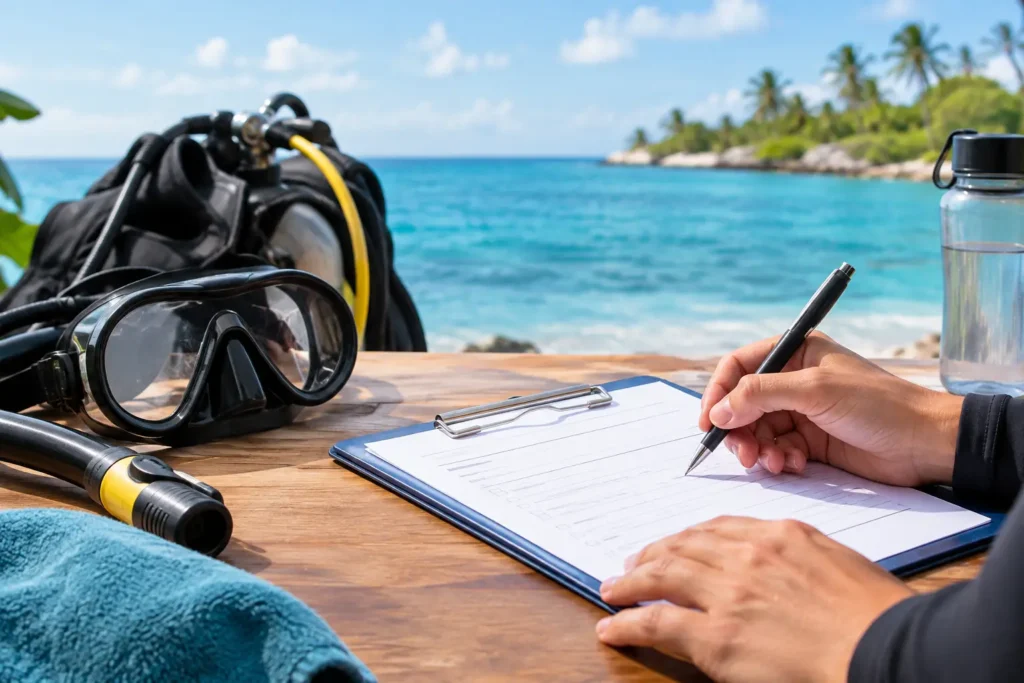
A missed question on a medical questionnaire should never be the reason your first breath underwater gets delayed. Diving medical forms are there to protect you, your buddy, and the crew – and completing them early means you can arrive at the marina focused on the reef, not paperwork.
For many guests, especially those planning a Try Scuba experience or SSI course during a Dominican Republic vacation, the forms can look more intimidating than they are. Most healthy adults can complete the screening without issue. The key is to answer honestly, understand what a “yes” response means, and give yourself enough time if a physician’s approval is needed.
Why diving medical forms matter
Scuba diving changes the way your body handles pressure. As you descend, the air spaces in your ears, sinuses, lungs, and mask are affected. As you ascend, your body must safely release the nitrogen absorbed during the dive. Good training, sensible profiles, and properly maintained equipment all play a role, but your personal health matters too.
That is why reputable dive centers use a standardized medical screening questionnaire before in-water training or diving activities. It helps identify conditions that may need a conversation with a doctor before you enter the water. It is not designed to exclude people from an experience they have been dreaming about. It is designed to make sure that experience is appropriate and safe.
A form can also help the instructor plan the day. Perhaps you have a history of motion sickness and benefit from an early, calmer departure. Maybe you are prone to ear congestion and need extra time during descent. Clear information lets a professional crew support you properly, without guesses or last-minute surprises.
Who usually needs a medical questionnaire?
If you are trying scuba for the first time, enrolling in an SSI course, or joining a guided dive, expect to complete a participant statement and medical questionnaire. Certified divers are not automatically exempt simply because they hold a certification card. Policies can differ by activity, agency, and dive center, and a current screening may still be required.
A guest joining a boat trip only to relax, snorkel, or visit Saona Island generally will not need the same scuba medical paperwork. However, if you decide to add a scuba activity, ask in advance what documentation applies. The easiest travel days are the ones where everyone knows the plan before boarding.
Parents or guardians should also expect to complete paperwork for minors. Age limits and youth-program requirements vary, so it is smart to confirm the details while reserving rather than assuming a child can join the same activity as an adult.
What the questions are really asking
Medical forms commonly ask about heart and circulation conditions, lung or breathing issues, ear and sinus concerns, neurological history, diabetes, current medications, recent surgery, pregnancy, and mental health conditions that could affect safe participation. They may also ask whether you have experienced fainting, seizures, panic attacks, serious headaches, loss of consciousness, or difficulty equalizing your ears.
The wording is direct because underwater is not the place to discover a problem. Still, a “yes” answer is not an automatic no to diving.
It may mean you need a physician to review your answers and sign the medical clearance section. In other cases, a temporary issue – such as a head cold, blocked ears, or a recent respiratory illness – may simply mean rescheduling the dive until you feel fully well. A qualified doctor, ideally one familiar with diving medicine, can assess your individual situation. Your instructor and boat crew cannot diagnose you or override a medical requirement.
Be particularly cautious about anything affecting your ability to breathe normally, equalize pressure, stay alert, or respond calmly to an unexpected situation. Diving should feel exciting, never like something you need to push through while unwell.
Ear and sinus congestion deserves respect
One of the most common vacation-day mistakes is trying to dive with a cold, allergies, or congestion. If you cannot equalize easily at the surface, forcing your way down can injure your ears or sinuses. Decongestants are not a reliable shortcut either. Their effects can wear off during the dive, creating a problem when it is time to ascend.
Tell the team how you feel that morning. Sometimes conditions improve with patience, hydration, and a slower descent. Sometimes the best call is to postpone. Caribbean water will still be there tomorrow. Your hearing is worth protecting.
Medications are not always disqualifying
Many travelers take prescribed medication and dive safely. The question is whether the condition being treated, the medication’s side effects, or a recent change in dosage could affect you underwater. Drowsiness, dizziness, impaired judgment, altered blood sugar, and breathing effects all deserve careful medical advice.
Bring medications in their original labeled containers when you travel, keep them accessible, and never stop a prescribed treatment just to fit a dive schedule. If you need clearance, take the completed form to your physician along with an accurate list of medications and dosages.
When to get a doctor’s sign-off
Do not wait until the evening before your boat departure to look at the questionnaire. Review it as soon as you book. If any question triggers a physician evaluation, arrange it before you leave home whenever possible. That gives you time to discuss your health history without vacation pressure and avoids spending a precious day searching for an appointment.
Bring the signed clearance with you, either as a printed copy or in a format the dive center has confirmed it can accept. Make sure the doctor has completed every required section and that the clearance is current under the applicable program rules. A brief note saying “fit for travel” is not always the same as clearance to scuba dive.
If you have had surgery, a hospital stay, a major illness, or a significant change in your health since your last dive, treat that as a fresh conversation with a doctor. The fact that you dived years ago, or even last season, does not answer whether you are ready today.
How to prepare before your dive day
A little preparation keeps the paperwork from stealing energy from the fun. First, complete the forms privately and truthfully. Do not rush through them on a phone while someone is waiting for you. Second, gather any certification card, logbook details, and medical clearance requested for your activity.
Then protect your body in the days leading up to the dive. Sleep well, drink water, avoid excessive alcohol, and do not plan a demanding dive after a long night out. Tropical heat, travel fatigue, and dehydration can turn a small discomfort into a lousy day on the water.
On the morning of your dive, let the crew know about any new symptoms, medications, anxiety, or concerns. First-time divers are often surprised by how much easier the experience becomes once they say, “I’m a little nervous about equalizing,” or “I get carsick sometimes.” A good instructor can explain what will happen, set an unhurried pace, and help you decide whether conditions feel right.
The form is only one part of safe diving
Paperwork is the starting point, not a substitute for good judgment. Listen closely during the briefing. Be honest if you are uncomfortable. Descend slowly, equalize early and often, and never hold your breath. If something does not feel right, signal your instructor and stop.
At Sharky’s Crew, we have seen how a calm, personalized approach changes a first dive. There is no prize for pretending you are more confident or healthier than you feel. The best underwater memories come from guests who are prepared, supported, and able to enjoy every blue-water moment.
Complete your diving medical forms early, ask questions before you travel, and give yourself permission to make the safe call if your body says not today. The reef is not going anywhere – and when you are ready, it will be far more spectacular than any rushed plan could be.
