


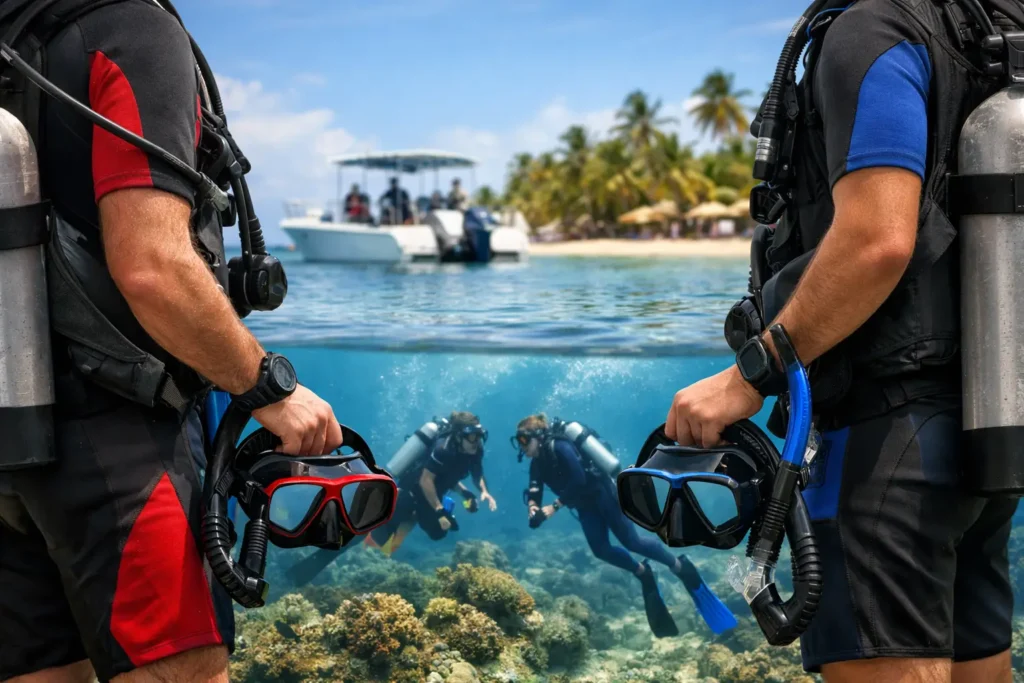
If you are comparing ssi versus padi Bayahibe options while planning your trip, you are already asking the right question. Not because one agency magically makes you a better diver, but because the right fit can shape how comfortable, confident, and excited you feel from your very first briefing to your first giant stride into Caribbean water.
For most vacation divers, the choice sounds bigger than it really is. SSI and PADI are both globally recognized training systems. Both certify millions of divers. Both teach the same core life-saving habits, equipment skills, buoyancy basics, and underwater communication you need to dive safely. Where things start to feel different is in the learning style, instructor approach, scheduling flexibility, and the kind of experience you want on vacation.
SSI versus PADI in Bayahibe
Bayahibe changes this conversation in a useful way. Warm water, excellent visibility, easy boat access, shallow reefs, and a mix of beginner-friendly and more advanced sites create ideal conditions for learning. That means your certification agency matters, but the quality of the dive center, the size of your group, and how much personal attention you get often matter more.
If you are choosing between SSI and PADI here, think less about logos and more about how you want to learn. Are you the kind of traveler who wants a structured, familiar course name they have heard before? Or do you want a more flexible, personalized training flow with a digital system that makes it easy to continue your education later? Those differences are real, even if the final outcome is similar.
What stays the same
At the certification level most travelers care about, both systems cover the same essential ground. You will learn how pressure affects the body, how to assemble and check your gear, how to clear a mask, recover a regulator, maintain neutral buoyancy, ascend safely, and dive with a buddy. If your goal is to become a competent recreational diver for tropical destinations, either path can get you there.
Both SSI and PADI certifications are widely accepted around the world. If you train with one and later book dives with a center that teaches the other, that is usually no problem at all. Recreational scuba is built on shared standards, and dive operators work with certified divers from both agencies every day.
The real differences between SSI and PADI
The biggest practical difference often comes down to how the training is delivered.
SSI training is usually tied more closely to the dive center that issues it, which can lead to a more integrated, hands-on experience. The digital learning platform is user-friendly, and many travelers like how smoothly course materials, progress tracking, and continuing education connect inside one system. SSI also tends to work very well in personalized training environments where instructors can adjust pacing without making the course feel rushed.
PADI, on the other hand, has extremely strong global brand recognition. Many people have heard of PADI long before they plan a dive vacation, so it feels familiar. That familiarity can be reassuring, especially for first-time divers who want to book something they already recognize. The course structure is straightforward and respected worldwide, and some travelers simply prefer that sense of standardization.
None of this means one system is safer than the other. Safety comes from the instructor, the center’s standards, the condition of the gear, the size of the group, and whether the operation takes the time to adapt to your comfort level.
Learning style matters more than people expect
This is where the decision gets personal.
Some students want a clear checklist, a fast timeline, and a course they can knock out during vacation. Others need a little more time to get comfortable with mask skills, equalizing, or simply breathing underwater for the first time. A good SSI-centered experience often appeals to travelers who value coaching, flexibility, and a more tailored pace. A good PADI course often appeals to travelers who want a familiar format and know exactly what they are signing up for from the start.
If you are traveling as a couple or family, this matters even more. Rarely do two people learn at exactly the same speed. One person may feel ready after the first confined session, while the other needs extra repetition before everything clicks. In those cases, a dive center that works in small or private groups can make a bigger difference than the badge on the certification card.
SSI versus PADI Bayahibe for beginners
For complete beginners in Bayahibe, conditions are on your side. Calm mornings, warm temperatures, and access to shallow reefs make it easier to focus on skills instead of fighting current, cold, or poor visibility. That lowers stress and helps first-time divers build confidence fast.
So which agency is better for a beginner? Honestly, it depends on what kind of support you want.
If you are nervous, want extra attention, or prefer a more boutique training experience, SSI is often a strong match when taught by a center that specializes in small groups and personalized instruction. If you are the type who has seen PADI everywhere and feels more comfortable choosing the best-known name, that confidence has value too. Feeling mentally at ease before a course starts is not a small thing in scuba.
The mistake travelers make is assuming the agency alone determines the experience. It does not. A rushed course with too many students can feel impersonal regardless of agency. A carefully managed course with patient instructors, well-run boats, and calm site selection can make either system feel excellent.
What experienced divers should look at instead
If you are already certified, the SSI versus PADI question usually matters less than your next goal. Are you trying to log reef dives, explore wrecks, refresh after a long break, or continue into advanced training? Those priorities should guide your decision.
Experienced divers often benefit more from local expertise than from agency differences. In Bayahibe, site choice, departure timing, guide quality, and group size have a direct impact on how much you enjoy the day. The diver who leaves early with a crew that knows the conditions, current windows, and marine life patterns will usually have a better experience than the diver who chose based only on agency branding.
If you want to continue training after Open Water, SSI’s continuing education flow can feel especially convenient. If you already have a PADI history and want to keep everything under one familiar framework, staying with PADI may feel simpler. Neither choice is wrong.
How to choose the right dive center, not just the agency
This is the question that saves people from disappointing vacation dives.
Ask how many students are in a class. Ask whether private or semi-private instruction is available. Ask what sites are used for training and whether conditions are selected based on comfort and skill level. Ask how long the center has been operating locally and whether the crew runs its own boats. Ask what happens if you need extra time with a skill.
Those answers tell you far more than a logo ever will.
A family-run operation with direct owner involvement, multilingual staff, and captains who know the local waters inside and out can turn a standard certification into a memorable part of your trip. That is especially true in a destination where the best days often come from small details – leaving before the crowds, choosing the right reef for the weather, or spotting when a guest needs encouragement instead of pressure.
Diving DR trains divers through SSI, and that makes sense for the kind of experience many travelers want here: personal, safety-focused, and built around real attention rather than volume. But even then, the real selling point is not the acronym. It is the care behind the experience.
Price, flexibility, and long-term value
Travelers often ask whether SSI is cheaper than PADI. Sometimes yes, sometimes no. Pricing varies more by dive center, inclusions, boat quality, digital materials, and group size than by agency alone.
A lower course price is not always the better deal if it means larger groups, less flexibility, or a tighter schedule that leaves you stressed. A slightly higher price can be worth it if it includes more individual coaching, better logistics, and a smoother path from nervous beginner to confident diver.
Long-term value also matters. If you think scuba will become a real hobby, choose the system and center that make you want to keep going. The best agency for you is the one that leaves you excited for your next dive, not the one that wins the loudest internet debate.
If you are deciding between SSI and PADI in Bayahibe, keep it simple. Both can certify you well. Both can open doors around the world. What makes the difference is whether your course feels safe, personal, well-paced, and genuinely enjoyable. Choose the team that listens, teaches clearly, and treats your vacation time like it matters – because it does.
