


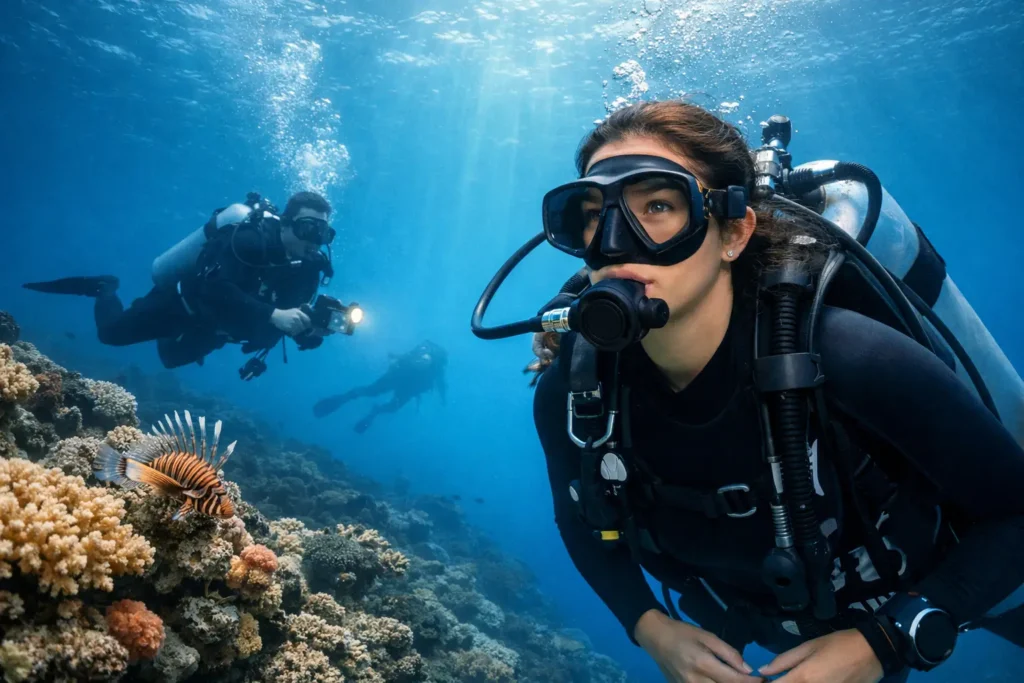
You do not need to be an advanced diver to start the SSI Advanced Adventurer course, and that is exactly where many people get confused. If you are searching for an ssi advanced adventurer course review, you are probably trying to figure out whether this is a true next-level certification or simply a smart way to sample new types of diving without locking yourself into a full specialty right away. The honest answer is that it is a bit of both.
For the right diver, it is one of the most enjoyable courses you can take on vacation. It adds structure to your trip, gets you in the water with purpose, and lets you test different adventure dives before committing to a full path like deep, navigation, or perfect buoyancy. For the wrong diver, it can feel like a sampler platter that leaves you wanting more.
SSI Advanced Adventurer Course Review: What It Really Is
The SSI Advanced Adventurer program is best understood as an experience-based course. You complete five adventure dives, each tied to a different specialty area. One of those dives is usually deep diving, and another is often underwater navigation, with the remaining choices depending on the dive center, conditions, and your interests.
That flexibility is a big part of the appeal. Instead of spending your entire trip focused on one specialty, you get a broader look at what kind of diver you want to become. Some divers discover they love navigation and precision. Others realize wrecks, night dives, or fish identification are what really light them up.
The course is not designed to make you a master of five specialties. It is designed to introduce you to them safely, under supervision, and with enough real in-water experience to tell what deserves your next step.
Who This Course Is Best For
If you have recently earned your Open Water certification and do not want to lose momentum, this course makes a lot of sense. It keeps your skills fresh while building confidence in new situations. That matters more than many divers expect. A diver with ten thoughtful, guided dives is often calmer and more capable than someone who has only the minimum four certification dives and then takes a long break.
It also works well for travelers who want more than standard fun dives but are not ready to commit their whole trip to a single specialty course. On a Caribbean vacation, that can be the sweet spot. You still get the excitement of reefs, wrecks, depth changes, and varied conditions, but with an instructor helping you connect each dive to actual skill development.
For nervous divers, there is a trade-off. The course can build confidence fast, but only if the instruction is patient and personalized. In a rushed group, some divers feel pushed. In a small-group or private format, the same course can feel supportive and genuinely fun.
What You Actually Learn
This is where a lot of SSI Advanced Adventurer course review articles stay too vague. The learning is real, but it depends heavily on which five adventure dives you choose.
If you do deep diving, you learn how depth affects air consumption, awareness, planning, and no-decompression limits. That sounds technical, because it is, but underwater it becomes very practical very quickly. You notice how small choices matter more at depth.
If you do navigation, you start using a compass with intention instead of carrying one because someone told you to. You practice natural navigation too, reading the reef, light, bottom contour, and your own direction of travel.
Perfect buoyancy is often one of the most valuable dives in the course, especially for vacation divers. Better buoyancy improves air consumption, calmness, trim, and reef protection all at once. It is not flashy, but it changes everything.
Other options might include boat diving, wreck diving, night or limited visibility, fish identification, or search and recovery. The quality of the course comes down to how well those dives are matched to the environment and to you. A wreck dive at a modest site with strong briefing and skill focus can teach more than a more dramatic site handled casually.
The Best Part of the Course
The best part is simple – variety.
A lot of divers hit a plateau after Open Water. They can dive, but they are not yet fully comfortable adjusting to new conditions or making smart choices underwater without second-guessing themselves. The Advanced Adventurer format helps break that plateau because each dive has a different purpose.
You are not just going down and swimming around. You are observing, planning, correcting, and noticing more. That kind of active diving builds awareness faster than repeating the same easy profile again and again.
On a warm-water trip, this can be especially rewarding. Good visibility, manageable conditions, and multiple site types let you focus on learning rather than simply coping. That is one reason many divers choose to do this course while traveling rather than waiting until they get home.
Where the Course Can Fall Short
No honest ssi advanced adventurer course review should ignore the limitations.
First, this is not the same as completing five full specialties. You get one adventure dive from each area, not the full depth of training. If you want serious capability in deep, wreck, nitrox, or navigation, you will likely want the full specialty later.
Second, the course experience varies a lot by operator. That is probably the single biggest factor. In a high-volume setup, the course can become a checklist. You do five dives, log them, and walk away with the card but not much confidence. In a more attentive setup, the instructor adapts briefings, pace, and site choice so each dive feels meaningful.
Third, the title itself creates unrealistic expectations. Some divers hear “advanced” and assume this is for highly experienced people. Others think the certification instantly makes them advanced. Neither is quite true. It is an intermediate bridge course. Very useful, but not magic.
Is It Worth the Money?
Usually, yes, if you value guided progression more than just adding dives to your logbook.
If your choice is between five unguided-feeling vacation dives and five structured dives that improve your skills, the course often offers better value. You are paying for instruction, planning, feedback, and certification, not just tank time.
That said, the value depends on your goals. If you already know you want to become a better deep diver, it may be smarter to go straight into the Deep Diving specialty. If you mainly want to enjoy marine life and relax, standard fun dives may suit you better. The Advanced Adventurer course is strongest for people who want exploration with direction.
Doing It on Vacation Versus at Home
Vacation is often the better setting, provided conditions are favorable and the dive center does not rush the schedule.
Warm water helps. Good visibility helps. Being mentally switched off from work helps even more. You tend to absorb more when you are excited, rested, and actually looking forward to the next dive. In a place with reefs, walls, and wrecks within easy reach, the course feels less like classwork and more like a real adventure.
That is one reason many divers choose to complete it in destinations like Bayahibe, where site variety and calm conditions can turn a training course into one of the highlights of the trip. In the right hands, it does not feel like you are giving up vacation time for certification. It feels like your vacation just got better organized.
What to Ask Before You Book
Before signing up, ask which five adventure dives are typically offered, how much flexibility you have, and whether the course is run in small groups. Ask who teaches it and whether the dive sites are selected around learning goals or simply whatever boat is going there that day.
You should also ask how the course is paced. Five adventure dives can be fantastic, but cramming them into a rushed timeline is not ideal for everyone. Some divers love a full, active schedule. Others perform much better with more space between dives for briefing, rest, and reflection.
If you are traveling with family or a partner who is not in the course, schedule matters even more. A good operator will help the course fit your trip instead of making your trip orbit the course.
Final Verdict
The SSI Advanced Adventurer course is a strong choice for divers who want to build confidence, sample multiple specialty areas, and make their vacation dives count for more. It is not the final word in advanced training, and it should not be sold that way. But as a next step after Open Water, it is practical, fun, and often the course that helps a casual diver become a genuinely engaged one.
If you choose a dive center that keeps groups small, teaches with intention, and matches the dives to your goals, this course can be far more than a certification card. It can be the moment you stop feeling like someone who tried scuba and start feeling like a diver.
