


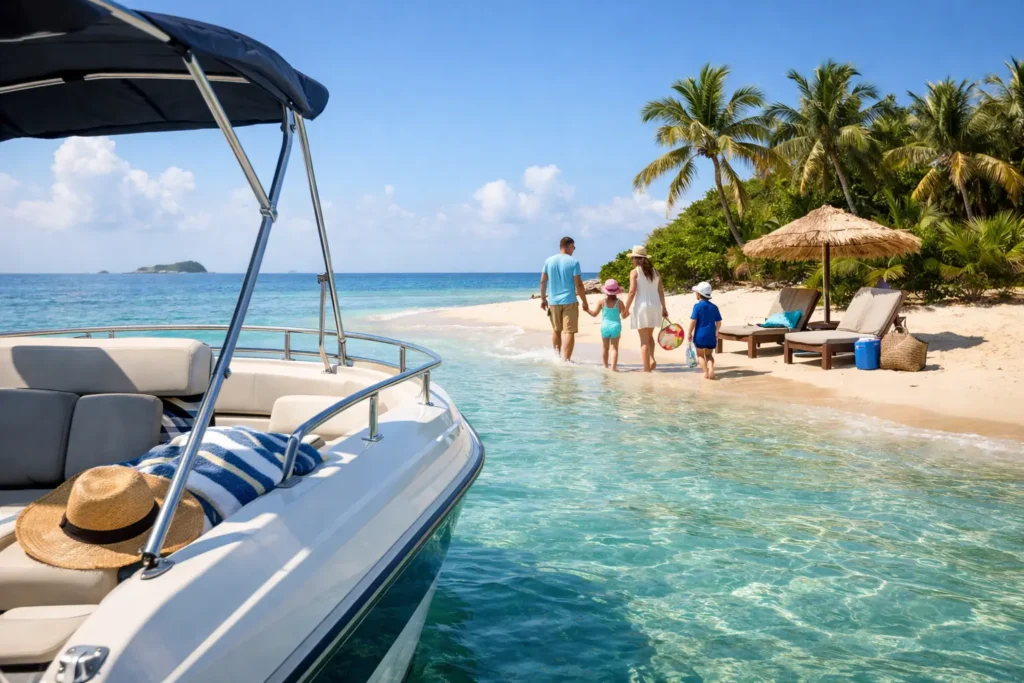
The best family boat days do not begin with a race for the dock. They begin with the small decisions made before anyone puts on sunscreen: how early to leave, how long the youngest traveler can stay happy on the water, where shade will come from, and whether the itinerary has room for a spontaneous swim. When you plan a family island boat day around your family rather than a fixed crowd schedule, an iconic Caribbean outing becomes much easier to enjoy.
For families visiting the Dominican Republic, Saona Island is often the dream: bright white sand, clear shallow water, and that wide-open Caribbean horizon children remember long after the vacation ends. The difference between a great day and an exhausting one usually comes down to pacing. A private or small-group boat gives you the freedom to adjust when the kids need a snack, when grandparents want a calmer stop, or when everyone decides that one more swim is nonnegotiable.
Start With Your Family’s Real Rhythm
A family boat trip should not be planned around what looks good in a brochure. Think honestly about your group. A toddler who naps at noon, a teenager who wants to snorkel every reef, and adults hoping for a quiet beach lunch can all have a good day together, but only if the route leaves room for them.
Early departures are usually worth it. The sea is often calmer in the morning, the light is beautiful, and you can reach popular beaches before the larger excursion boats arrive. Leaving Bayahibe early also means the ride feels like part of the adventure instead of a long wait between hotel breakfast and beach time.
That does not mean every family needs the earliest possible pickup. If you are traveling with very young children or anyone prone to seasickness, a slightly later start may be smarter if it allows a calm breakfast, medication time, and a relaxed boarding process. The best departure time depends on your crew, the forecast, and the day’s route.
Choose the Right Kind of Boat Day
There is a major difference between getting your family to an island and giving them an island day they can enjoy. Large catamaran excursions can be social and lively, but they run on a shared timetable. That may mean loud music, fixed swim stops, crowded beach areas, and little flexibility if a child is tired or hungry.
A private boat day is often the better fit when the family includes different ages, when you want more personal space, or when the island is a centerpiece of a special vacation. You can slow down at a natural pool, choose a quieter stretch of beach, and spend more time where the water is best that day. For multigenerational groups, that flexibility is not a luxury – it is what keeps the day comfortable for everyone.
Ask practical questions before booking. Is there shade on board? Is there a swim ladder that younger children and less confident swimmers can use comfortably? How are life jackets fitted? Is there dry storage for phones, towels, and a change of clothes? An experienced operator should answer these clearly, not treat them as afterthoughts.
Build a Route With Breaks, Not Checkboxes
The temptation is to see every stop: a reef, a sandbar, a beach club, a natural pool, and an island lunch all in one day. Families are usually happier with fewer stops and more time at each one.
A strong Saona itinerary often has three natural chapters. First comes the boat ride and an easy water stop while everyone is fresh. Next is the main beach time, with enough room for swimming, sand play, lunch, and doing absolutely nothing. Then comes a gentle final stop or scenic return, depending on energy levels and sea conditions.
Children do not need constant entertainment in a place like Saona. Give them a mask, a patch of soft sand, supervision, and time. Adults also need time to settle into the experience rather than checking the clock every 20 minutes. The most memorable moments are often the unscheduled ones: a school of tiny fish near shore, a pelican passing overhead, or a family photo taken when nobody is posing too hard.
Plan Food and Water Like It Matters
Sun, salt water, and boat travel make people hungry faster than expected. Do not rely on a single late lunch to carry the day, especially with children. Start with breakfast, bring familiar snacks, and make hydration part of the rhythm rather than an emergency response.
Water should be easy to reach and offered regularly. Fruit, crackers, sandwiches, and simple snacks are usually safer bets than anything overly rich before a boat ride. If someone in the family has allergies or specific dietary needs, discuss them before departure. A good crew can help organize the day, but they need the information early.
For adults, it is also worth being realistic about alcohol. A celebratory drink on a beautiful beach can be part of the experience. Too much alcohol in direct sun, followed by swimming or a bumpy ride home, can turn a great plan into a miserable afternoon. Save the big celebration for when everyone is safely back on land.
Pack Light, But Pack for the Water
A boat is not the place for a suitcase-sized beach bag. Bring what your family will use, protect it from splashes, and leave room for dry towels and extra clothing. Four items make the biggest difference: reef-safe sunscreen, hats or lightweight cover-ups, refillable water bottles, and dry bags for valuables.
Add motion-sickness medication if anyone might need it, and take it according to the directions before symptoms begin. Bring a small first-aid kit for minor scrapes, plus any medications your family uses regularly. For little ones, a familiar snack, swim shirt, and light towel can be more valuable than another beach toy.
If snorkeling is part of the plan, ask whether properly sized masks and fins are available. A mask that leaks or squeezes is frustrating for adults and can quickly put off a child trying it for the first time. Never force snorkeling. Let curious kids float with a life jacket, look down when they are ready, and decide how much of the underwater world they want to see.
Make Safety Feel Normal, Not Scary
The safest family boat day is one where the adults know the plan and the kids understand a few simple rules. Everyone should wear the provided life jacket when the captain or crew asks, especially while the boat is moving or conditions change. Children should know who their designated adult is in the water and that they do not enter or leave the boat without a clear signal.
Local knowledge matters here. Conditions around Saona can change with wind, tide, and boat traffic. A responsible captain may adjust a stop, choose a more protected beach, or change the order of the day. That is not a compromise on the adventure. It is exactly what skilled boat handling looks like.
At Sharky’s Crew, the focus is on reading the day and building around the guests on board, whether that means finding calmer water for first-time snorkelers or arriving early for a quieter stretch of Saona shoreline. Nearly 20 years in these waters teaches a crew which details matter before visitors even notice them.
Leave Space for the Return Trip
Many families plan every ounce of energy for the island and forget that everyone still has to travel back. Keep a dry shirt handy, have water and snacks available, and make the final hour easy. Younger kids may nap. Older children may be perfectly content replaying their favorite photos and videos. Adults may simply want to sit back and watch the coast come into view.
If weather or sea conditions make a stop less appealing, resist the urge to chase the original plan at all costs. A comfortable ride, a protected swim, and a happy family are better than checking off an itinerary item in rough water. The Caribbean rewards flexibility.
A family island boat day does not need to be packed to feel special. Give the day a thoughtful start, a capable captain, enough shade and snacks, and room to follow the mood of the people you came with. Then let the island do what it does best: make everyone forget to look at the time.
