


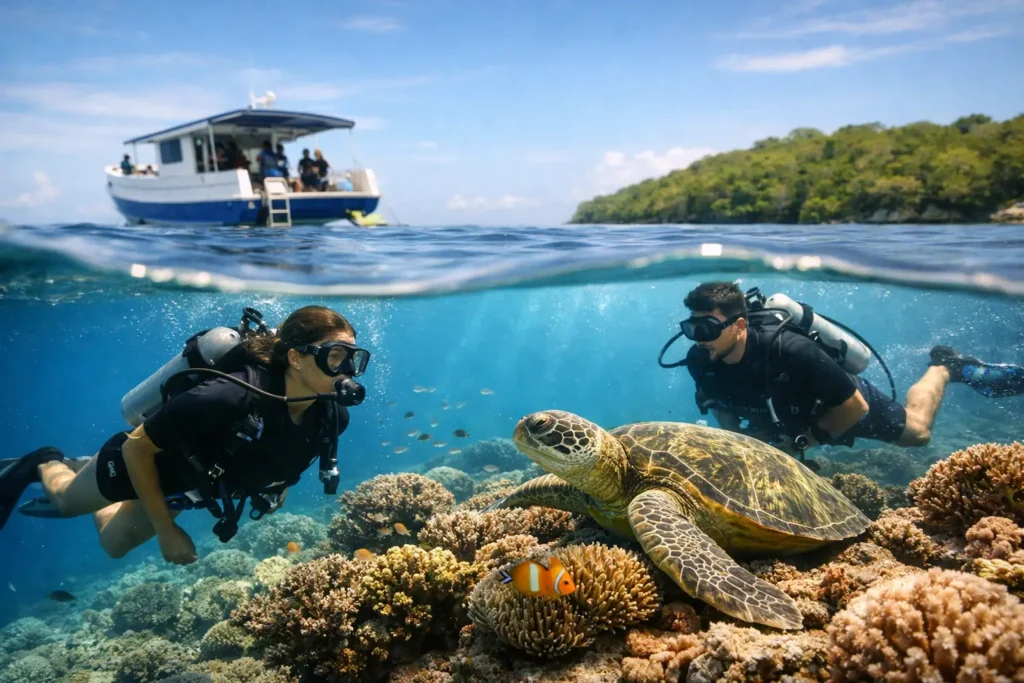
The fastest way to ruin a perfect reef is to treat it like a theme park. You see the difference right away – crowded boats, rushed briefings, fins kicking coral, wildlife chased for photos. Eco friendly dive tourism is the opposite of that experience. It is slower where it should be, stricter where it matters, and far more rewarding for travelers who want the ocean to stay wild.
For divers, snorkelers, and private boat guests, sustainability is not a marketing extra. It shapes visibility, marine life behavior, reef health, and even how relaxed your day feels on the water. If you are traveling to the Caribbean for clear water and living reefs, the way your operator runs the trip matters almost as much as the destination itself.
What eco friendly dive tourism actually means
A lot of businesses use the phrase loosely. In practice, eco friendly dive tourism means operating in a way that reduces damage to reefs and marine life while still giving guests an exceptional experience. That includes boat handling, group size, guide behavior, mooring use, waste management, fish interaction rules, and the quality of pre-dive briefings.
It also means accepting trade-offs. A responsible operator may limit guest numbers, skip a site when conditions are not right, or ask you to keep more distance from turtles, rays, or reef fish than you expected. That can feel less dramatic in the moment, but it is usually the reason the site still looks healthy years later.
The best version of sustainable dive travel is not anti-adventure. It is better adventure. You get a crew that knows how to read conditions, avoid unnecessary reef contact, and time departures so your group enjoys iconic places without adding to the chaos that makes those places feel overused.
Why better reef practices create a better trip
Healthy reefs are not only prettier. They are more alive. Fish stay calmer, coral cover remains stronger, and the whole underwater scene feels less stressed. When a destination gets hammered by poor anchoring, oversized groups, or careless diver control, the decline is visible long before most travelers know what caused it.
That is why eco friendly dive tourism matters even if your main goal is simply to have an amazing vacation day. Small-group operations tend to move at a more comfortable pace. Briefings are clearer. Entry and exit are more organized. New divers get more attention. Certified divers spend less time waiting on a crowd and more time actually enjoying the site.
This is especially true in places where reefs, islands, and shallow marine parks attract high visitor volume. Reaching a site early, using local knowledge to avoid traffic, and choosing the right stop for the day are not just premium touches. They reduce pressure on the environment and improve the guest experience at the same time.
How to spot eco friendly dive tourism before you book
You can usually tell a lot before you ever step on the boat. Start with how the operator talks about the ocean. If every photo shows people standing on coral, handling animals, or packed shoulder to shoulder, that is a warning sign. If the sales pitch promises constant wildlife contact, that should also make you pause.
Look for signs of real operational discipline. Responsible operators explain safety procedures clearly, talk about reef etiquette, and are transparent about conditions. They do not promise the impossible. They also tend to emphasize small groups or private formats, because control on the water is much easier when the crew can actually pay attention to each guest.
Ask practical questions. Do they use mooring buoys instead of anchoring on sensitive areas? How do they brief first-time divers and snorkelers around coral? What is their policy on touching marine life, feeding fish, or chasing animals for photos? A serious team will answer quickly and confidently because those decisions are already built into how they operate.
The small-group advantage
This is where sustainability and comfort really meet. Smaller groups are easier to guide responsibly, especially with mixed experience levels. A couple trying scuba for the first time needs a very different pace from certified divers on a reef circuit, and both need more attention than they will get on a crowded cattle-call departure.
Small groups also reduce accidental reef damage. Fewer fins in the water means fewer collisions with coral heads and less sand kicked up over delicate marine life. Underwater, spacing matters. On the surface, it matters too. Boarding is smoother, gear setup is calmer, and the entire day feels more personal.
For private boat excursions, the same principle applies. A flexible captain can adjust timing, avoid congested landing points, and choose a better route based on weather and traffic. That is good hospitality, but it is also one of the easiest ways to reduce unnecessary impact on popular coastal areas.
Wildlife encounters: respect beats proximity
One of the biggest misconceptions in eco friendly dive tourism is that a responsible trip means seeing less. In reality, respectful wildlife viewing often leads to better encounters. Fish that are not harassed behave naturally. Turtles that are not boxed in by swimmers stay calmer. Stingrays and reef species are more likely to keep moving through an area instead of fleeing it.
There is an it depends factor here. Some sites can handle more visitation than others. Sandy bottoms are different from fragile coral gardens. A skilled guide knows when to approach, when to pause, and when to move on. That judgment is worth a lot, especially if you care about photography or simply want the kind of underwater moment that feels real instead of staged.
The same goes for snorkeling and island stops. Walking, wading, or anchoring in the wrong place can do damage fast in shallow areas. Good crews manage those transitions carefully. It may seem like a small detail, but those details are the difference between a place staying beautiful and being slowly worn down by tourism.
What this looks like in the Dominican Republic
In the Dominican Republic, the appeal is obvious – warm water, easy access to reefs and islands, and marine environments that can feel postcard-perfect on the right day. But popular destinations also face the usual pressure points: busy excursion traffic, inexperienced guests, and operators trying to move too many people too quickly.
That is why local knowledge matters so much. In Bayahibe, for example, an experienced crew can time departures to reach famous areas before they fill up, choose sites based on current conditions, and steer guests toward a more controlled, higher-quality experience. That is better for beginners, better for certified divers, and better for the places everyone came to see.
This is one reason family-run operators with long regional experience often outperform bigger volume-driven businesses. They know which sites recover well, which need extra caution, and when to change the plan. At Sharky’s Crew AKA Diving DR, that local judgment is part of the value – not only for comfort and safety, but for protecting the same reefs and coastal areas guests travel so far to enjoy.
Your role as a guest matters too
Even the best crew cannot protect a reef alone. Guests shape the day more than they realize. Good buoyancy, calm finning, and listening during the briefing are not advanced skills. They are basic courtesy underwater. If you are new to scuba or snorkeling, saying so upfront helps the crew place you where you will be safest and least likely to struggle near coral.
Gear choices matter as well. Reef-safe habits start with the obvious things: secure loose equipment, avoid standing in shallow marine areas, and do not collect shells or touch wildlife. If you are on a boat trip with food and drinks, keep waste contained and pay attention to how the crew wants items handled.
And yes, photos can be part of the problem. The ocean does not owe anyone the perfect shot. If getting the picture means crowding a turtle, kneeling on coral, or asking a guide to manipulate marine life, it is not worth it.
Why the future belongs to better operators
Travelers are getting sharper. More people can spot the difference between polished marketing and genuine stewardship. They still want the extraordinary beach, the bright reef, the unforgettable dive. They just want it delivered by a crew that treats the place with respect.
That shift is good news. It rewards operators who invest in training, maintain higher standards, and build trips around quality instead of volume. It also means travelers do not have to choose between comfort and conscience. The best eco friendly dive tourism experiences already prove you can have both.
If you are planning time on the water, choose the trip that leaves the reef looking like nobody was there at all. That is usually the one you will remember longest.
