


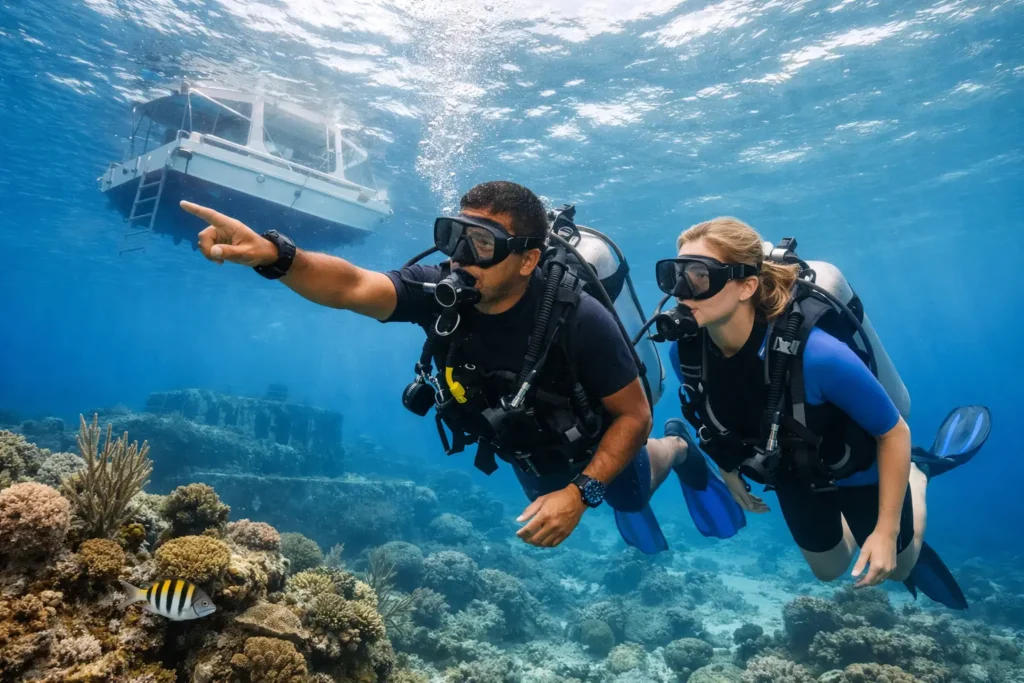
You have your certification card, your logbook, and enough dives to feel comfortable underwater. So, do certified divers need a guide? Not always. But on a dive trip, especially somewhere new, a good local guide can be the difference between simply getting wet and having the kind of dive you will talk about long after your Dominican Republic vacation ends.
Certification proves that you completed training and met the standards for a particular level of diving. It does not automatically mean you know every reef, current, entry point, boat procedure, marine-park rule, or changing weather pattern at your destination. That is where local knowledge earns its place.
Do certified divers need a guide by rule?
Whether a certified diver must have a guide depends on the destination, the operator, the specific site, and the conditions that day. Certification agencies teach divers how to plan and conduct buddy dives within the limits of their training. In some places, experienced divers can rent tanks, organize their own buddy plan, and dive independently.
But many boat dives operate differently. A captain and dive center may require guests to follow a guide because the site is inside a protected area, because there is boat traffic, or because currents and navigation make a group plan safer. Certain wrecks, deep profiles, overhead environments, and special-access sites can also have their own requirements.
That is not a judgment on your ability. It is the operator’s responsibility to manage the boat, the group, emergency procedures, and the impact divers have on the reef. A professional crew has to make decisions for the full picture, not just for one confident buddy pair.
In Bayahibe, the close access to Parque Nacional del Este and the Saona coastline makes guided diving especially valuable. Reefs can look calm from the surface while a mild current runs along the bottom. The right drop point, route, ascent location, and pickup plan matter. A crew that works these waters every day reads those details quickly.
Certification is not the same as local familiarity
A newly certified diver and a diver with 500 logged dives may both hold the same entry-level certification. Their comfort, air consumption, buoyancy, navigation, and response to an unexpected change in conditions may be completely different. Even a highly experienced diver can be new to a region.
Think about the last time you visited an unfamiliar city. You could drive there with a map, but a local could tell you which road is closed, which neighborhood is worth your time, and where traffic changes without warning. Underwater, that local insight is more than convenient. It can shape the safety and quality of the dive.
A local guide knows where sea turtles tend to rest, which coral heads hold schooling fish, where a wreck’s most photogenic angle is found, and when a site is likely to be quiet. They also know what is normal for the day. If visibility drops or a current arrives earlier than expected, they can adjust the plan before a small issue becomes an uncomfortable dive.
That is why guided dives are not only for beginners. Many seasoned travelers choose them because they want the best route through a new site without spending precious vacation time figuring it out underwater.
When a guide is the smart choice
Guided diving is usually the better call when you are visiting a new destination, returning to the water after a long break, or diving in conditions unlike those at home. It is also a strong choice when one buddy is significantly less experienced, when you are trying a wreck or deeper site for the first time, or when you simply want a relaxed day with great marine life.
A guide is particularly useful if you are traveling with a non-diving partner or family. Instead of coordinating every detail yourself, you can arrive with your gear checked, hear a clear briefing, follow a sensible plan, and return to the boat knowing the crew has the surface logistics covered. That leaves more room for the reason you came: being underwater together.
For photographers, guides can be invaluable without becoming intrusive. The best ones do not chase wildlife or point every diver at the same creature. They notice what is ahead, give the group space, and help position divers so the reef stays protected and everyone gets a better view.
There is a trade-off, of course. Independent divers may prefer their own pace, longer time at a favorite feature, and total control over navigation. That preference is valid when conditions, site access, experience, and operator policies support it. The key is to be honest about whether independence is adding freedom or simply adding workload.
What a quality dive guide actually does
A guide should do much more than lead a line of divers from one coral head to the next. Before the splash, they should explain the entry, planned depth, expected conditions, hand signals, current strategy, boat pickup, and what happens if a buddy team separates. A useful briefing is specific, not rushed.
Underwater, the guide should maintain appropriate control without treating certified adults like students. That means watching air and comfort levels, adjusting the route when needed, protecting the reef, and making sure slower divers are not abandoned at the back of the group. It also means respecting your buddy relationship. You are still responsible for your own gauges, buoyancy, depth, and buddy awareness.
On the surface, a good operation has the operational details ready before anyone needs them: a maintained boat, reliable communication, emergency oxygen, first-aid supplies, qualified crew, and a practical plan for weather changes. Those details are not glamorous, but they are part of what lets a beautiful Caribbean dive feel effortless.
At Sharky’s Crew, the goal is not to herd divers through a standard route. Small groups and local site knowledge allow the plan to fit the people in the water, from a couple easing back into diving to experienced guests looking for reef and wreck time with a capable local team.
How to decide before you book
Ask the dive center whether guiding is required for your chosen sites and why. The answer should be direct. Then ask about group size, guide-to-diver ratio, expected depth and current, the boat’s emergency equipment, and whether the profile can suit your certification and recent experience.
Be equally clear about your own diving. Share your number of logged dives, your most recent dive, any deep or wreck experience, and what you hope to see. There is no prize for exaggerating. A crew can create a much better day when it knows whether you want a gentle reef drift, a structured wreck dive, time to work on buoyancy, or a more adventurous profile within your training.
If you have not dived in six months or longer, consider a refresher or a conservative first dive. Warm, clear Caribbean water can make getting back in feel easy, but familiar skills deserve a quick reset before you add depth, current, cameras, or a new environment.
The right question is not just “Do I need one?”
The better question is: what will a guide add to this particular dive? If you know the site, have a compatible buddy, understand local procedures, and the operator permits independent diving, you may not need a guide. If you are visiting Bayahibe for a few exceptional days on the water, a guide can bring safer routing, better wildlife encounters, smoother boat handling, and a more personal experience.
Your certification gives you access to the underwater world. The right local crew helps you spend that access where it counts – following the reef at the right moment, surfacing in the right place, and coming back to the boat with a story worth carrying home.
