


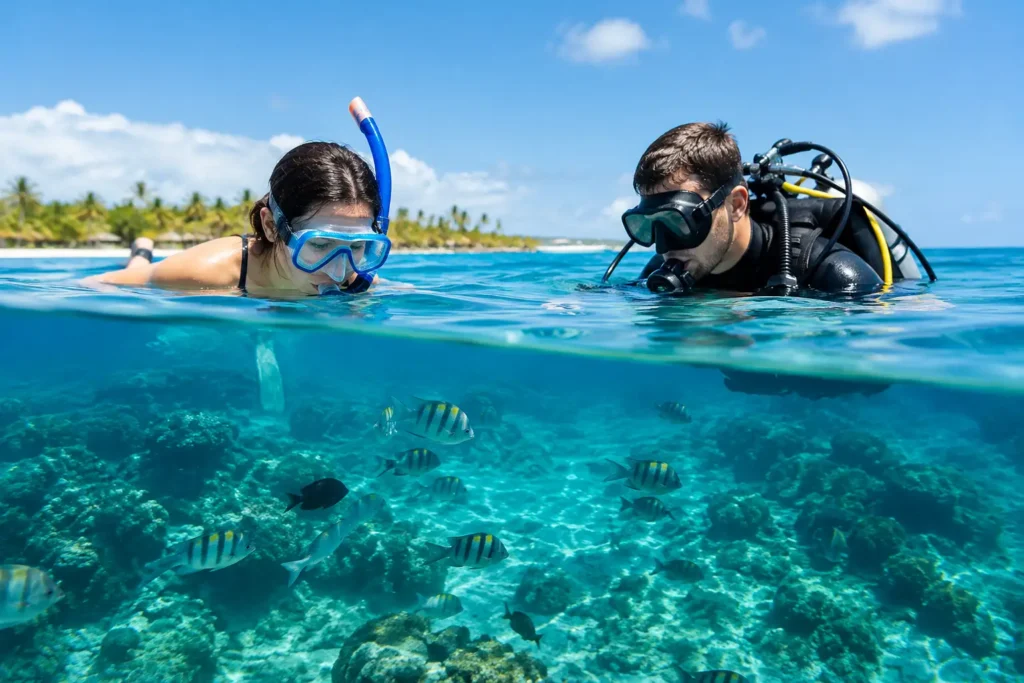
The choice – Try Scuba versus snorkeling – can shape your whole Caribbean day. From the boat, both begin with the same clear blue water, warm sun, and reef-lined coastline. But one keeps you floating above the action while the other lets you become part of it, breathing calmly beneath the surface as fish move around you.
Neither choice is automatically better. Snorkeling is wonderfully simple, social, and easy to fit into a beach or island day. A Try Scuba experience asks a little more of you, then rewards you with a completely different perspective: the coral at eye level, the quiet of the underwater world, and the unforgettable first breath from a regulator.
If you are deciding how to spend limited vacation time in Bayahibe, here is what actually separates the two.
Try Scuba Versus Snorkeling: The Real Difference
Snorkeling happens at the surface. You wear a mask, snorkel, fins, and usually a flotation vest, then look down at the reef below. It is an easy way to see tropical fish, shallow coral formations, sea grass, and sandy-bottom channels without a lesson or heavy equipment.
Try Scuba is a beginner scuba experience led directly by a qualified dive professional. You wear a mask, fins, buoyancy equipment, tank, and regulator, and first learn a few essential skills in calm, shallow water. Once you are comfortable, you can explore beneath the surface with your instructor close by. You do not need to be certified to try it.
The biggest difference is not only depth. It is connection. A snorkeler watches the reef from above. A new diver can pause beside a coral head, hover quietly while a school of fish shifts around them, and see the details that disappear from the surface: tiny shrimp tucked into coral, a spotted ray resting on sand, or a curious trumpetfish holding perfectly still in the water column.
What the Reef Feels Like From Each View
Snorkeling keeps the day light and flexible
Snorkeling is often the right call for travelers who want maximum time on the water with minimal preparation. You can slip into the water after a quick equipment briefing, return to the boat when you want a break, and get back in again when something catches your eye. It works especially well for families with mixed confidence levels, guests who would rather stay close to the surface, and anyone pairing reef time with a private island stop.
You also have a constant visual reference: sunlight above, the boat nearby, and the surface within seconds. For someone who feels unsure about enclosed gear or has never put their face in the water with a mask before, that familiarity can make the experience more relaxing.
The trade-off is distance. Even in clear Caribbean water, looking down from the surface creates a little separation between you and the reef. Fish may still come close, but surface movement, glare, and the natural need to keep your snorkel clear can pull your attention away from what is happening below.
Try Scuba slows everything down
A first scuba experience usually starts with a personal explanation of the equipment and the rules that keep the dive comfortable. You will practice clearing water from your regulator, equalizing your ears, communicating with hand signals, and breathing normally underwater. These are simple skills, but they matter. Feeling prepared is what turns nerves into that wide-eyed, can-you-believe-this smile.
Once underwater, time has a different rhythm. Your instructor guides the pace, checks that you are comfortable, and keeps the group small enough for real attention. You are not kicking to stay at the surface or lifting your head to adjust a snorkel. Instead, you focus on steady breathing and buoyancy while the reef opens up around you.
For many first-timers, the surprise is how peaceful it feels. The ocean does not become silent – you hear your own bubbles and the soft movement of water – but the usual rush of a vacation day fades away. That feeling is why a Try Scuba session can be much more than a quick activity. It may be the moment you realize you want to earn your certification.
Choose by Comfort, Not by Bravery
People sometimes think scuba is for fearless thrill-seekers and snorkeling is the safer, easier alternative. That is not a useful way to choose. A good Try Scuba experience is designed for beginners, including people who feel excited and nervous at the same time. You do not need prior diving experience, and you do not need to prove anything to anyone.
What helps most is being comfortable in the water, able to swim, and willing to listen carefully to your instructor. If you can relax, breathe slowly, and take the briefing seriously, you may be a great candidate for an introductory dive. Being nervous is normal. Rushing through nerves is not. A professional crew should give you time, answer direct questions, and never pressure you to go farther than you are ready to go.
Snorkeling may be the better option if you dislike having water near your face, do not feel confident swimming, are managing a cold or ear discomfort, or simply want a low-commitment way to enjoy the reef. The same applies if a doctor has advised against diving due to a medical condition. Scuba has specific health considerations, so honest communication before entering the water is part of a safe day, not an inconvenience.
Time, Energy, and the Rest of Your Trip
Think about the shape of the day you want. Snorkeling can be an easy addition to a Saona Island or Catalina Island boat trip. You might snorkel for a while, enjoy the beach, swim in warm shallows, have a relaxed lunch, and still feel fresh for dinner that evening. It is an excellent choice when the group includes sunbathers, young teens, or travelers who all want freedom to follow their own pace.
Try Scuba deserves more focus. The briefing, equipment fitting, skill practice, and guided underwater portion are all part of the experience. That does not make it difficult, but it does make it more intentional. If your dream is to say, “I breathed underwater for the first time in the Caribbean,” make room for the process rather than treating it as a rushed stop between beach plans.
For couples, an introductory dive can become the standout memory of the trip. For families, it can be a special shared milestone when everyone meets the age, swimming, and health requirements. For corporate or private groups, it creates the kind of story people keep telling after the tan fades: the moment the team traded meeting rooms for masks, bubbles, and a reef.
Why Bayahibe Makes Both Experiences Worth Doing
Bayahibe is unusually well positioned for this decision because excellent snorkeling water and accessible dive sites are close to shore. The protected waters around Parque Nacional del Este and the Saona coastline can offer warm conditions, colorful reef life, and the kind of visibility that helps beginners feel more at ease.
But conditions are never identical every day. Wind, current, recent weather, and the experience level of your group should guide the plan. Local knowledge matters here. An experienced captain and crew know which route makes sense that morning, where the water will be most comfortable, and when an early departure can give you a quieter reef before busier boats arrive.
That is the advantage of a smaller, personalized operation. At Sharky’s Crew, the conversation should begin with what you want from the day, not with a one-size-fits-all itinerary. Perhaps one person wants a first dive while others snorkel nearby. Perhaps your group wants a private boat day where the underwater session is only one part of the adventure. With the right planning, nobody has to feel like they chose the wrong experience.
A Simple Way to Make the Call
Choose snorkeling when you want easy water time, surface-level reef views, and complete flexibility throughout a beach or boat day. Choose Try Scuba when you are curious about life below the surface, comfortable enough to learn a few skills, and ready to give the underwater world your full attention.
If you are torn, listen to the question behind the question. Are you hoping to see the reef, or are you hoping to feel what it is like to be inside it? The first answer points to snorkeling. The second may be your sign to take that first breath underwater – carefully, confidently, and with a crew that knows these waters by heart.
