


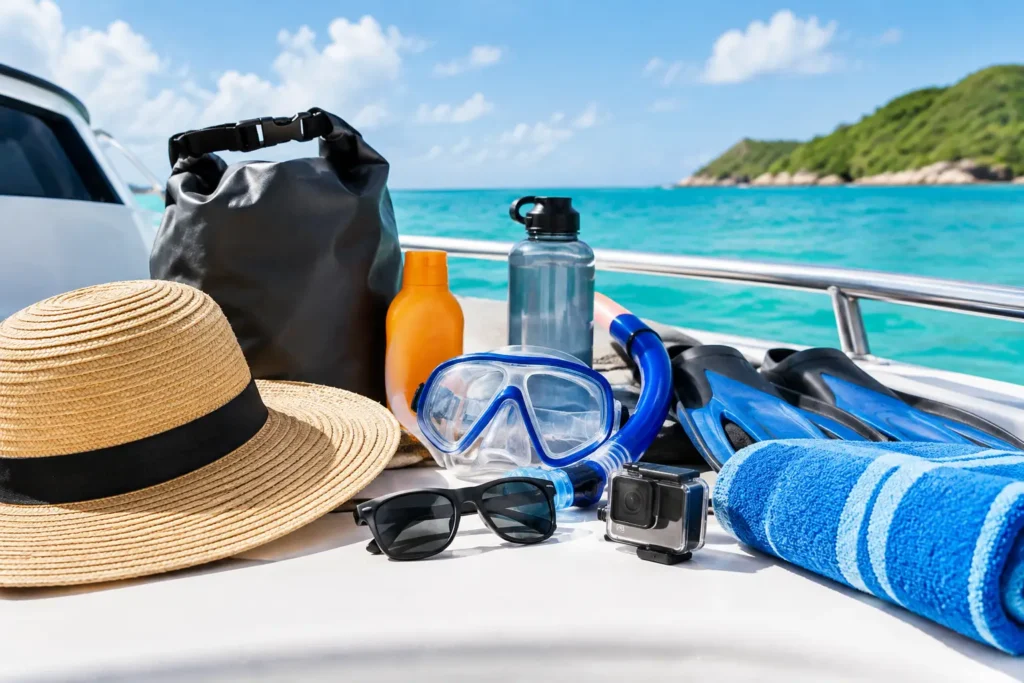
A Caribbean boat day can begin in the cool hush of an early marina and end with salt on your skin, sand in your shoes, and photos you will want to keep forever. The essential items for boat excursions are not about hauling a suitcase onto the deck. They are about bringing the few things that let you enjoy every swim stop, beach landing, and open-water run without being distracted by sunburn, soggy valuables, or a preventable headache.
For a private trip to Saona Island, Catalina Island, or the Chavon River, packing well also gives you more freedom. You can step off the boat for a walk, snorkel when the water looks irresistible, or settle into the shade with a cold drink without realizing something important is back at the hotel.
Start With Sun Protection That Works on the Water
The sun feels stronger on a boat than it does beside a pool. Light reflects from the water, sea breezes disguise how warm you are getting, and a beautiful morning can turn into an intense afternoon before you notice it.
Bring broad-spectrum, water-resistant sunscreen with SPF 30 or higher, and apply it before boarding. Waiting until you are already on the water usually means missing your shoulders, ears, feet, and the back of your legs. Reapply after swimming and throughout the day according to the label.
Choose a sunscreen that is mindful of marine environments, but read beyond front-label claims. Terms such as “reef-safe” are not regulated in the same way everywhere. A practical choice is to avoid products containing oxybenzone and octinoxate and to rely on physical coverage whenever possible.
A lightweight long-sleeve rash guard, sun shirt, or linen cover-up is one of the smartest pieces you can pack. It protects more reliably than sunscreen alone and is especially useful for guests who plan to snorkel, spend time on the bow, or simply burn easily. Add a hat with a secure strap and polarized sunglasses with UV protection. Polarized lenses cut glare, making the color changes over shallow reefs and sandbars much easier to see.
Essential Items for Boat Excursions: Keep Valuables Dry
A dry bag is small, simple, and worth its place on nearly every excursion. Put your phone, wallet, hotel key, medication, and a spare shirt inside before the boat leaves. Even on a calm day, spray can reach the deck, and beach landings are rarely the moment to test whether your tote bag is actually waterproof.
Use a dry bag with a roll-top closure and check it before you trust it with electronics. For your phone, a separate waterproof pouch can be useful for photos in shallow water, but only if it is properly sealed and tested first. Touchscreens do not always behave perfectly through plastic, so think of the pouch as protection first and a camera accessory second.
Bring only the valuables you truly need. Leave passports, expensive jewelry, and extra cards securely at your accommodation unless there is a specific reason to carry them. A photo of essential documents stored safely on your phone can be more useful than taking originals onto the water.
Wear the Right Shoes for the Day You Actually Have Planned
Bare feet are great on soft white sand. They are less great on a hot dock, a rocky shoreline, or a beach with shells underfoot. Pack water shoes, secure sport sandals, or lightweight sandals that stay on your feet when you step in and out of the boat.
Flip-flops are fine for a simple beach stop, but they can be slippery on wet decks and easy to lose in the surf. Closed-toe water shoes make more sense for guests who expect to explore a riverbank, walk over uneven ground, or snorkel where the entry is not pure sand.
Avoid shoes that become heavy once wet or take all day to dry. The best pair is comfortable enough for walking but easy to rinse after a salty day.
Bring Water, Snacks, and a Plan for Your Energy
Your captain and crew may provide refreshments or food, depending on the trip, but it is still wise to bring a reusable water bottle. Heat, swimming, and celebratory drinks can leave you dehydrated faster than expected. Start drinking water early rather than waiting until you feel thirsty.
A few compact snacks are helpful, especially for families, guests with dietary restrictions, or anyone prone to low energy between meals. Think fruit, crackers, trail mix, or a protein bar that will survive a warm bag. If you have serious food allergies, communicate them in advance and carry your own backup snacks rather than assuming every island stop will have a suitable option.
Alcohol can be part of a relaxed vacation day, but balance it with food and water. Save the strongest drinks until after snorkeling, swimming, and moving around a boat. Your body will thank you when the return ride gets a little bumpy.
Pack for Swimming Without Overpacking
Wear your swimsuit under comfortable boat clothes so you are ready when the first clear-water stop appears. Pack a small quick-dry towel or wrap, plus dry underwear or a light change of clothes for the ride back. A large beach towel is luxurious, but it takes up valuable space and stays damp. For most guests, a compact travel towel is the better trade-off.
If snorkeling is part of your plan, ask your operator what equipment is included before packing your own. Quality mask, snorkel, fins, and flotation equipment should fit properly, and good crews inspect and maintain what they provide. Bringing your own mask can make sense if you know it fits your face perfectly or wear a prescription mask. Bringing a full set of gear often does not.
For scuba divers, follow the packing guidance from your dive center. Certification card details, logbook access, dive computer, and personal exposure protection may matter more than extra beach gear. At Sharky’s Crew, the crew can help guests understand what is supplied for a particular diving or excursion itinerary, so there is no need to guess and overload your bag.
Do Not Forget Motion-Sickness and Personal Care Items
Even people who feel fine on large boats can be surprised by a faster ride across open water. If you are prone to motion sickness, prepare before departure. Non-drowsy medication, prescription patches, acupressure bands, or ginger products can help, but the right option depends on your health needs. Ask a medical professional or pharmacist in advance if you are unsure, and follow the directions carefully.
Take motion-sickness medication early when required. Waiting until you feel ill is usually too late for it to do its best work. On board, look toward the horizon, stay in fresh air, avoid reading, and tell the crew if you are uncomfortable. Experienced captains and guides have seen it all, and speaking up early is far better than trying to tough it out.
A small personal-care kit should include any daily medication, lip balm with SPF, insect repellent for river or late-day stops, and a few bandages if you are traveling with children. Keep medication in its original labeled container and protect it from heat and moisture.
Carry the Details That Make the Day Easier
Bring a form of payment for gratuities, local purchases, or an unexpected beach snack, but keep the amount modest and stored securely. A charged phone, portable battery, and your accommodation information are useful too. If you are meeting a transfer after the trip, save the contact details before you lose signal offshore.
Families should pack a little more strategically, not dramatically more. A spare set of dry clothes for young children, familiar snacks, sun-protective clothing, and any needed flotation or comfort item can prevent small problems from taking over a big day. If a child cannot swim confidently, let the crew know before boarding so the day can be paced safely and comfortably.
The best boat bag is not the fullest one. It is the one that leaves room for a towel, keeps your essentials dry, and lets you say yes when the captain points toward a quiet stretch of Caribbean water. Pack with that moment in mind, then let the day unfold.
