


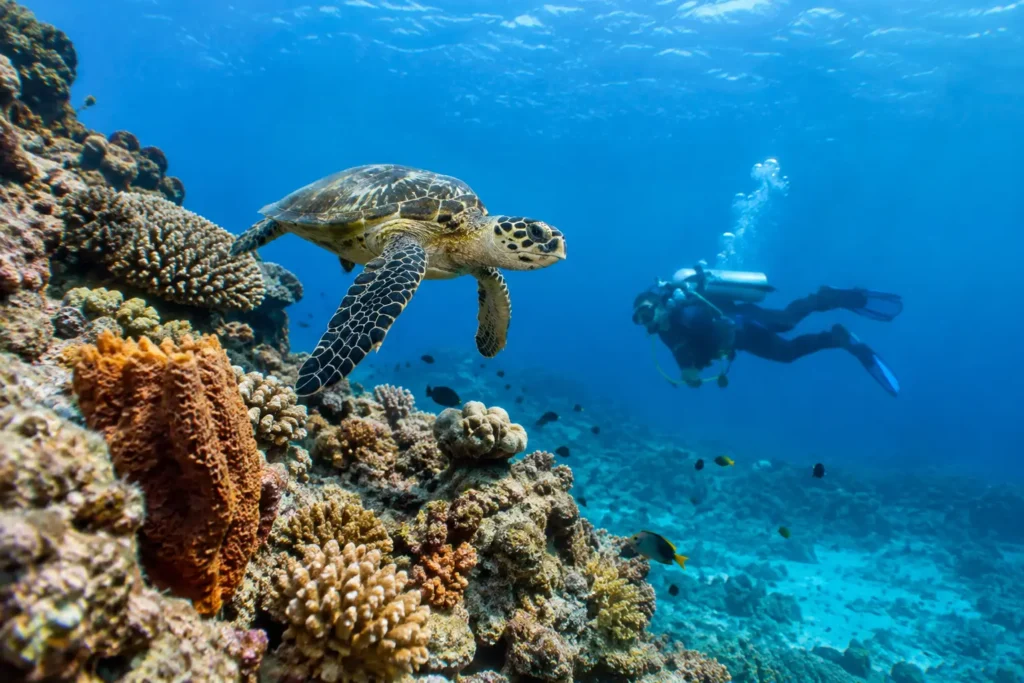
The best Bayahibe reef dive sites are not simply the ones with the biggest fish count on a perfect day. They are the sites that match your experience, your comfort level, and the kind of underwater memory you came to make. One morning that may mean hovering over a sunlit coral garden on your first guided dive. The next, it may mean following a reef slope into deeper blue water while a turtle cruises past.
Bayahibe sits beside the protected waters of Cotubanamá National Park, formerly known as Parque Nacional del Este, with quick access to sheltered local reefs and more adventurous sites toward Saona Island. Warm water, generally clear visibility, and short boat rides make it an outstanding place to build confidence or add real variety to a certified diver’s trip.
What Makes Bayahibe’s Reefs Worth Diving?
This coastline offers more than one style of reef. Close-in sites can be calm, shallow, and full of color – ideal for Try Scuba guests, new Open Water divers, and families who want an easygoing first experience. Farther routes can bring deeper profiles, reef ledges, stronger blue-water scenery, and less-frequented coral formations.
Conditions always lead the plan. Wind direction, recent weather, current, and the group’s experience affect where a responsible captain and guide should go that day. A site that is spectacular for an experienced diver can be the wrong choice for someone taking their first breaths underwater. The right dive center does not force every guest onto the same schedule. It selects the route that gives the group the best combination of comfort, visibility, and marine life.
7 Best Bayahibe Reef Dive Sites
1. Dominicus Reef
Dominicus is a favorite introduction to Caribbean reef diving because it offers an approachable depth range and plenty to watch without requiring a demanding profile. Expect hard and soft corals, schools of tropical fish, and the kind of relaxed pace that lets newer divers focus on buoyancy, breathing, and simply enjoying the view.
It is also a smart first dive for certified divers returning after a long break. Rather than starting deep, use Dominicus to get comfortable in the water again, check weighting, and settle into the rhythm of the sea. On a clear morning, this can be one of those dives where the reef feels close enough to study in detail from start to finish.
2. El Peñón
El Peñón, or “the rock,” is often chosen for its reef structure and the sense of moving around a more dramatic underwater formation. The profile can suit a range of certified divers, depending on the exact route and conditions. Fish gather around the contours, while coral-covered surfaces give the site a more sculpted character than a flat garden reef.
This is a good choice for guests who have completed a few dives and want something that feels more adventurous without making the day all about depth. Bring a slow, controlled approach. The best moments at El Peñón are often in the smaller details: a hidden crab, a moray looking out from a crevice, or a cloud of juvenile fish sheltering near the reef.
3. Guaraguao
Guaraguao is a classic local reef option for divers who want colorful marine life and an easy, enjoyable two-tank day. Its appeal is not about chasing one guaranteed rare animal. It is the steady variety: parrotfish working the reef, sergeant majors moving in groups, possible trumpetfish hovering vertically, and occasional rays or turtles when the ocean decides to be generous.
For underwater photographers, this type of reef rewards patience. Stay low without touching the bottom, let the fish resume their normal behavior, and use the coral textures as your frame. It is equally suitable for a relaxed guided dive with a partner who wants to enjoy the water rather than race through a checklist of sites.
4. La Cueva
La Cueva adds a little mystery to the reef day. The name means “the cave,” but divers should not expect a technical cave dive. Depending on the route, the attraction is the sheltering reef topography: overhangs, cracks, and shaded spaces that can hold different marine life from the open reef.
It can be especially fun for certified divers who are ready to improve buoyancy control. Moving carefully around reef features takes awareness and calm finning, not speed. A good guide will point out the life that is easy to miss, from lobsters tucked under ledges to fish using the shadows for cover.
5. The Aquarium
The Aquarium earns its name through fish activity and bright, shallow-water color. It is one of the strongest choices for beginners, refresher dives, and guests taking an SSI course because there is time to practice skills while still feeling like you are on a genuine Caribbean reef adventure.
Shallow does not mean boring. Sunlight brings out the color of the corals, and the reduced depth can give divers a longer, more relaxed bottom time. For first-time divers, this is the kind of environment that replaces nervousness with the moment that matters most: realizing you can breathe underwater and feel completely at home.
6. Bayahibe’s Coral Gardens
Some of the best reef dives do not need a famous name to be memorable. Bayahibe’s coral garden sites are selected according to conditions and group ability, making them an excellent option when the crew wants to prioritize calm water and reef health over a fixed itinerary.
These gardens are ideal for slowing down. Watch for flamingo tongue snails on sea fans, tiny blennies peeking from holes, and juvenile fish using coral branches as protection. Divers often remember the big turtle, but the small discoveries are what make a coral garden feel alive. This is also where good buoyancy matters most. Keep your fins clear of the reef, never hold onto coral, and let the ecosystem stay beautiful for the next group.
7. Catuano and Saona-Side Reefs
For divers looking beyond the closest Bayahibe sites, the reefs toward Catuano and Saona can deliver a more exclusive day on the water. These routes are more dependent on weather and boat planning, but the payoff can be a stronger sense of escape: open Caribbean horizons, less boat traffic, and reef scenery that feels far removed from the hotel zone.
This is often best for confident certified divers, private groups, or families combining a dive plan with a carefully paced island day. It is not necessarily about making the deepest dive. It is about reaching a part of the coast where the journey itself becomes part of the experience. Departing early helps, especially for guests who want quiet water before the busiest excursion boats arrive.
How to Choose the Right Reef for Your Dive
Start with honesty about your experience. If you are new, the best site is one with calm water, a comfortable depth, and a patient instructor or guide. There is no prize for choosing a challenging profile before you are ready. A relaxed first dive builds the habits that make every future dive better.
If you are certified, think about what you want from the day. Coral gardens and fish life? More dramatic structure? A private boat route toward Saona? Let your guide know how recently you have dived, your certification level, whether you use air quickly, and what you hope to see. That conversation helps shape a better itinerary than simply picking the most famous name on a list.
For couples or mixed-experience groups, private or small-group diving makes a real difference. One person may want extra time with a guide while the other is comfortable exploring a slightly deeper section. With the right plan, nobody has to spend the day feeling rushed or held back.
A Better Way to Experience Bayahibe Underwater
The reef is the reason you enter the water, but the crew determines how the day feels. Experienced local captains know which routes make sense when conditions change. Professional SSI instructors know when a nervous beginner needs another minute on the surface and when a confident student is ready for more. Small groups give everyone more attention, more space, and more freedom to enjoy the moment.
At Sharky’s Crew AKA Diving DR, nearly 20 years on these waters means the plan is built around the sea and the people on the boat, not a one-size-fits-all schedule. Whether your goal is a first Try Scuba experience, a guided reef day, or a private route toward Saona, the best choice is the site that leaves you surfacing with a full tank of stories and the confidence to go again.
