


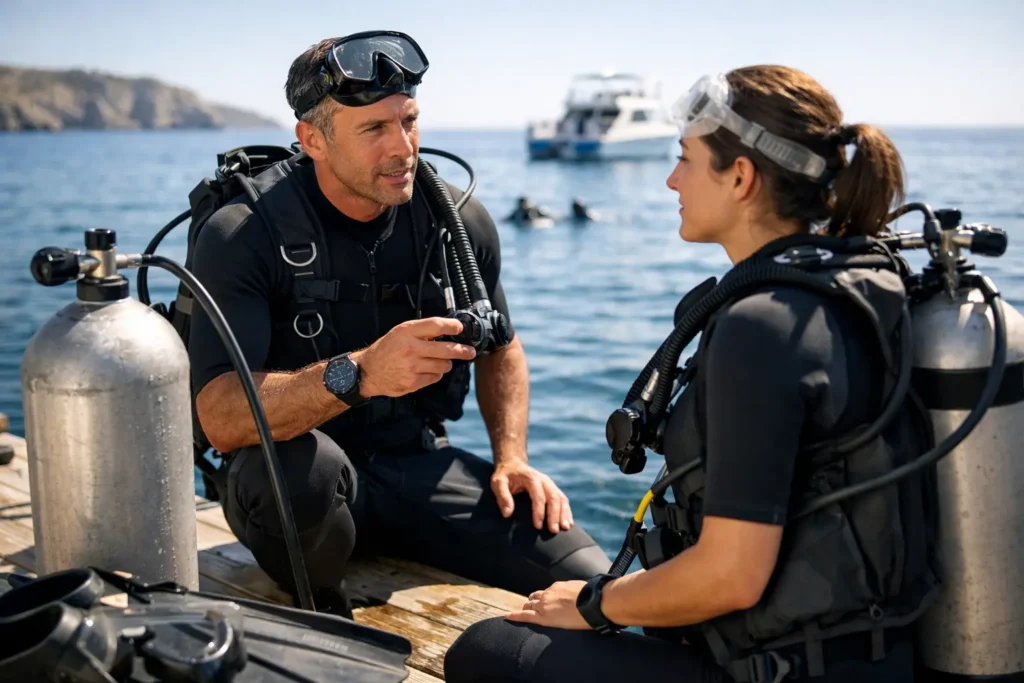
The first breath underwater is unforgettable. It can also feel like a big question mark: Is scuba safe? Yes, scuba can be very safe when it is treated as the skills-based activity it is, with proper training, realistic conditions, well-maintained equipment, and a crew that puts people ahead of schedules.
Scuba is not a thrill ride where you simply jump in and hope for the best. It is a controlled way to explore another environment, one built around preparation and good decisions. The same habits that make a diver comfortable underwater also make diving safer: going slowly, communicating clearly, staying within training limits, and knowing when to call a dive.
For a first-time diver in the Dominican Republic, warm water, typically clear visibility, and sheltered Caribbean sites can make the learning experience feel far more approachable. But conditions are only one part of the picture. The right dive center, instructor, and personal readiness matter just as much.
Is scuba safe for beginners?
It can be, provided beginners start at the right level. A Try Scuba experience is designed for people who have never worn a mask or breathed from a regulator. Before entering open water, an instructor explains the equipment, reviews the key hand signals, and practices essential skills in shallow water. You are not expected to arrive knowing how to clear a mask or manage your buoyancy.
The safest first dives are unhurried. That means a small group, a patient instructor, and a shallow site where you can focus on breathing and getting comfortable rather than trying to keep up with a crowd. A good instructor watches how you respond, not just whether you complete a checklist.
For guests who want to become certified, an SSI Open Water course builds knowledge and practical skills over multiple sessions. You learn why pressure changes affect the body, how to plan a dive, how to use a buddy system, and how to respond calmly to common issues. Certification is not a guarantee that every future dive is right for you. It is the foundation that helps you recognize which dives match your experience.
The real risks of scuba diving
Scuba diving has risks, and honest dive professionals do not hide them. Pressure changes can affect the ears and sinuses. A diver who ascends too quickly can increase the risk of decompression sickness. Poor buoyancy control can lead to an accidental rapid ascent, while panic can turn a manageable problem into a serious one.
The reassuring part is that the major risks are well understood. Modern training is built around preventing them through simple, repeatable habits: breathe continuously, ascend slowly, equalize early and often, stay with your buddy, monitor your air, and follow the plan. Diving conservatively is not boring. It is what lets you enjoy the reef long enough to notice the small things, from a shy lobster under a ledge to a school of blue tang moving across the coral.
Equipment problems can happen, but diving gear is designed with backups and procedures in mind. Divers carry an alternate air source, instruments to check depth and pressure, and a buoyancy control device. Before every dive, buddies check each other’s key equipment. A professional crew also inspects, services, and prepares rental equipment so guests are not left to figure it out on a boat dock.
Your health matters before you get on the boat
A short health questionnaire is not paperwork to rush through. It helps identify situations where a doctor should clear you for diving first. Asthma, heart conditions, recent surgery, certain medications, pregnancy, chronic ear or sinus problems, and a history of lung issues can all require individual guidance.
A cold, congestion, dehydration, exhaustion, or a heavy night of drinking can also make a dive a bad idea. If you cannot equalize your ears comfortably on land, forcing it underwater is never the answer. The ocean will still be there tomorrow.
There is one timing rule every traveler should take seriously: do not fly after diving without allowing the recommended surface interval. Your instructor or dive professional can explain the timing for your specific dives, but the practical message is easy to remember. Plan your last day in the water well before your flight home, not between breakfast and airport pickup.
Why conditions and local knowledge change the experience
No destination is safe every day, and no two dive sites behave exactly alike. Wind, current, visibility, boat traffic, and changing weather can affect a plan. A responsible operator does not promise the same site no matter what the sea is doing. They choose the site that fits the divers and the conditions that day.
Bayahibe is a strong place to learn because its nearby reefs often offer warm water, colorful marine life, and sites suitable for different levels. Yet local knowledge goes beyond knowing where the pretty coral is. It means knowing which route is comfortable in a particular wind, where currents tend to build, when a reef is best for a new diver, and when it is smarter to switch plans.
At Sharky’s Crew, nearly 20 years on these waters means the team can make those calls with real familiarity. For guests, that should translate into something simple: a calmer day, a better-matched site, and a crew that never treats safety as an afterthought.
What safe diving looks like on the day
Safety begins before the boat leaves. Your crew should ask about your certification level and recent diving experience, explain the day’s conditions, and give a clear briefing. That briefing should cover the entry, descent, maximum depth, route, expected current, hand signals, and what to do if you become separated from the group.
Once in the water, safe divers stay close enough to communicate with their buddy or guide and keep checking their surroundings. They do not chase marine life, touch coral, or push deeper simply because another diver does. They stay aware of air supply and depth, then end the dive with plenty of reserve rather than trying to squeeze out a few more minutes.
A safety stop near the end of an appropriate dive is another calm, useful habit. It gives divers a few extra minutes at shallow depth before surfacing. The point is not to make the day feel technical. It is to make good practices automatic.
Red flags worth taking seriously
You should feel comfortable asking questions before you book and again before you enter the water. If a dive operation dismisses concerns, rushes a beginner, skips a briefing, overloads a guide, or pushes guests into conditions they do not feel ready for, choose another operator.
The same goes for your own instincts. Feeling nervous before a first dive is normal. Feeling pressured, sick, severely congested, or unsure about a skill is a reason to pause and speak up. Any diver, at any level, can end a dive with a simple thumbs-up signal. There is no prize for ignoring discomfort.
How to make your first scuba experience safer and better
Start by choosing an experience that fits your actual comfort level, not the version of yourself you hope to be on vacation. A private or small-group introduction can be a better choice for nervous first-timers, couples with different confidence levels, and families who want more attention from the instructor.
Sleep well the night before, drink water, eat a light meal, and arrive early enough that you are not flustered. Listen closely during the briefing, even if parts seem obvious. Tell your instructor if you are anxious about breathing, ears, masks, or deep water. Those are common concerns, and sharing them early gives the team a chance to adjust the pace.
Underwater, keep your movements slow and your breathing steady. Do not hold your breath. If something feels wrong, stop, signal your instructor, and take a moment. Most small issues have simple solutions when handled early.
The best scuba memory is not about proving you were fearless. It is about floating quietly over a reef, looking up at the sunlight, and realizing you had the skills, support, and good judgment to enjoy a world few people ever get to see.
