


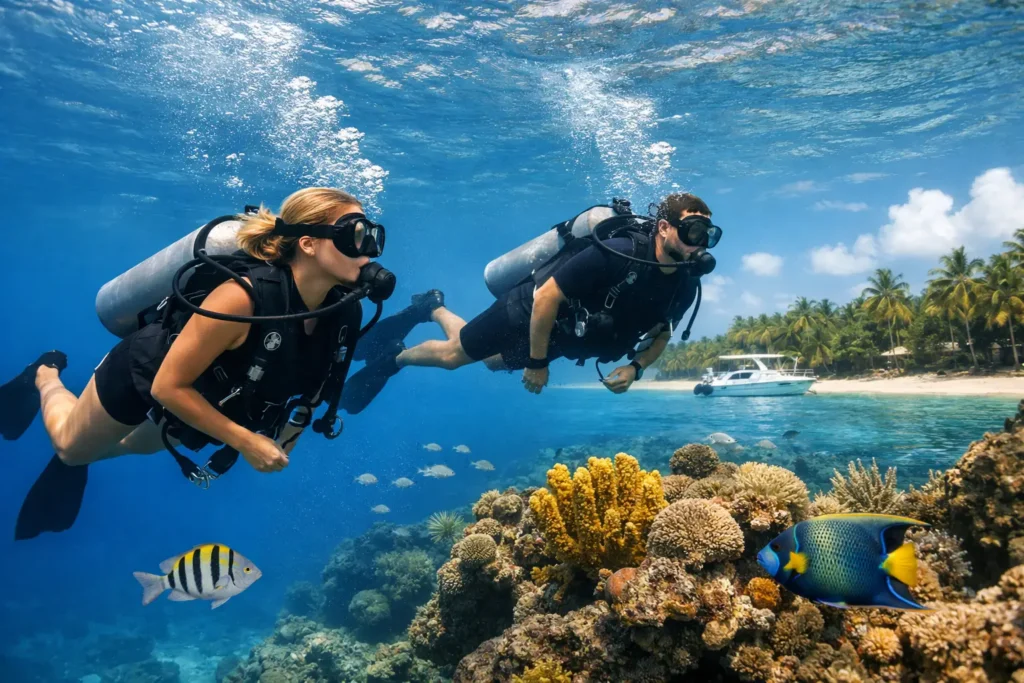
The first time you drop below the surface in the Dominican Republic, one thing usually surprises you – how quickly the noise disappears. A few steady breaths, a guide at your side, and suddenly the best beginner dives Dominican Republic visitors ask about do not feel intimidating at all. They feel warm, clear, and very possible.
That matters, because beginner-friendly diving is not just about shallow depth. It is about calm entries, predictable conditions, good visibility, manageable currents, and marine life that makes a first dive feel rewarding without pushing your comfort zone too far. In the Dominican Republic, especially along the southeast coast, you can find all of that in one trip.
What makes the best beginner dives in the Dominican Republic?
A site can be beautiful and still be wrong for a new diver. The best beginner dives in the Dominican Republic tend to share a few key traits: easy access, mild conditions, sandy patches for skill practice, and enough life on the reef to keep the experience exciting even when you stay shallow.
Water temperature helps too. For much of the year, the Caribbean here is warm enough that new divers spend less energy dealing with cold and more energy enjoying the dive. Visibility is often excellent, which reduces stress and makes basic skills easier. When you can clearly see your instructor, the bottom, and the reef around you, confidence builds fast.
The other factor is guidance. A beginner site becomes much better when it is dived with a crew that knows the timing, the mooring, the current patterns, and the right route for first-timers. That local judgment is what turns a decent introductory dive into a great one.
8 best beginner dives Dominican Republic travelers should know
1. Coral Garden
If you want a classic first reef dive, Coral Garden is hard to beat. The name tells you what you are there for – healthy reef structure, bright fish life, and a layout that is easy to follow without feeling boxed in.
This site works well for Try Scuba experiences and newly certified divers because the depth stays comfortable and the scenery starts early. You do not need to go deep to feel like you are in the middle of a real Caribbean reef. Expect schools of reef fish, soft coral movement, and the kind of visibility that makes every photo look better than it should.
2. Atlantic Princess
Not every beginner wants only coral. Some want the thrill of a wreck without the pressure of a technical dive. Atlantic Princess is one of the best options for that.
It is a wreck that many new divers can enjoy because it sits at a manageable depth and often has relatively friendly conditions. You get the unmistakable silhouette of a sunken vessel, fish moving around the structure, and that first taste of wreck diving in a format that feels approachable. It is dramatic without being too much.
3. St. George outer views for progressing beginners
St. George is famous, and for good reason, but it is not a one-size-fits-all beginner wreck. For absolute first-timers, it can be more dive than necessary. For beginners who already have an intro dive behind them or new Open Water divers diving with a professional, selected sections and outer views can be a strong next step.
That is an important distinction. The site is best when planned conservatively. Done the right way, it offers scale, history, and reef life around the wreck without turning the dive into a confidence test.
4. Viva Shallow Reef
Some of the best beginner experiences happen on sites that never make dramatic top-10 lists. A shallow reef near resort areas can be perfect because the profile is forgiving and the marine life starts almost immediately.
Viva Shallow Reef fits that role. It is ideal for travelers who want an easy first dive, families with mixed comfort levels, or couples where one person is enthusiastic and the other is still deciding. These are the dives that often turn nervous guests into future certified divers.
5. The Wall’s upper section
Walls sound advanced, but not always. In the Dominican Republic, some wall sites have a very beginner-friendly upper shelf before the drop-off becomes the main feature.
That upper section can be excellent for a new diver. You stay in a safe, comfortable depth while enjoying the dramatic blue beyond the reef edge. It gives the sense of being somewhere big and wild without needing to descend into deeper water. For many people, that balance is exactly what makes a dive memorable.
6. Catalina Island house-style reefs
Catalina is often mentioned for stronger visibility and postcard-color water, and for beginners that can be a major advantage. On calm days, the easier reef areas around the island offer gentle conditions and a lot of visual payoff.
The trade-off is logistics. Catalina is usually more of a dedicated boat day than a quick local dive, so it suits travelers who want the dive to be part of a bigger outing. If you are deciding between convenience and that extra wow factor, Catalina usually wins on scenery.
7. Bayahibe local reef circuits
For new divers staying near Bayahibe, local reef circuits are often the smartest choice. They are varied, accessible, and usually easier to match to your exact comfort level on the day.
This is where an experienced crew really earns your trust. Instead of forcing every beginner into the same site, they can choose based on wind, current, visibility, and how you are feeling after the briefing. That flexibility matters more than people realize, especially if you are diving for the first time on vacation and want things to feel smooth from the start.
8. Saona-side shallow coral spots
Most travelers think of Saona for beach time, not scuba. But certain shallow coral areas on the Saona side can be excellent for beginners when sea conditions line up.
These sites are especially appealing if you are building a full Caribbean day around the water. You can combine an easy, colorful dive with the kind of scenery people usually only see on postcards. It is not always the first recommendation for pure training, but for experience-led beginner diving, it can be special.
Reef or wreck – which is better for a first dive?
For most people, reef diving is the easier starting point. Reefs feel open, bright, and forgiving. There is usually more room to settle your breathing, adjust to buoyancy, and simply look around.
Wrecks are exciting, but they can also feel more imposing. Even on beginner-friendly wrecks, the structure creates a different mood. Some first-timers love that instantly. Others relax more on coral sites and enjoy the wreck more as their second or third dive. It depends less on athletic ability and more on personality.
When conditions matter more than the site name
A famous site in rough conditions is not beginner-friendly. A modest reef in calm water can be perfect.
That is why weather, current, surface chop, and visibility should shape the plan. New divers often focus on the destination name, while experienced operators focus on the actual day. The best crews will happily change sites if it means a better first experience. That is not settling for less. That is choosing the right dive.
How to choose the right beginner dive for you
If you are nervous in open water, ask for a shallow reef with an easy descent and minimal current. If you are excited by shipwrecks and already know you like snorkeling or freediving, a gentle wreck like Atlantic Princess may be a better fit. If you want a full-day adventure with standout color and visibility, Catalina can make sense.
Couples and families should also think about pacing. The best beginner dive is not always the most famous one. It is the one that matches the least experienced person in the group while still feeling memorable for everyone else.
If you are planning your first dive in the area, this is where a local SSI dive center with small-group guiding makes a real difference. Sharky’s Crew, also known as Diving DR, has spent nearly 20 years helping first-timers feel comfortable in these waters, and that kind of local knowledge shows up in all the little details guests remember afterward.
What beginners should expect on the day
A good beginner dive day should feel calm before it feels adventurous. You should get a clear briefing, realistic expectations, and simple explanations that make the gear feel less mysterious. No one should rush your questions.
Underwater, the pace should stay conservative. A first dive is not about covering distance. It is about breathing comfortably, understanding how your body moves in the water, and having enough mental space to notice the reef, the light, and the fish around you. The best instructors know that confidence is part of safety.
The Dominican Republic gives beginners a real advantage here. Warm water, bright reefs, and generally inviting conditions help shorten that awkward stage between curiosity and enjoyment. For many travelers, that is the moment scuba finally clicks.
If you are choosing your first dive carefully, trust the sites that feel welcoming, not just famous. The best beginner dive is the one that leaves you surfacing with a grin, already thinking about the next descent.
