


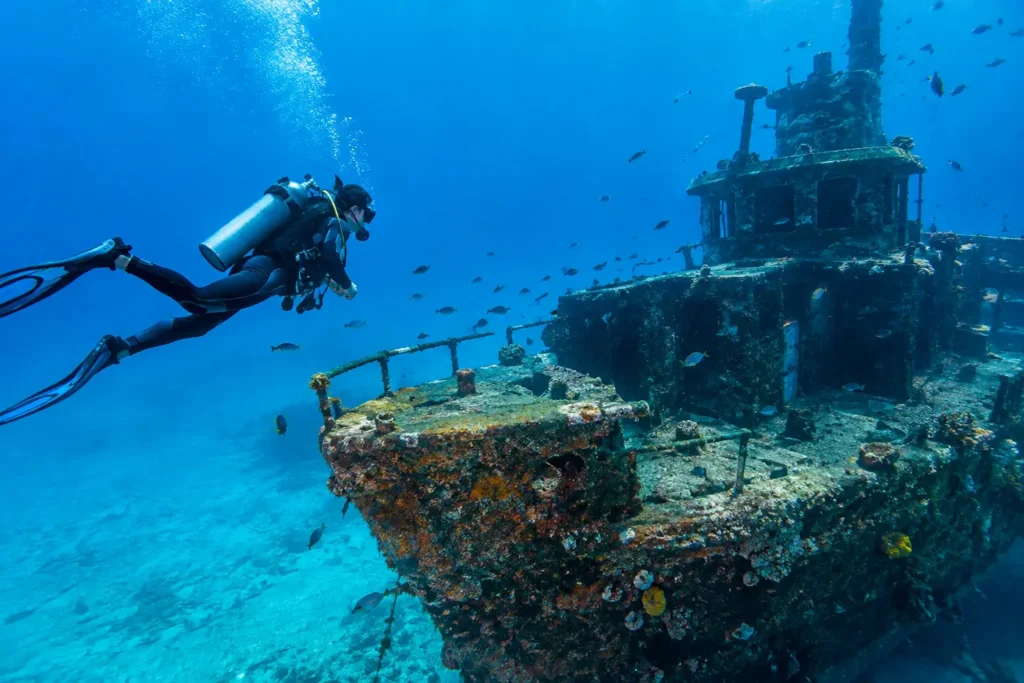
A wreck is never just a sunken ship. It is a changing underwater neighborhood: coral claims the railings, glassy schools of fish move through open decks, and every visit reveals a different detail. This Dominican Republic wreck diving guide is for travelers who want that experience with clear expectations, from the first question of whether a wreck dive fits their certification to the moment they descend alongside a local guide.
For divers staying on the southeast coast, Bayahibe is one of the smartest bases for wreck diving. The water is typically warm, the boat ride can be short, and the area combines purpose-sunk wrecks with healthy Caribbean reef. That means a dive day can feel like a real adventure without turning into an exhausting expedition.
Dominican Republic Wreck Diving Guide: Why Bayahibe Works
Bayahibe sits close to protected waters and some of the Dominican Republic’s most reliable dive conditions. Visibility changes with weather, current, and recent rain, but clear blue water is common enough that wrecks often come into view with a satisfying sense of scale as you descend. Water temperatures are generally comfortable year-round, usually in the upper 70s to mid-80s Fahrenheit.
The practical advantage is variety. A certified diver may pair a deeper, more dramatic wreck with a shallow reef on the same morning. Partners with different comfort levels can often plan a schedule that leaves room for snorkeling, a Try Scuba experience, or a private boat day after the dive. It is a much better fit for a Caribbean vacation than committing every day to long transfers and rigid group schedules.
Wreck diving here is not automatically an advanced activity, though the most compelling sites may be. Your best choice depends on your certification, recent experience, air consumption, comfort with blue-water descents, and the day’s sea conditions. An honest conversation before boarding is part of a good dive operation, not an obstacle to the fun.
The Wrecks Worth Knowing
St. George: The Big-Ship Experience
The St. George is the wreck many experienced divers come to Bayahibe hoping to see. This former cargo ship was intentionally sunk to create an artificial reef, and its size gives the dive a true shipwreck feeling. The vessel sits upright, with its structure, deck areas, and openings creating a striking silhouette against the blue.
Depth is the deciding factor. The site reaches beyond the range that feels relaxed for many newly certified divers, and conditions can make it more demanding. Divers should be comfortable maintaining buoyancy, monitoring no-decompression limits, and making a controlled descent and ascent. A guide can point out the best features, but no one should feel pressured to turn a deeper wreck into their first challenging dive.
For the right diver, the payoff is exceptional. Look beyond the metal itself: resident fish gather around the hull, soft corals add color, and the ship’s lines become more dramatic as sunlight falls across the upper sections. Bring a camera only if your buoyancy is already dependable. The wreck deserves your attention, and so does the diver beside you.
Atlantic Princess: A Gentler Introduction
The Atlantic Princess offers a different kind of wreck experience. It is a smaller, shallower artificial reef and often a more approachable option for less experienced certified divers. Because it is accessible at recreational depths, it can be a good place to build confidence around a wreck without the added pressure of a deeper profile.
That does not make it a lesser dive. Smaller wrecks can be wonderfully alive, especially when fish use the structure as shelter. They are also useful for practicing the habits that make every future wreck dive better: staying off the bottom, keeping clear of delicate growth, controlling your position near hard surfaces, and following the guide’s route.
A shallow wreck can be especially appealing for mixed groups. One diver may want a memorable introduction to wreck scenery, while another wants an easy second dive after a deeper morning site. The best itinerary is not always the deepest one. It is the one that gives everyone time underwater they can genuinely enjoy.
Wreck and Reef Combinations
One reason the Bayahibe area stands out is that wrecks do not exist in isolation. Many dive days combine a shipwreck with a reef full of ledges, sponges, and Caribbean marine life. This pairing adds variety and helps match the day to the group.
A deeper wreck followed by a shallower reef is often a sensible order, provided the profile and surface interval are planned properly. Your crew should discuss the day before departure, including expected maximum depths, currents, entry method, and what to do if the group becomes separated. These details may sound routine, but they are how a relaxed vacation dive stays relaxed.
Choose the Right Dive for Your Experience
Open Water certification does not mean every wreck is appropriate, and Advanced-level training does not guarantee that every day will be suitable. Recent experience matters. A diver who has not been underwater for two years may have a better first day on a shallow reef or an easier wreck than on a deep, open-water site.
If you are newly certified, say so when booking. A professional center can recommend a private guide, a refresher, or a site with gentler conditions. If you are an experienced diver, share your logbook history and the kind of dive you enjoy. Do you prefer wide-angle ship views, marine life photography, deeper profiles, or a calm, unhurried exploration? Those preferences help shape the day.
Penetration is a separate skill set. Swimming through a doorway or enclosed section of a wreck is not the same as touring the outside. Overhead environments require specialized training, equipment awareness, redundancy, and disciplined procedures. On a recreational guided dive, staying outside the wreck and enjoying its exterior is often the safest and most rewarding choice.
What to Expect on the Boat
A quality wreck diving day begins before the first giant stride. The crew should confirm your certification, ask about medical or comfort concerns, inspect equipment, and give a site-specific briefing. Listen for practical information: the planned depth, route, current direction, descent line, turnaround pressure, and emergency procedures.
On the water, small groups make a real difference. They allow the guide to watch divers more closely, adjust the pace, and avoid the feeling of being pushed through a site behind a long line of fins. For couples, families, or friends traveling together, a private or semi-private boat can also make the schedule more flexible.
At Sharky’s Crew AKA Diving DR, our captains and guides use nearly 20 years of local knowledge to choose routes and sites that make sense for the conditions and the people on board. That local judgment matters when wind, current, or visibility suggests changing the original plan. The goal is never to force a famous wreck. The goal is to give you an excellent dive.
Pack Smart and Protect the Site
Most dive centers provide core rental gear, but bring a properly fitting mask if you own one. A reef-safe sunscreen applied well before boarding, a reusable water bottle, dry clothes, and motion-sickness medication if you need it will make the day more comfortable. If you carry a camera, secure it with a lanyard and be ready to stow it when conditions require your full attention.
Underwater, the rule is simple: look closely, touch nothing. Wrecks become reefs because marine life settles on them. Grabbing a railing can damage growth, stir up sediment, or put your hand near a hidden animal. Maintain neutral buoyancy, keep fins away from the structure, and let the wreck remain a home for the next group of divers.
Make It a Wreck Dive You Will Remember
The Dominican Republic rewards divers who plan for experience rather than bragging rights. Choose the site that suits your skills, listen carefully to the briefing, and leave enough space in your vacation for a slow surface interval and a second reef dive. When the hull appears beneath you in clear Caribbean water, you will be glad you chose a crew and a plan built around your comfort, not just a name on a dive-site list.
