


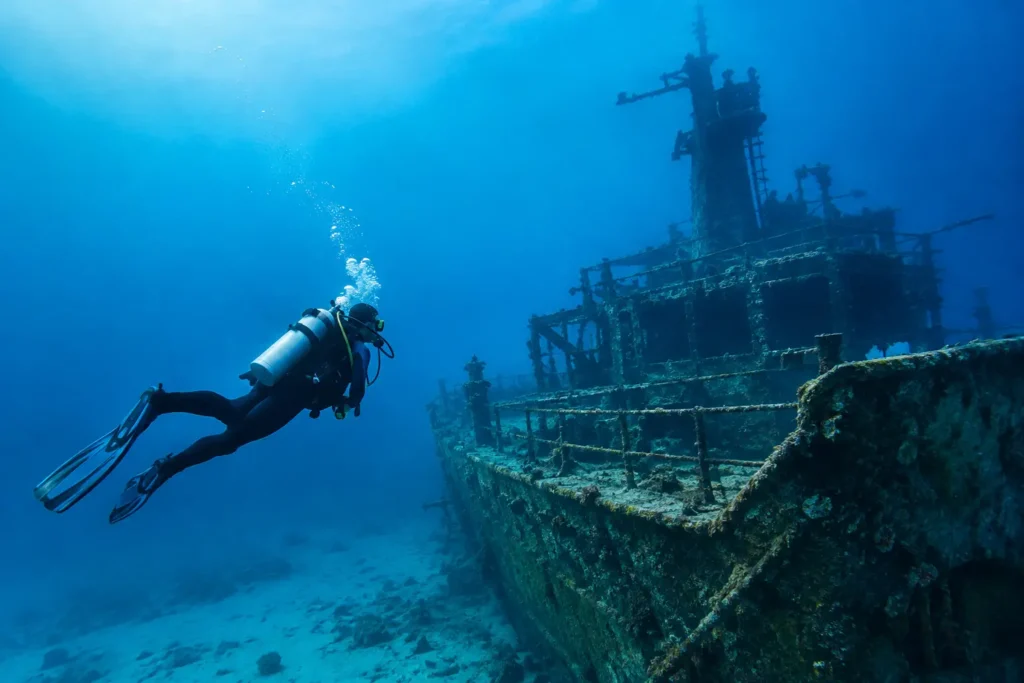
A shipwreck can appear almost out of nowhere: a dark hull taking shape through blue water, a school of fish turning above the deck, coral softening what was once steel. But are wreck dives deep? Sometimes, absolutely. Other wrecks sit in shallow water where newly certified divers can enjoy the view with plenty of bottom time. The depth is not determined by the word “wreck” – it comes down to the vessel, where it rests, and how the local dive team plans the route.
For divers visiting the Dominican Republic, that range is part of the appeal. You can choose a relaxed wreck exterior with a guide, or make a more technical-feeling descent to a larger, deeper site when your certification, recent experience, and comfort level support it.
How Deep Are Wreck Dives, Usually?
Wrecks can be found from just a few feet below the surface to well beyond recreational depth limits. A small boat intentionally placed as an artificial reef may rest in 30 to 50 feet of water. It can be a fantastic first wreck experience: clear orientation, colorful marine life, manageable air consumption, and time to look closely at the details.
Many famous recreational wrecks sit between 60 and 100 feet. This is where divers often notice the biggest trade-off. The ship may be more dramatic and the water around it may feel wonderfully open, but bottom time becomes shorter as depth increases. At roughly 100 feet, a diver can reach no-decompression limits far more quickly than at 40 or 60 feet.
Some wrecks begin at an accessible depth but extend much deeper. You might descend to the top of the structure, swim along a rail or deck, then see the sand far below. A good guide does not treat the deepest point as the goal. They choose a profile that matches the group, lets everyone enjoy the wreck, and leaves a sensible reserve of air and no-decompression time.
Depth is only one part of the plan
Two wrecks at the same depth can feel completely different. Current, visibility, surface conditions, the size of the vessel, and the distance from the mooring line all change the experience. A 75-foot wreck in calm, clear water may feel easygoing. A 60-foot wreck with current, low visibility, or a complicated route may demand more awareness.
This is why a dive briefing matters. Before entering the water, your crew should explain the maximum depth, expected conditions, route, time limits, ascent plan, and what to do if you become separated from your buddy or guide. The best wreck dive starts long before the giant stride.
Are Wreck Dives Deep Enough for Advanced Divers?
They can be, but “advanced” does not automatically mean “go as deep as possible.” Certified divers often choose deeper wreck dives for the scale of the experience: a large freighter, a towering bow, cargo holds visible from outside, or pelagic fish circling in the blue. Advanced-level training and recent diving experience can make these sites a better fit, especially when the planned maximum depth exceeds 60 feet.
That said, experienced divers also appreciate shallow wrecks. Longer bottom time means more chances to photograph schooling grunts, inspect the growth on a propeller, or watch a turtle pass through the structure. Depth does not create the quality of the dive by itself.
For divers who want to enter enclosed areas, the question changes. Wreck penetration requires specialized overhead-environment training, the right equipment, and a disciplined approach to gas management, navigation, and emergency procedures. A recreational guided wreck dive generally means exploring the outside of the vessel or swimming through wide, open sections where there is always a direct path to the surface. Never assume that a doorway is an invitation to enter.
What Certification Do You Need for a Wreck Dive?
An Open Water certification is enough for many shallow wreck exteriors, provided the site is within your training depth limit and conditions are appropriate. For deeper wrecks, an Advanced Adventurer or Advanced Open Water-level qualification is commonly recommended or required by operators, particularly when the plan reaches deeper recreational depths.
The exact answer depends on the site and the agency standards, but certification is only part of the picture. A diver who earned an advanced card years ago and has not been underwater since may be better served by a refresher and a more conservative first dive. A recently active Open Water diver with excellent buoyancy may be a strong candidate for a shallower wreck route.
At a professional SSI dive center, the crew should ask about your certification, logged dives, date of your last dive, and comfort in open water. Those questions are not paperwork for its own sake. They help the team put you on the right boat, pair you thoughtfully, and plan a dive you will remember for the right reasons.
Buoyancy matters more around a wreck
Wrecks invite close inspection, but touching them can damage fragile growth and stir up sediment. Good buoyancy lets you hover beside a porthole, fin above the sand, and keep a respectful distance from sharp metal, fishing line, or marine life.
If it has been a while since your last dive, tell the crew. A short skills review, a shallower first site, or a private guide can turn nervousness into confidence before you visit the bigger wreck on your wish list.
Why Bayahibe Wreck Dives Feel So Special
Bayahibe offers an exceptional combination for Caribbean wreck diving: warm water, frequently clear visibility, colorful reef life, and sites suitable for different confidence levels. Wrecks here are not sterile underwater museums. They become living structures, with sponges, corals, schooling fish, and predators using the hull as shelter and hunting ground.
The deeper sites deliver that satisfying sense of scale, while shallower artificial reefs can be ideal for divers who want an easy, unhurried introduction. Conditions still vary from day to day, of course. Wind, swell, current, and visibility always have the final say, which is why local knowledge is worth so much.
After nearly 20 years on these waters, Sharky’s Crew plans around the actual conditions rather than forcing every guest into the same schedule. That may mean choosing a calmer route, adjusting the group’s depth, or recommending a reef dive first. A personalized plan is not less adventurous. It is how you get the most out of the adventure.
How to Choose the Right Wreck Dive for You
Start with an honest answer to one question: what do you want from the experience? If you want a memorable first wreck, choose a site with a shallower maximum depth, easy navigation, and a guided exterior tour. If you are a certified, current diver hoping for a dramatic descent and a large vessel, ask about a deeper wreck and the expected conditions that day.
It also helps to think beyond the underwater portion. A morning departure can offer calmer seas, and a small group gives the guide more freedom to adapt the pace. Families and couples often prefer that flexibility, especially when divers in the same party have different experience levels.
Bring your certification card, let the crew know about any gap in diving, and be clear about your comfort with depth. Then listen to the briefing. The wreck will still be there tomorrow, but a well-chosen dive today can be the highlight of your Caribbean trip – a quiet moment beside a ship that now belongs to the sea.
