


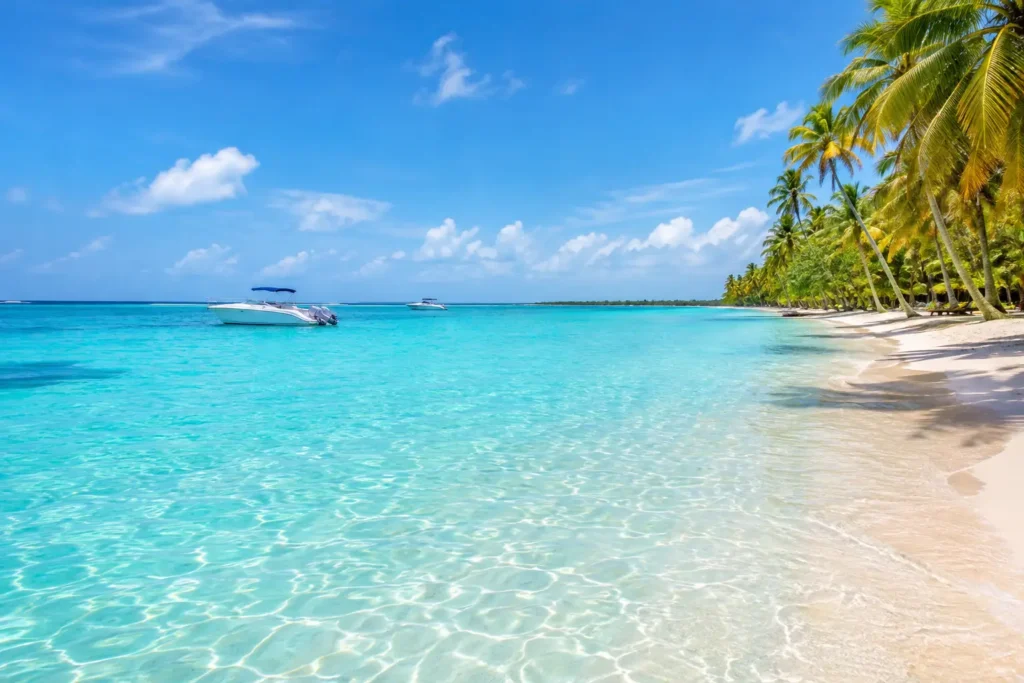
The honest answer to when is Saona calmest is not a single month on a calendar. It is usually an early start on a day when the wind has stayed gentle, paired with a captain who reads the water instead of simply following the standard excursion schedule. Saona can look like a postcard in every season, but the ride, the anchorage, and the feeling of having a beach to yourself change dramatically with the conditions.
For couples planning a relaxed Caribbean escape, families with younger children, or anyone who would rather skip a bouncy group-boat crossing, timing is part of the experience. The right plan turns Saona from a rushed checklist stop into the long, unhurried beach day it should be.
When is Saona calmest during the year?
Saona Island sits off the southeastern coast of the Dominican Republic, protected in part by the geography of Parque Nacional del Este but still exposed to Caribbean trade winds and changing weather. In broad terms, the sea is often at its gentlest from late spring through early fall, especially on mornings with light winds. But conditions vary from day to day, and a calm-looking forecast does not always tell the whole story.
The winter months, roughly December through March, can bring more frequent easterly trade winds. Those winds are welcome on a hot beach, yet they can put more chop on open sections of the route. That does not mean Saona trips stop being beautiful in winter. It simply means a skilled crew may adjust the route, choose more protected stops, or recommend an earlier departure to make the most of the day.
From around May through September, mornings are often glassier and warmer. This is a favorite window for guests who prioritize a soft ride, easy swimming, and clear, inviting water. Afternoon showers are more common in parts of the warmer season, though they are frequently brief and localized. A private trip has a major advantage here: there is room to adapt the pace and order of stops rather than pushing through a fixed group itinerary.
Hurricane season runs from June through November, with the highest likelihood of tropical activity generally later in that period. That is not a reason to write off a summer or fall visit. Most days are perfectly suitable for being on the water, and local operators monitor forecasts closely. It does mean that flexibility matters. A responsible captain will never treat a booked date as more important than safe sea conditions.
The calmest part of the day is usually early
If a smooth ride is your priority, morning is almost always the smartest choice. The wind commonly strengthens as the land heats up, making midday and afternoon crossings livelier than the first hours after sunrise. Departing early also means arriving before the largest catamaran and speedboat groups settle into their beach stops.
That early window changes more than the water. Saona’s pale sand is quieter, the shallows feel more peaceful, and there is time to enjoy a natural pool or reef-side swim before the busiest part of the day. Photographs are better when the beach is not framed by rows of day-trip boats. More importantly, you are not watching the clock while dozens of other guests line up for lunch and a quick swim.
For guests staying near Bayahibe, an early private departure is especially practical. It puts you on the route while the sea is often at its most cooperative and gives the captain freedom to choose the best first stop based on that morning’s conditions.
Wind matters more than the weather app icon
A sunny icon can be misleading. Sunshine says very little about wave height, swell direction, or how exposed a particular beach will feel. The question is not just whether it will rain. It is whether the wind has been building for several days, which direction it is coming from, and whether the route offers protected water.
Easterly and northeasterly winds can create a choppier feel on exposed stretches, while a lighter, steadier breeze can leave the sea surprisingly smooth. Swell generated farther away can also reach the coast even when the local sky is blue. This is why local knowledge beats a generic forecast when you are deciding whether a day is right for young kids, first-time boaters, or guests prone to motion sickness.
A good operator checks marine conditions close to departure, not just once when the reservation is made. At Sharky’s Crew, nearly two decades on these waters means the team knows that the best Saona plan may be a different route, a different stop order, or a different day altogether. That is not a compromise. It is how a private day stays personal, safe, and genuinely enjoyable.
Choose the right boat plan for your group
The calmest possible Saona experience is not only about choosing a season. It is also about avoiding the parts of mass tourism that make even a beautiful day feel hectic. Large catamarans operate on set timetables, often leave later, and carry enough people that everyone must move at the same pace. If conditions change, your group’s preferences rarely shape the plan.
A private or small-group boat gives the crew more options. Families can slow down for an extra swim. Couples can linger at a quiet anchorage. Corporate groups can keep the atmosphere polished and relaxed instead of competing with a party soundtrack. Your captain can prioritize sheltered water when the breeze rises and pick locations based on where the sea is best that day.
This does not mean every private trip will be perfectly flat. The ocean has the final word, and anyone promising otherwise is not being straight with you. It means your experience can be designed around comfort rather than around filling seats and keeping to a rigid circuit.
How to improve your chances of a smooth Saona day
Book the beginning of your available travel window if possible. That gives you room to shift your excursion if a windy day arrives. Guests who schedule Saona for their final day have less flexibility, particularly during months when weather patterns can change quickly.
Tell the crew if anyone in your party gets seasick, has limited mobility, is traveling with small children, or simply wants the gentlest ride available. These details affect departure timing, seating advice, route choice, and how ambitious the day should be. Motion-sickness medication, when appropriate for you, works best when taken according to its instructions before the boat begins moving, not after the waves have already made an impression.
Also, separate calm water from warm weather in your expectations. Saona is warm much of the year, but a hot, cloudless day can still have a brisk afternoon breeze. Conversely, a lightly cloudy morning may deliver smooth water and a more comfortable beach temperature. The best day is not always the one that looks most dramatic on an app.
A quick rule for families and first-time boaters
If comfort is the priority, aim for an early private departure between late spring and early fall, keep one flexible day in your itinerary, and listen to the captain’s recommendation the evening before. Winter travelers can still have an exceptional Saona day, especially with an early departure and a route selected for the prevailing wind.
Calm water is only half the magic
There is another kind of calm people remember long after they leave Saona: the quiet that arrives before the crowds. It is the sound of water folding onto the sand, a child floating without being jostled by other swimmers, and the rare luxury of choosing when to move on. That is why timing matters so much.
Ask about the likely conditions for your exact travel dates, then leave enough room for the crew to make the smart call. Saona rewards travelers who start early, stay flexible, and let the day follow the sea rather than fight it.
