


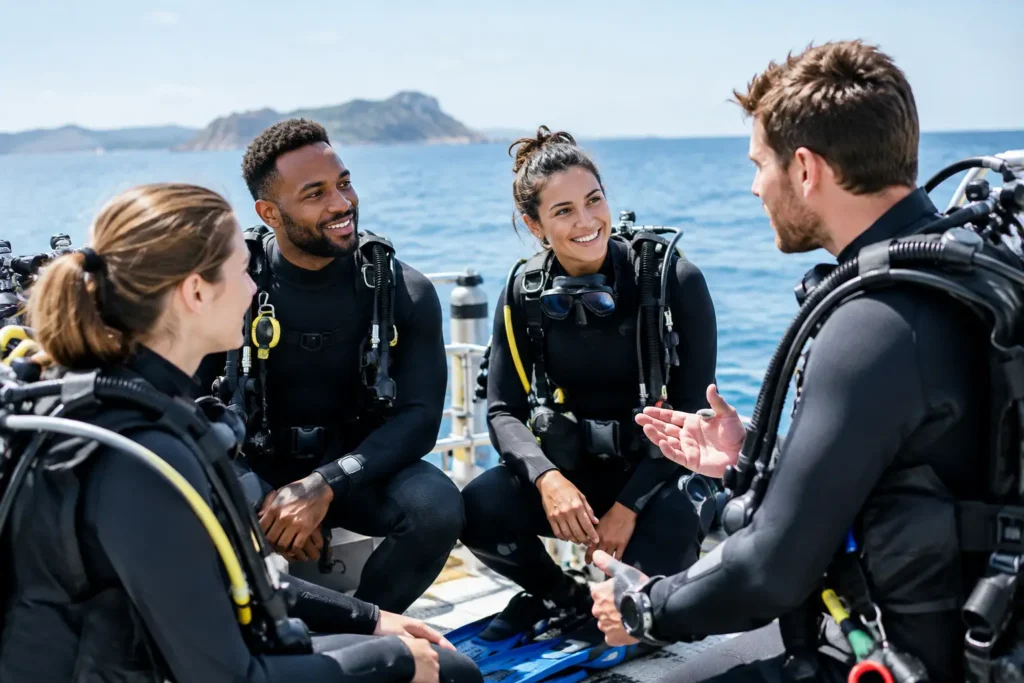
A conference room can only take a team so far. When you organize corporate diving team building for a Dominican Republic retreat, you give people a shared challenge that requires calm communication, attention, and trust – then reward them with a day on clear Caribbean water. The result should feel exciting, never forced: a premium experience where first-time divers are looked after, certified divers still feel challenged, and non-divers are fully part of the story.
Why Corporate Diving Team Building Works
Scuba is naturally collaborative. Before anyone enters the water, participants learn the same core habits: listen closely, check equipment carefully, communicate with a buddy, and respect the plan. Underwater, where conversations become hand signals and awareness matters, job titles fade quickly. A senior leader and a new hire have the same responsibility to stay close, move deliberately, and look out for one another.
That does not mean every group should be pushed through a dive course. The strongest corporate days are designed around confidence levels, not bravado. For some teams, a Try Scuba experience in calm, shallow conditions is the memorable breakthrough. For a group with certified divers, a guided reef or wreck dive can add the right sense of adventure. The value comes from doing something real together, with safety and support built into every step.
A private boat also changes the atmosphere. Instead of sharing the day with a packed excursion schedule, your group has room to settle in, ask questions, celebrate small wins, and enjoy the coastline at its own pace. In Bayahibe, early departures can put a team on the water before the busiest boats arrive, leaving more space for the experience that brought everyone there.
Start With the Right Outcome, Not the Activity
A great event begins with one simple question: what should the team take away from the day? An incentive group may want an extraordinary shared memory. A leadership retreat may be looking for a confidence-building challenge. A newly merged department may benefit most from easy conversation and a relaxed private-boat day, with optional water activities rather than an all-or-nothing dive plan.
Be clear about your group’s experience level before selecting the itinerary. Ask who is certified, who has never tried scuba, who is comfortable swimming, and who would prefer to stay above water. This is not a test of commitment. It is the information that lets an experienced operator create a day where nobody feels like the reluctant participant.
For mixed groups, the best format is often a split experience. First-time divers receive a patient orientation, practice key skills in controlled conditions, and make a closely supervised introductory dive if they are comfortable. Certified divers can enjoy a more advanced guided site. Meanwhile, colleagues who are not diving can snorkel, swim, photograph the day, or simply enjoy the boat and a beautiful beach stop. Everyone should reconnect afterward with the feeling that they shared the same adventure, even if they experienced it differently.
Build participation without pressure
Avoid presenting scuba as a mandatory activity on the agenda. Water confidence, health considerations, and personal boundaries vary widely, and a reluctant diver is not the foundation for a good team day. Position the experience as a choice within a private, well-hosted adventure.
The same principle applies to recognition. Celebrate a first underwater breath, a completed buddy check, or a teammate who offered calm encouragement. These moments are more meaningful than turning the day into a competition. Corporate team building works best when people leave proud of themselves and more generous toward each other.
How to Organize Corporate Diving Team Building Safely
Start planning early, especially for a retreat with a fixed travel schedule. The dive center will need an accurate headcount, the number of certified divers, preferred dates, hotel location, dietary needs, and any guests who may want a non-diving option. A small private group can often remain flexible, while a larger team needs more lead time to match the right boat, crew, instructors, and site plan.
Medical screening is part of responsible planning, not an administrative afterthought. Diving providers use health questionnaires to identify whether a participant needs medical clearance before getting in the water. Share this requirement before the trip, not during a welcome dinner the night before. It gives participants time to ask their doctor questions and prevents awkward last-minute surprises.
The itinerary should also respect diving’s practical rules. Schedule diving before any beach celebration involving alcohol, keep everyone hydrated, and leave sufficient time between the final dive and flying. The precise interval depends on the dive profile and professional guidance, but many travelers should plan for at least 18 to 24 hours before boarding a flight. If your team is leaving the next morning, make the last full day a boat excursion, beach gathering, or Chavon River outing instead.
Weather deserves a sensible contingency plan. Caribbean conditions are often excellent, but sea state, wind, and visibility can change. Choose a crew that knows the local routes and has alternatives ready, whether that means a more sheltered dive site, a revised departure time, or a private island itinerary that still feels special. Flexibility is a sign of good operations, not a downgrade.
Choose the format that fits your team
An introductory diving day works beautifully for smaller groups that want a first-time experience with close instructor attention. Keep the schedule unhurried. People need time for the briefing, equipment fitting, shallow-water practice, and the understandable nerves that can come before their first descent.
For a team with many certified divers, build the day around the dive sites rather than making the dive a short item between meetings. A reef and wreck combination, if conditions and qualifications allow, gives experienced guests a more rewarding day while leaving time for lunch and a relaxed boat ride.
A hybrid private excursion is often the smartest choice for a varied corporate group. The boat becomes the shared base, with diving, snorkeling, beach time, and calm-water stops available around it. At Sharky’s Crew, our captains and SSI professionals shape these days around the people on board, using local knowledge to balance the conditions, group pace, and the destinations that will make the day feel personal.
Turn the Boat Day Into a Team Experience
The details around the water time are where a corporate outing becomes a genuine team-building memory. Begin with a welcome that is warm and clear: introduce the crew, explain the plan, and let participants know exactly what support is available. People relax faster when they understand who is in charge and what comes next.
Give teams a simple shared role before the first activity. Pair buddies for equipment checks, invite colleagues to help capture photos, or ask small groups to choose music for the ride home. Keep it light. The purpose is to create natural interaction, not to import office exercises onto a boat.
Leave room in the schedule for the unscripted moments. The best conversations often happen after a first dive, during a swim stop, or while the boat crosses water that seems almost unreal in color. A rushed itinerary can deliver activities, but it cannot create that sense of freedom. Private and small-group formats are valuable because they protect the time between the highlights.
If you want to connect the day to a leadership program or company values, save that conversation for after everyone has dried off and eaten. Ask a few open questions over lunch: What helped you feel confident? When did you rely on someone else? What surprised you? Let the answers stay human rather than turning them into a formal debrief.
What a Corporate Group Should Bring
Your provider should supply properly maintained dive gear and safety equipment, but participants should bring swimwear, a towel, reef-safe sun protection, sunglasses, and a dry change of clothes. Encourage a light breakfast, plenty of water, and a good night’s sleep beforehand. Those small decisions make a real difference to comfort on the boat.
For the organizer, bring a final guest list, emergency contact details, certification cards for qualified divers, and realistic expectations. Not every first-time diver will decide to descend, and that is completely fine. A professional crew will never rush the decision. The win is giving each person the chance to try something extraordinary on their own terms.
The best corporate water day is not the one with the busiest agenda. It is the one where every guest feels included, cared for, and just brave enough to come home with a story they will still be telling at the next team meeting.
