


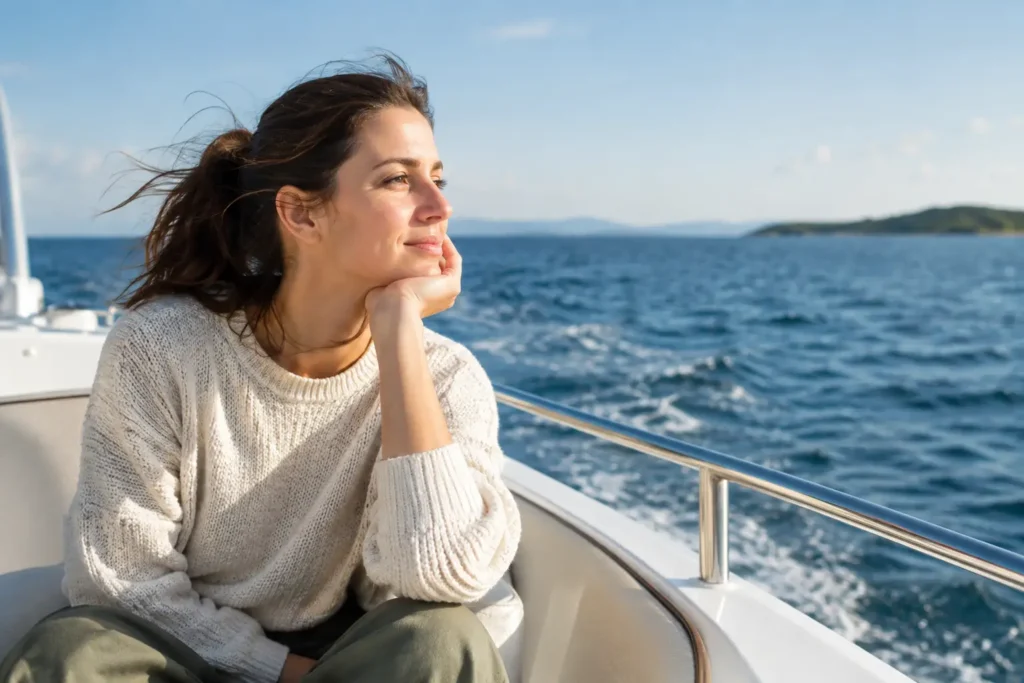
A beautiful boat day can start with crystal-clear water and end at a white-sand beach. But if your stomach turns the moment the hull begins to move, it is hard to enjoy any of it. Knowing how to avoid seasickness boating is less about being naturally tough at sea and more about making smart choices before you leave shore.
The good news: most guests can dramatically reduce their chance of feeling sick. Preparation, where you sit, what you look at, and how your captain plans the route all matter. On a private or small-group trip, the crew can also adapt the pace when someone needs a little extra care.
Why Seasickness Happens on a Boat
Seasickness is a conflict between what your inner ear senses and what your eyes see. Your body feels the boat rise, drop, and roll, while your eyes may be fixed on a phone, the deck, or the cabin. That mismatch can lead to nausea, sweating, dizziness, fatigue, and sometimes vomiting.
It can happen to anyone, including experienced travelers and confident swimmers. Being seasick does not mean you are afraid of the ocean or unfit for a boat trip. Some people are simply more sensitive to motion, especially when they are tired, dehydrated, hungry, hungover, anxious, or traveling through choppy water.
Conditions matter, too. A short crossing in calm morning water is very different from a long afternoon ride with wind and boat traffic. That is one reason an experienced local captain is worth having. They know which routes are more protected, when the weather usually changes, and when it is wiser to adjust the day rather than push through rough conditions.
How to Avoid Seasickness Boating Before Departure
Your best defense starts the night before. Get real sleep, drink water throughout the evening, and go easy on alcohol. A late night and too many cocktails can make even gentle motion feel much worse the next morning.
Eat a light, familiar meal before boarding. Think toast, fruit, eggs, oatmeal, rice, or a simple sandwich. An empty stomach can make nausea worse, but so can a huge greasy breakfast. Skip very spicy, heavy, or rich foods if you know you are prone to motion sickness.
Hydration deserves more attention than it gets. Caribbean sun, warm air, salt water, and celebratory drinks can quietly leave you dehydrated before the boat has even cast off. Start with water, then keep sipping during the trip rather than waiting until you feel thirsty.
If you have been seasick before, consider medication ahead of time. Common over-the-counter options include dimenhydrinate and meclizine, while a clinician may prescribe a scopolamine patch for some travelers. These are not one-size-fits-all solutions. They can cause drowsiness, dry mouth, blurred vision, or other side effects, and may not be appropriate with certain health conditions or medications.
Speak with your doctor or pharmacist before your trip, especially if you are pregnant, have glaucoma, heart concerns, take prescription medication, or are traveling with children. If scuba diving is part of the day, never try a new motion-sickness medication for the first time immediately before a dive. You need to know how it affects your alertness and comfort on land first.
Pick the Best Place to Sit on the Boat
Once aboard, location is one of the fastest ways to feel better. The center of the boat usually has less motion than the bow or stern. Sit low, near the middle, where you can get fresh air and see the horizon. If the crew directs you to a particular seat for safety or balance, follow their guidance first.
The bow may feel exciting when the sea is flat, but it often has the biggest up-and-down movement in waves. The stern can also bounce and may have stronger engine smells. If you are already feeling unsettled, do not try to tough it out in the most active part of the boat. A simple seat change can make a noticeable difference.
Keep your eyes on a stable point in the distance. The horizon gives your brain a visual reference that better matches the movement your inner ear is feeling. This is the opposite of what happens when you look down at a phone, read a book, edit vacation photos, or search through a bag for twenty minutes.
Fresh air helps, too. Warm enclosed cabins, fuel odors, and stuffy spaces can intensify nausea. Stay outside when it is safe, loosen any tight clothing, and let the breeze do its job.
What to Do When the Water Gets Choppy
Even the best-planned outing can meet an unexpected patch of wind or waves. The key is to react early. The first signs are often subtle: feeling unusually warm, yawning repeatedly, sweating, burping, or losing your appetite. Tell the crew right away. You are not inconveniencing anyone by speaking up.
A good crew would rather move you to a better spot, offer water, suggest a horizon view, or adjust the ride before symptoms become severe. On small-group trips, there is often more flexibility than on a crowded party boat with a fixed schedule.
Keep your head as still as possible and avoid sudden turns. Sit facing forward if you can, breathe slowly, and focus outside. Small, dry snacks such as crackers can help some people settle their stomach. Ginger candies, ginger tea, and acupressure wristbands are popular options, although results vary from person to person. They are best treated as an extra layer of support, not a guaranteed cure.
If you do vomit, do not panic or feel embarrassed. It happens. Let the crew know so they can help you safely, clean up promptly, and make sure you are able to continue comfortably. Afterward, take small sips of water and rest in the most stable area of the boat.
Plan the Right Kind of Boat Day
Not every excursion has the same seasickness risk. A fast ride across open water, a slow cruise along a protected coast, and a catamaran sail can feel completely different. If you are sensitive to motion, ask about expected travel time, likely sea conditions, shade, seating, restroom access, and how flexible the itinerary can be.
Early departures are often a smart choice in the Dominican Republic. Mornings can bring calmer water, cooler temperatures, and fewer boats at popular stops. Leaving early for Saona Island or Catalina Island can also mean more time to relax once you arrive, rather than spending the day rushing from one stop to the next.
Private charters are especially helpful for families, couples, and groups with mixed comfort levels. One guest may want to snorkel every reef, while another needs a quieter ride and a long swim in shallow water. A personalized day lets the experience fit the people on board. At Sharky’s Crew, that local route knowledge is part of the service, not an afterthought.
A Few Habits That Make a Real Difference
Avoid staring at screens during transit. Save the messages, videos, and photo sorting for the beach. Keep water within reach, wear sun protection, and use sunglasses if glare makes you squint or feel headachy. Sun exhaustion can mimic or worsen motion sickness surprisingly fast.
Try not to overthink every wave. Anxiety can make your stomach tighten and turn normal movement into something much more uncomfortable. Give yourself a job instead: watch the horizon, identify the next landmark, sip water, or talk with someone facing forward. The ocean is moving, but you have practical ways to stay in control.
A calm boat day is not about proving that you can handle rough water. It is about setting yourself up to enjoy the ride, the reef, and that first impossible shade of Caribbean blue. Prepare early, listen to your body, and let the crew help before a small wobble steals the day.
