


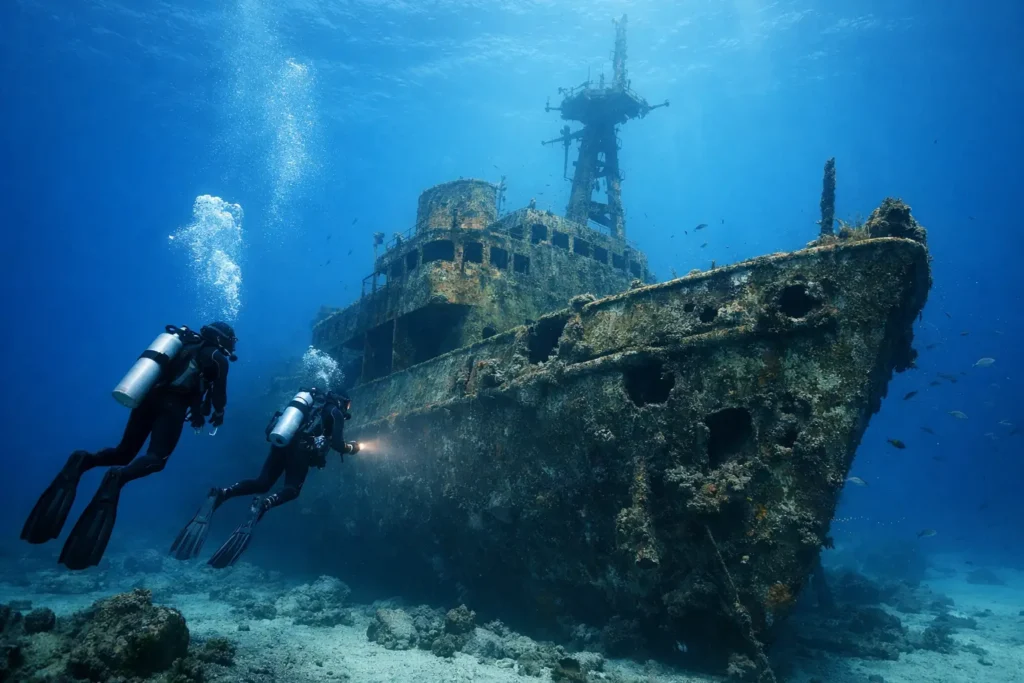
One look down the mooring line and you understand why st george wreck diving sits high on so many divers’ must-do lists. The structure appears slowly at first, then all at once – a long steel ship resting on white sand, wrapped in blue water and busy with marine life. It is dramatic without feeling theatrical, challenging without being inaccessible, and for the right diver it delivers the kind of descent people replay in their heads long after the vacation ends.
For visitors planning a serious dive day in the Dominican Republic, this wreck stands apart because it offers more than a quick swim-by. You get scale, history, a real sense of exploration, and conditions that can be excellent when the weather and sea cooperate. At the same time, this is not a site to treat casually. Depth, profile, and changing conditions matter here. That balance is exactly what makes it so rewarding.
Why St George wreck diving stands out
The St George is one of the best-known wrecks in the Bayahibe area, and its appeal starts with its size. This is not a small artificial structure with a few fish hovering around it. It is a substantial cargo ship, intentionally sunk after being prepared as an artificial reef, and it carries the presence you want from a wreck dive. The lines are recognizable, the deck areas create orientation points, and the open water around it adds to the feeling that you are visiting something significant.
Visibility is often a major part of the experience. In clear Caribbean water, the wreck comes into view in layers, which adds tension to the descent in the best possible way. You are not just dropping onto metal. You are watching a shape emerge from blue, with schooling fish moving above the superstructure and soft growth gradually claiming the ship.
Marine life helps the wreck feel alive rather than abandoned. Depending on the day, divers may encounter schools of snapper, barracuda, glassy sweepers tucked into shaded sections, and the usual reef companions patrolling nearby. The wreck has enough structure to attract life, but enough open space around it to preserve that clean, cinematic look many divers hope for.
What the dive is actually like
St George wreck diving is usually best suited to advanced recreational divers because of the depth. The wreck sits deeper than many casual vacation dives, and that changes the pace of everything. Bottom time is more limited, gas management matters more, and your descent and ascent need to be deliberate.
That does not mean the dive has to feel rushed. With a good guide, a well-planned route, and a small group, the experience becomes more focused. Instead of wandering, you spend your time where the wreck shows best – along major structural lines, around the deck, and near the sections where marine life tends to gather.
Conditions can vary. Some days the water feels calm and straightforward. On other days, current can add effort, especially around descent and ascent. This is one reason the site rewards divers who are already comfortable in open water and who do not need to spend mental energy on the basics. When buoyancy, trim, and equalization are automatic, you can enjoy the wreck itself.
Depth, training, and who should dive it
This is where honesty matters. The St George is not the best first wreck for every traveler, and a good operator should say that clearly.
If you are newly certified, your interest in the wreck is understandable, but interest alone is not enough. The right choice depends on your logged dives, your comfort at depth, your air consumption, and how relaxed you remain when descending onto a large structure in blue water. Some newer divers can build toward it with additional guided dives or training. Others are better off enjoying shallower reef sites first and saving the wreck for a later trip.
For advanced recreational divers, this site usually fits much more naturally. If you already have experience with deeper profiles, controlled descents, and strong buoyancy, the wreck feels exciting rather than overwhelming. If you are pursuing advanced training, a wreck-focused dive here can also be a meaningful step, provided the dive is planned around your certification level and not around wishful thinking.
The trade-off is simple. Greater depth gives the St George its drama, but that same depth reduces flexibility. You have less margin for poor air management, less time to linger, and more reason to dive with a crew that keeps groups small and supervision close.
What makes a good St George wreck diving operator
Not every wreck dive is made better by a bigger boat or a louder sales pitch. For a site like this, the details matter more.
A good operator briefs the dive thoroughly, not just the fun parts. You want clear expectations around maximum depth, route, current, entry, ascent, and contingency planning. You also want guides who know the wreck well enough to adjust the dive to conditions rather than force the same pattern every day.
Boat handling matters too. Experienced local captains make a real difference on wreck sites because surface conditions can shift, and efficient site approach helps the whole dive run more calmly. The best experience usually comes from a crew that treats logistics as part of safety, not as background noise.
Small groups are especially valuable here. On a deep wreck, crowding is not just annoying. It can affect visibility, pace, stress level, and how much of the structure you actually get to appreciate. A personalized operation gives divers more room, more attention, and a dive profile that feels managed instead of herded.
That is one reason many travelers prefer a family-run team with deep local knowledge. In Bayahibe, Diving DR has built its reputation around exactly that kind of experience – personal, safety-focused, and planned for the diver in front of them rather than the largest possible group.
Best conditions for the St George
There is no magic calendar date that guarantees a perfect wreck dive. Weather, surface chop, current, and visibility all play a role, and those can shift from one week to the next. Still, warm Caribbean water and generally favorable diving conditions make this region appealing for much of the year.
Morning departures often have an edge. Lighter traffic, calmer conditions, and a more relaxed tempo can improve the day before you even hit the water. For travelers building a vacation itinerary, that matters. A wreck dive feels better when the entire day is organized well, from departure timing to surface interval to the next site.
If the sea state is not ideal, a responsible operator may recommend another site. That is not a disappointment dressed up as caution. It is good judgment. Wrecks are at their best when conditions let you appreciate them, not just complete them.
How to prepare for St George wreck diving
Preparation starts before the boat leaves the dock. Make sure your certification level and recent experience match the plan. If you have not dived in a while, a refresher or an easier check dive first is often the smartest move. Nobody wins by discovering rusty skills at depth.
Equipment should be simple and familiar. This is not the day to experiment with poorly fitted gear or a setup you barely know. Good exposure protection depends on your comfort, but many divers appreciate a light wetsuit even in warm water, especially on a deeper profile with repetitive diving. Bring a computer you trust and pay attention to your gas consumption from the start.
Mentally, approach the dive with curiosity and discipline in equal measure. Wreck diving can trigger excitement that makes people descend too fast, over-kick, or burn through air while trying to see everything at once. The better approach is slower. Let the wreck reveal itself. Good control gives you more to see.
Is the St George worth it?
For the right diver, absolutely. It is one of those sites that feels substantial. You are not booking a name on a map. You are diving a real wreck with presence, depth, and a distinct atmosphere that reef-only itineraries cannot fully replicate.
But whether it is worth it for you depends on what kind of dive day you want. If you prefer long, easy, shallow profiles with lots of bottom time, a reef may suit you better. If you want a more advanced dive with sharper planning, stronger visuals, and the quiet thrill of descending onto steel in clear blue water, the St George is hard to beat.
The best trips are the ones that match the diver, not the marketing. If this wreck is on your list, choose a crew that will tell you the truth about conditions, tailor the day to your level, and give you the space to enjoy the site properly. When that happens, st george wreck diving is not just another excursion. It becomes the dive people ask you about first when you get home.
If that kind of descent has been sitting in the back of your mind for a while, this might be your moment to stop scrolling and actually plan it.
